by Julia Felton | Feb 18, 2014
Given that this is the Year of The Horse, I’ve made a decision that in 2014 I need to become more visible and bring the amazing work that horses teach us into the world. It continues to amaze me how much my horses teach me about business on a daily basis. The lesson that the herd has been reinforcing this week is the power of FOCUS and clarity.
In fact the lesson only landed for me when I was chatting with one of my coaches. Last year she had come and experienced a Horse Assisted Coaching session with me, which she still raves about. When we were chatting about her experience on Sunday she reminded me that when she was leading Charlie, my race-horse I had told her “Just look where you want to go and he will follow”. Of course when she had clarity and focus Charlie followed, but when she was unclear on where she wanted to go, Charlie just took over and did his own thing, invariably eating the grass.
Wow, how like that is business. When as a business owner you lack focus. clarity and a vision of where you want to lead your business it becomes confused and like Charlie finds excuses to go off and eat grass. In fact I have observed when I lack focus my business takes on a life of its own and manages to spiral out of control. My business ends up leading me rather than the other way around. And that is not a great place to be as you become reactive to the situation around you. And this constant reacting creates stress and does not help you achieve the life-style that you want.
The only solution is to have a plan. A vision of where you want to go. You wouldn’t get into a car to drive to a meeting without knowing where you were heading. If you didn’t know the destination it is certain that you would fail and not get there. This is why having a plan in business and in life is so vital. Beware however of becoming fixated with the plan, you need to adopt a flexible approach to navigate the obstacles that will surely come up along the way. If we take the car journey example again, if you decide to drive to Scotland you will hopefully have an idea of the route you want to take but if the road is flooded you would have to deviate. To continue on blinded by the flood warnings would be a recipe for disaster.
So do you have a plan for your business and life?. Do you have a clear vision of where you are heading? If not I strongly suggest you create one. You can write out your vision, draw it, collage it, whatever works for you. I find vision boards work well for me.
by Julia Felton | Jan 27, 2014
It doesn’t matter what you do in life staying FOCUSED is paramount to ensure your success. Steve Jobs, the founder of Apple, had laser-like focus and cites staying focused as one of the key leadership skills any business owner must have. Staying focused also means that often you need to streamline your offering. According to Jobs it is better to do a few things really well rather than loads poorly. Can you think of a time when you have experienced a mediocre product or service because the company was distracted by too many competing priorities. Success will always elude you until you get focused.
At a Garden Party in 1994 William Gates II (the father of MicroSoft founder Bill Gates III) posed this question to his distinguished dinner guests who were at the time the two richest men in America:
“What factor do you feel was most important to getting where you’ve gotten in life?”
Both guests, Warren Buffett and Bill Gates replied focus.
Everyone knows focus is vital for achieving success. But how do you get focus? And once you have it, how do you keep it?. The recipe for focus has two ingredients.
- The first ingredient is clarity about what you want to do. No surprises here. When people talk about defining specific goals; casting a clear vision; or describing what success looks like they are talking about variations on this one critical point.
- The second ingredient is killing the other things you also want to do. This second ingredient is far less obvious, and far more forgotten. Our natural tendency is to assume that if we just get really clear about what we want to achieve that the seas will part and distractions will magically evaporate. That’s the positivist approach. Reality calls for a reductionist approach.
In an interesting study, the NYU psychologist Peter Gollwitzer found that writing action plans in a “distraction-inhibiting” way is more effective at keeping us focused than writing the plans in a “task-facilitating” way. For example, let’s say your goal is to reach a certain sales target for the week. To achieve that goal, you know you that you need to start your day by making sales calls right off the bat. So, you might set a calendar reminder for yourself that says “the first thing I will do is make 3 sales calls to customers A, B, and C!”
The problem is that this crystal clear “go get em’!” plan doesn’t say anything about the emailing, water cooler chats, and Facebook status updates that will compete for your attention first thing in the morning. Gollwitzer’s research suggests that the best approach to distraction is not doubling your efforts toward the goal, but preemptively naming and avoiding the likely distractions.
I’ve started applying this to my own daily habits and it’s working wonders. For example, when I need to focus on writing this newsletter I write “NO EMAIL!! Write your ezine” and then I turn my phone and email off to ensure that I get no distractions.
As Steve Jobs noted “Deciding what not to do is as important as deciding what to do”. So my question to you today is what will you say No to, in order to stay focused on what you really want and rein in that business chaos.

by Julia Felton | Nov 21, 2012
“The greatest source of unhappiness comes from inside.” —Jim Rohn
If you want to be a leader who attracts quality people, the key is to become a person of quality yourself. Leadership is the ability to attract someone to the gifts, skills, and opportunities you offer as an owner, as a manager, as a parent. I call leadership the great challenge of life.
What’s important in leadership is refining your skills. All great leaders keep working on themselves until they become effective. Here are some specifics:
Learn to be strong but not rude. It is an extra step you must take to become a powerful, capable leader with a wide range of reach. Some people mistake rudeness for strength. It’s not even a good substitute.
Learn to be kind but not weak. We must not mistake kindness for weakness. Kindness isn’t weak. Kindness is a certain type of strength. We must be kind enough to tell somebody the truth. We must be kind enough and considerate enough to lay it on the line. We must be kind enough to tell it like it is and not deal in delusion.
Learn to be bold but not a bully. It takes boldness to win the day. To build your influence, you’ve got to walk in front of your group. You’ve got to be willing to take the first arrow, tackle the first problem, discover the first sign of trouble.
You’ve got to learn to be humble, but not timid. You can’t get to the high life by being timid. Some people mistake timidity for humility. Humility is almost a God-like word. A sense of awe. A sense of wonder. An awareness of the human soul and spirit. An understanding that there is something unique about the human drama versus the rest of life. Humility is a grasp of the distance between us and the stars, yet having the feeling that we’re part of the stars. So humility is a virtue; but timidity is a disease. Timidity is an affliction. It can be cured, but it is a problem.
Be proud but not arrogant. It takes pride to win the day. It takes pride to build your ambition. It takes pride in community. It takes pride in cause, in accomplishment. But the key to becoming a good leader is being proud without being arrogant. In fact I believe the worst kind of arrogance is arrogance from ignorance. It’s when you don’t know that you don’t know. Now that kind of arrogance is intolerable. If someone is smart and arrogant, we can tolerate that. But if someone is ignorant and arrogant, that’s just too much to take.
Develop humor without folly. That’s important for a leader. In leadership, we learn that it’s okay to be witty, but not silly. It’s okay to be fun, but not foolish.
Lastly, deal in realities. Deal in truth. Save yourself the agony. Just accept life like it is. Life is unique. Some people call it tragic, but I’d like to think it’s unique. The whole drama of life is unique. It’s fascinating. And I’ve found that the skills that work well for one leader may not work at all for another. But the fundamental skills of leadership can be adapted to work well for just about everyone: at work, in the community, and at home.
Article by Jim Rohn

by Julia Felton | Nov 14, 2012
I came across this 1928 article (anonymous) called ‘10 Ways to Kill a Team’. I smiled as a I read it and thought you’d enjoy:
- Don’t go to team meetings. Complain about the inconvenience of scheduling – place – time.
- If you do go, go late and offer a creative excuse. Do create distractions when arriving.
- If the weather doesn’t suit you, don’t even think of going. It’s not convenient anyway.
- If you attend, find subtle fault with the work of the team leader and team members.
- Never accept leadership as it is easier to criticise than to do things and take the heat.
- Get sore if you are not appointed to special teams, but if you are, don’t participate.
- If asked by the team leader for your opinion, don’t give it – complain after the meeting.
- Do the minimum, when others jump in to help, complain that a clique runs the team.
- Don’t pay your dues or coffee / birthday / anniversary fund collections, or pay very late.
- Don’t recruit new members, “Let George do it”. Complain about quality and production.
Do you know anyone who does these things?!
If any of these resonate then I would strongly urge you to look at your team and how to engage them in your business. One great way to do this is to get your team members to take a Talent Dynamics profile test. You can take the test here.

by Julia Felton | Nov 13, 2012
One in 20 bosses. That’s only 5%.According to this research cited in Management Today, for every company that has 20 bosses (your average 200-300 employee firm), only one of them is likely to be a good boss. For a public sector body with say 5000 employees, it may have 25 good bosses. Puts things into perspective wouldn’t you say?
How on earth does this happen in today’s world when it would be easy to think that businesses understand the value of developing their people? It’s not like there aren’t any books on the subject or even free information out there on the good ol’ web…
I’ve pulled together these critical danger points for you to look at for yourself and/or to work through with the leaders and managers in your organisation. They come from my personal experience and learning so I’m not saying this is all there is to it, please add your own insights too in the comments:
Critical Danger Points
Not understanding that different people need different approaches so they treat all people the same.
This can come from a genuine wish to do well by others, so many of us learned “Do unto others as you would have them do unto you”. Treating people with kindness and compassion makes you a good person. Giving all your direct reports public praise and recognition may not make you a good manager though – some will love it and others may be mortified. The same applies to how much time you spend handholding and ‘helping’ your team. Some may really appreciate help, others will just feel micro-managed and that you don’t trust them.
Not ensuring people work to their strengths and talents.
The evidence is overwhelming on this point. When managers and their teams really get how to leverage their talents across the team (and between them and other teams in the organisation) not only does productivity and effectiveness go up, motivation and engagement usually increases too.
Underestimating the importance of good people management the higher up the ladder they go.
I’ve heard several HR people talk as though senior leaders don’t need to focus so much on their people management skills because their direct reports are also more senior and should know what they’re doing. Maybe so, however, there are some other factors to consider. Their direct reports are people too and they have the same emotional needs as any person does. Remember “All the world’s a stage” and people are watching how senior managers manage to get clues about what is really valued by the big bosses, no matter what leaders say. So maybe it’s more important the higher up they go as they get to influence a greater sphere of people. After all, people do as you do, not as you say..
They lack self-awareness
As cited in the Management Today article self-awareness is very important. Imagine a leader talking at a staff conference about people coming forward with ideas and interacting when they had shouted at people only a few minutes earlier? Leaders and mangers may believe that their past successes were all down to them and discount the contribution of others. Nothing rankles so much with people as when blame and credit are unfairly attributed. There may be times when us development and HR peeps have to bite the bullet and help leaders to understand the impact of their behaviour – get your CV ready and tread carefully though, not all leaders will want to hear it because…
They simply don’t care and purposely choose a domineering or bullying stance
because they believe that’s what gets results. It will definitely get results; the ones where people do a lot of politicking to stay on their right side. The kind of results where people won’t pass on valuable data for decision-making because it conflicts with what they know or think the leader wants to hear. This not caring often results in the best people leaving the business at the first opportunity because they’re not allowed to do their best work. The research cited in the article found that 47% of respondents felt threatened at work, instead of praised… The end result of all this is usually a downward spiral for the organisation.
They don’t manage change very well.
Any research on change will indicate that participation and communication are the two most important elements of successful change. Yet time and time again bosses don’t do either very well. All too often in my experience decisions are made without genuine interaction with others in the organisation. Often those making the decisions on changes don’t know what really goes on in the level of detail that team members do. Give people a chance to input BEFORE decisions are made. Not all change will be good for each individual in the business but for those that it is make sure to communicate that as well as why the change is so vital in the first place. Then communicate that again and again and again and again until people complain that they’ve heard this message several times now!
The business hasn’t got the right leader in the right place at the right time.
In the way that team members will get to perform at their best when they get to work to their strengths, the same applies to leaders and managers too. Yet more than this, each leader will have a time and place in the organisation that is most suited to their talents. When a leader is great at innovating and problem solving, don’t put them in charge of customer service because they are likely to innovate their way out of service issues. This is especially true when the business (or product) is at the point where it is building a solid customer base. In the same way, a leader who is great at managing risk is not going to excel if the organisation really needs to boost the performance of its staff. In addition, the economy goes through cycles (or seasons) too and this also influences who is best to lead at a particular point in time. You don’t want the person who was so good at tightening your belts to restrict growth when the economy turns from Winter to Spring.

by Julia Felton | Nov 8, 2012
According to research cited in Management Today, only one in every 20 bosses (5%) is a good leader. So for every company that has 20 bosses (your average 200-300 employee firm), only one of them is likely to be a good boss. For a public sector body with say 5,000 employees, it may have 25 good bosses. Puts things into perspective wouldn’t you say?
How on earth does this happen in today’s world?. In John Maxwell’s experience most people stop growing when they reach their 20’s. Rarely do you find a person committed to a personal growth plan into their 30’s, 40’s or beyond. I know that when I worked in the corporate world bosses were so busy working that they rarely had time to develop themselves. And yet the irony is that great leaders never get to the point where their influence has maxed out. They always have unreached potential waiting to be fulfilled. In leadership, how far you go depends on how much you grow. Your growth as a leader is within your control; you can do something about it. You’ll grow the most when you know the most about how the process of personal development happens.
There are three basic laws of personal growth:
1) The Law of Intentionality: Growth Doesn’t Just Happen
Seldom do we lack access to information that can help us grow, but rarely do we apply the resources at our disposal. Put simply, knowing isn’t the same as growing. Whilst old age may happen automatically, growth doesn’t necessarily come with experience. This reminds me of the adage:
To Know and Not To Do is Not Yet To Know
In order to grow to our potential, we have to discard the mistaken beliefs that prevent us from moving forward. Two such beliefs are:
- that failure is fatal
- that we don’t have time right now to pursue a growth plan.
For starters, failing doesn’t mean that someone is a failure. Mistakes are an inescapable part of life, and failures often teach us lessons that we could never learn otherwise. Indeed, failures are steppingstones to success. With respect to time, the longer we intend to do something without taking action, the greater the odds that we will never do it. Time is the one resource we cannot recapture once it’s lost; there’s no way to make up for months and years of neglecting personal development.
2) The Law of Awareness: You Must Know Yourself to Grow Yourself
Personal growth isn’t a one-size-fits-all strategy for self-improvement. For personal growth to be beneficial, and not a waste of energy, it must be suited to your unique strengths and particular temperament. Not everyone shares the same learning style: what works for one person may be completely inappropriate for another. In addition, personal growth requires you to identify your purpose in life. Unless you’re clear where you’re headed, you won’t know which ways to grow. On the other hand, once you have a definite vision in mind, you can begin to develop the specific set of skills needed to accomplish it. Knowing your Talent Dynamic profile provides great insight into the best way for you to grow, a way that matches your learning style and uses your gifts to their best ability.
3) The Law of Consistency: Motivation Gets You Going, Discipline Keeps You Growing
Anyone who has successfully lost weight through regular exercise can tell you that there were days when they didn’t feel like going to the gym. All of the excitement about getting in shape dissipates at 5:00 am when the alarm clock rudely reminds you to get out of bed for a morning workout. To develop the discipline to keep growing, we must constantly remind ourselves why personal development means so much to us. As Simon Sinek reminds us – we must have a great reason why because unless we have clarity on Why we are doing something we will never maintain the motivation and discipline to continue when times get tough (and they inevitably will).
To get where you want to go in life, personal growth cannot be overlooked, postponed, or taken for granted. Your development requires intentionality, focus and accountability. It also requires a plan. If you would like help developing your plan sign up for one of my complimentary Grab The Reins – Lead Your Life Discovery Sessions where we will uncover what is holding you back from reaching your full potential.
by Julia Felton | Oct 28, 2012
‘Before you are a leader success is all about growing yourself.
When you become a leader, success is all about growing others.’ Jack Welch
A recent survey conducted by Emergentics International revealed that Leadership development is the number one priority of HR and organizational development leaders, with 25% of respondents putting it at the top of their priority list. With organizations needing to meet ever-higher financial goals and growth targets, the emphasis on people development provides a window into the way companies are seeing their ability to rise to the top.
The emphasis on talent development and management over competencies like innovation and tactical elements like metrics points to a realization that positive advancements in organizations must start with people. The second highest response for organizational priority was employee engagement, at 22%.
So what is leadership? The Oxford Paperback Dictionary defines a leader as ‘one whose example is followed’. Leadership is that elusive quality that companies are looking for and yet, in my opinion, is so often lacking in organisations. Given the multitude of companies offering leadership training and the circa £3billion spent on external training annually in the UK, how come our companies are not some of the best performing in the world? To my mind, leadership and management are too often confused. We expect managers to lead and yet leadership and management involve completely different skill sets. Indeed, the Peter Principal invariably plays out in organisations. The Peter Principal states that ‘people are promoted to the level of their incompetency’. This is why all too often people get promoted only to fail in their managerial role because what they really need are leadership skills.
Complete leadership starts with the vision and builds relationships with the people that share the vision and who will take on the task of achieving the vision. This differs from management which uses structures, rules and processes in order to control and predict results in a more stable situation. Frank S. Greene notes that ‘the success of management is seen in the industrial empires where people can be used interchangeably and as replaceable parts.’
In order for any business to be successful it needs strong leaders and particularly so in this age of globalisation because whilst an individual might be able to mask their lack of leadership skills in a small organisation, in my experience once they have to manage across multiple locations they will be found out. Great leadership involves developing a blend of vision, relationships and execution and as an organisation expands, the need for the leader to communicate that shared vision to a diverse set of people becomes paramount because unless the vision is shared, the organisation will never meet its goals. It will become like a ship bobbing up and down on the ocean with no clear direction of where it is heading and wonder why the business fails to move forwards.
So how can Horse Assisted Coaching help people develop leadership skills? The answer lies in the fact that horses are always looking for a leader. As a prey animal, the horse always has to be aware of imminent danger or else he could end up as someone else’s lunch. This means that a horse always has to be alert to any danger in his surroundings and also be in a position to run away should that danger present itself. To ensure that the horse can survive being a prey animal it has evolved so that its natural behaviour and physiology can keep it as protected as possible. This is why horses have eyes on the side of their head, as it gives them nearly 360 degree vision to see any approaching danger. They are also acutely aware of any changes in their environment, as this could herald the onset of approaching danger. The sense of community and camaraderie they gain from living in herds also helps keep horses safe. I’m sure you’ve heard of the idiom ‘Safety in numbers’ – well, this is the premise that horses work from. The more of them that are together, the more eyes they have looking out for danger and so the safer they feel.
It is because of this desire to stay safe that a horse is always looking for a leader. Can you imagine living by yourself, never being able to rest and relax for fear of being attacked and eaten? This is a tiring place to be and the reason why a horse is willing to let us take up the leadership role with them. However, and this is a really big thing, we must prove to be a leader who can be trusted and who knows what they are doing. If we have no clarity or certainty and don’t evoke a sense of trust from the horse then he will not let us lead him and he will take over the leadership position. You see, unlike people who might be quite polite when their boss is not being a clear, decisive leader, a horse has no option but to act, his life depends on it, whereas in a business we continue to tolerate poor leadership until such time that the leader is removed from that position – ironically often promoted to another position.
Different from humans, horses don’t follow blindly, yet they are looking to be led. They cannot be coerced or influenced, they choose to follow. Horses have survived for thousands of years due to their ability to get along with, and depend upon, one another. They test each other to establish their position within the herd, deferring only to other horses they feel will keep them safe. In a world in which money, control and status are non-existent, horse leaders respond immediately to the thoughts, feelings and sometimes hidden agendas of those around them, and communicate with authority, purpose, authenticity and confidence – all without ‘saying’ a single word. Like some employees, horses can either be willing participants or resentful ‘herd members’, making them ideal partners for teaching self-leadership and teamwork.
Want to learn more about how horses can help you make systemic leadership changes in your organisation, then check out AHA! Programmes at www.unbridledsuccess.co.uk

by Julia Felton | May 15, 2012
Merriam-Webster’s dictionary lists several definitions for the word relationship. The term is generally used to denote family ties, but it’s also used as a state of connecting or binding participants. Actions that bring people together and bind them in a common cause are key to building effective relationships.
I was first introduced to the statement ‘leadership is a relationship’ in the book The Leadership Challenge by James Kouzes and Barry Posner. The authors go into great detail about the importance of building camaraderie among the people you are leading. When you have a meaningful relationship with another person you work more effectively together. You have a common goal and a consistent purpose. Your efforts are channeled toward the same common outcome.
Effective leaders recognize the importance of building solid relationships. They spend time focusing their efforts in key areas that will build connections with the people they lead. Here are three simple tools that great leaders use to improve their working relationships:
- Listen: Leaders let other people talk and they pay attention to what they’re saying. They remove anything that would distract from their conversations and focus on what people are trying to convey.
- Understand: They appreciate what other people do and value their contributions. Leaders are not only open to new ideas but are also eager to learn new things. They know that taking the time to understand where people are coming from will pay dividends in the long run.
- Acknowledge: Leaders acknowledge the contributions of others. They are quick to give credit to others for their successes. They celebrate achievements and delight in the accomplishments of their team. They know that people will be more motivated to work hard and try new things if their leader acknowledges their efforts.
What are you doing to build effective relationships?
Source: Michael Ray Hopkin – Lead on Purpose
by Julia Felton | Aug 29, 2011
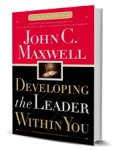
In my last post we learnt how focus and clarity helped “Susan” when she was in the picadero with a horse. Today, I’d like to share some of the teachings of one of my other great mentors (apart from my horses) in the art of leadership, John C Maxwell. For some years now I’ve been in the habit of revisiting books that had a profound impact on my thinking. It’s a powerful process, I find new insights and understandings I hadn’t experienced before, not because there’s been any change in the content of the book of course, but because of the changes in me since I first read the book. My awareness has shifted, resulting in my ability to see things in the book I wasn’t able to see previously.
Recently, I returned to John’s ‘Developing the Leader Within You’, and one of it’s messages hit me like a train. It was a message relating to vision, perception, thinking and potential.
Casting vision ignites potential. Too many people fail to create a compelling vision for what they aspire to in their lives, and what can’t be seen with the mind can’t be created in life. What you see is what you can be, and what you see is what you get.
I’ve worked with many business leaders who cast vision for their business and never for themselves. This is a major error. Without a personal vision of success, an individual is nothing more than a wondering generality in life.
Having a career is one thing, shaping one on your own terms is another. Lacking vision, a person is a like a ship adrift at sea without destination, it’s the tide that governs the path. Despite the biblical warning of ‘where there is no vision the people perish’ many people are still choosing to live life this way.
Then there’s perception. The way a person chooses to see things has a massive impact on their success in life. Konrad Adenauer once said ‘we all live under the same sky, but we don’t all have the same horizon’.
Henry Ford was told repetitively by his most senior engineers that his idea to create an eight-cylinder automotive engine was ‘impossible’. Over a two year period he continually sent them away to ‘make it so’, only for them to return with the same message. He refused to accept their beliefs, and eventually they overcame the obstacles and ‘made it so’. Ford and his engineers lived under the same sky yet had very different horizons.
What you see is what you get. What are your horizons? Where’s your thinking?

by Julia Felton | Jul 13, 2011
There is so much that horses can teach us about life. Horses have been described as “authenticity meters” and in my experience this is so true. They see beyond the mask that we put on and through to the real core of the person. They know when someone is frightened or in need of support, and when someone is overly aggressive. Horses allow, and expect us, to be who we truly are. They will not tolerate the mask that humans so often feel forced to put on in order to protect themselves.
I am reminded of an experience with a young lad, we shall call him Tom. Tom had been excluded from school for his aggressive behaviour. The teachers described him as being out of control and he bullied the other children. It took only a few sessions with a horse for Tom to realise that in order to connect with a horse he needed to let go of this mask. He needed to expose the young, frightened lad beneath and know that everything would be alright. Tom learnt it was ok to show his emotions and soon realised that acting tough had not been serving him well.
Horses act as mirrors reflecting back to us what we otherwise choose not to see. We all understand that we have different perspectives on the world and see the same thing in different ways, yet ironically we can only see what we already have in our frame of reference. If we experience the horse as angry and aggressive, it is likely that there are similar emotions that we have running through our lives. Horses allow us the opportunity to experience firsthand what is happening to us and by providing immediate feedback they allow us to change our actions to get a different result. How often does that happen in life? And importantly horses are non-judgemental. They just respond to the energy and intent shown to them. For children, I have found that often when faced with a horse the child’s whole persona can change as the real child that has been hiding behind that conditioned mask emerges. This can be a joyous experience for both children and parents. AHA! Moments occur and the children, and parents, get some real insights into what is happening for them.
So why is Horse Assisted Coaching so powerful? Well the answer lies in the fact that many traditional programmes focus on a verbal, classroom (neo-cortex) approach. Whilst this clearly has a role in society I have found that Horse Assisted Coaching sessions achieve a deeper, more sustainable and faster impact on creating change. This is achieved by doing, what is known as limbic learning, therefore there is no integration required. Examples of limbic learning are riding a bike, learning to walk etc. Once we have learnt to do these we do not forget.
Typically no riding is involved in a Horse Assisted Coaching session. Generally, all the work is done on the ground with the participants leading the horses through a series of exercises that help give them insight into such diverse topics as:
- The importance of being a great leader. If you can’t lead a horse and get him to follow you, how can you expect a team to follow you? Importantly, how can you lead others if you can’t lead yourself
- How body language and voice tonality help you influence others. With no words participants need to influence the horse to move using their own resources and what state you are in definitely influences the outcome.
- Value of teamwork. In this ever-connected society there is a real need for being plugged into the system in order to succeed. Alliances and partnerships will become more commonplace so participants learn how to contribute to a team and work towards a common goal.
- The importance of focus and intent because if you are not clearly focused and know what you are doing then horse will not follow you.
Sessions can be run in a group format or one on one depending on the client’s requirements. Horses can also be used to develop family constellations and these in the past have been shown to be very powerful.
So if you are looking for a fun, innovative way to have a break through with your clients then please do not hesitate to contact me. co*****@*****************es.com