by Julia Felton | Feb 25, 2025
Welcome back to this week’s edition of IMPACTFUL Teamwork. I’m excited to have you here again, and I hope you’ve been enjoying the recent episodes and the amazing guests we’ve had on the podcast. Today, it’s just me, and I want to dive into a concept that’s really resonated with me lately, as it perfectly captures the challenges I see in leadership today.
At Business HorsePower, we are passionate about transforming leadership and business practices. We believe the traditional leadership models—especially those based on command-and-control hierarchies—simply aren’t fit for purpose in today’s rapidly changing world. It’s time to embrace a new approach to leadership, one that’s inspired by nature and designed for a world of constant change.
Recently, I came across a concept that perfectly explains many of the leadership challenges businesses face: Zombie Leadership. I absolutely love this term because it vividly describes a type of leadership that seems alive but is actually stuck in outdated, ineffective practices.
In this blog, I’ll unpack the concept of Zombie Leadership, discuss its impact on businesses, and offer insights into how we can shift to more effective leadership practices that are better suited for the modern business landscape.
What is Zombie Leadership?
Zombie Leadership describes leadership that’s disconnected from the needs of modern teams and organisations. It’s when businesses continue investing in leadership development without addressing the fundamental flaws in their leadership models. On the surface, everything seems polished, but when you look closer, the foundation is weak and crumbling.
At Business HorsePower, I see this happening time and time again. Organisations pour money into leadership training, yet they often fail to see the results they expect. Leaders might be trained, but the underlying principles guiding their leadership approach don’t change. As a result, they continue operating in an ineffective, outdated way.
The Crumbling Foundation
I recently came across an analogy from my friend Jude Germain, which perfectly illustrates Zombie Leadership. She compares it to inheriting a grand historic mansion. From the outside, it looks impressive. But once you step inside, you notice the walls are cracked, the floors creak, and the foundation is crumbling. No matter how many renovations you make, you can’t fix a weak foundation.
This analogy perfectly mirrors what we see in leadership today. Many organisations are trying to build their businesses on leadership models that were designed for the industrial era. These models focus on command and control, which worked in the past but no longer meet the demands of today’s dynamic business world.
Zombie leadership continues because it benefits those in power. It doesn’t survive because it works; it survives because it maintains old power structures and supports the outdated “leadership industrial complex.”
The 8 Axioms of Zombie Leadership
Research by Haslam, Arif, and Abo in 2024 identified eight key axioms that define Zombie Leadership. These axioms are deeply ingrained in many businesses and, unfortunately, continue to hinder progress. Let’s take a closer look at these axioms and reflect on how they might show up in your organisation.
1. Leadership is All About the Leaders
Zombie Leadership often places leadership solely in the hands of those at the top. It defines leadership as a top-down, hierarchical process. But the reality is that leadership is about influence, not position. Effective leaders engage with their teams and understand their needs, rather than relying on their formal authority.
Action Point: Challenge the traditional top-down model. Encourage leadership at all levels of your organisation.
2. Great Leaders Have Specific Qualities
Many organisations believe that great leaders must possess certain qualities—such as intelligence, charisma, or vision. However, the most important factor is whether the team perceives these qualities. A leader may have exceptional skills, but if the team doesn’t recognise those qualities, the leadership is ineffective.
Action Point: Focus on building trust and rapport with your team. Leadership is about being relatable and understanding their perspectives.
3. Great Leaders Do Specific Things
Zombie Leadership suggests that effective leaders exhibit particular behaviours, such as fairness or initiating change. In reality, great leadership requires flexibility. The best leaders adapt their approach to the unique needs of their team and the challenges they face.
Action Point: Develop your emotional intelligence. Learn how to adjust your leadership style based on the team’s needs and circumstances.
4. You Know a Great Leader When You See One
Many organisations believe that great leaders are immediately recognisable. While it’s true that some leaders stand out, this belief overlooks the potential of others who may lead quietly and effectively in the background.
Action Point: Rethink what makes a great leader. Look for leadership qualities within your team and empower them to step up.
5. All Leadership is the Same
Zombie Leadership assumes that leadership is one-size-fits-all. However, leadership varies depending on the individual, the team, and the situation. What works in one context may not work in another, and the key to effective leadership is adaptation.
Action Point: Embrace the uniqueness of each leadership scenario. Cultivate leadership that adapts to the circumstances.
6. Leadership is a Special Skill for Special People
In the past, many viewed leadership as an elite skill reserved for a select few. Today, we know that leadership is a skill that anyone can develop with the right guidance and environment. Leadership isn’t about being “special”; it’s about being effective.
Action Point: Encourage leadership development across your organisation. Everyone can learn to be a leader with the right support.
7. Leadership is Always Good for Everyone
Zombie Leadership assumes that leadership is always beneficial for everyone. However, bad leadership can create inequality and division. Leadership should promote inclusivity, equality, and diversity.
Action Point: Ensure your leadership practices foster equality and inclusivity. Be mindful of the impact leadership has on your team and culture.
8. People Can’t Cope Without Leaders
Zombie Leadership promotes the idea that people cannot thrive without a leader. However, many teams today are self-managing and thriving without a designated leader. In some cases, leaders can even hinder progress.
Action Point: Foster a culture of self-management and autonomy. Encourage teams to lead themselves and collaborate effectively.
Moving Beyond Zombie Leadership
Zombie Leadership is pervasive because it’s deeply ingrained in many businesses. It feels comfortable and familiar, but it no longer serves the needs of modern teams and organisations. To overcome this, we need to embrace leadership that’s adaptive, inclusive, and capable of driving meaningful change.
I believe we need leaders who are willing to challenge the status quo and foster innovation. These leaders—whom I call trailblazing leaders—are the ones who can break free from the constraints of Zombie Leadership and create new, more effective ways of leading.
At Business Horsepower, we advocate for a leadership model based on agility, adaptability, and emotional intelligence. This model draws inspiration from nature, where every member of the team has the opportunity to lead in their own unique way.
Final Thoughts
Zombie Leadership has given me much to reflect on, and I encourage you to think about these eight axioms. Where are they showing up in your organisation? What can you do to reinvent leadership and create a more dynamic, effective leadership culture?
If you’d like to discuss how you can evolve your leadership approach, I’d love to hear from you. Together, we can build a leadership framework that fosters innovation, agility, and growth.
Thank you for reading, and I hope this exploration of Zombie Leadership has offered some fresh perspective. Let’s create the future of leadership—one step at a time.
If you’re ready to rethink your approach to leadership, get in touch today.
Show Notes:
Here are the highlights from this episode:
00:00 Introduction to Impactful Teamwork
01:43 The Concept of Zombie Leadership
05:57 The Eight Axioms of Zombie Leadership
16:57 The Role of GC Index in Combating Zombie Leadership
19:43 Conclusion and Call to Action
by Julia Felton | Aug 4, 2018
The summer months can signal the death knell for a business unless managed properly. As leaders and business owners, we all know that it is important for us and our team members to have balanced life; but have you ever stopped to consider how the summer months can literally kill the momentum in your business?
Think about an aircraft. It uses a large proportion of its fuel to simply get off the ground. Once airborne, only a tiny amount of energy is then required to keep it flying. And it’s the same in your business, too.
Projects take time, energy and resources to get going, and then when you think everything is going swimmingly, summer kicks in — and unless managed carefully, the momentum can be lost.
It’s a bit like the plane crashing en-route to its destination. The results can be devastating because, not only is productivity lost during these summer months, but the impact lasts into the third quarter of the year — meaning that close to six months of the year can be impacted by the loss of momentum during the summer.
If you don’t believe me, then let’s look at the research by American Express that reveals during the summer months there is:
- 20% decline in workplace productivity
- 19% drop in employee attendance
- 13% increase in the time it takes to complete projects
- 2.6 times increase in the time taken for lunch
And if that wasn’t bad enough, the research also revealed that there is a:
- 200% increase in shopping during work hours
- 120% increase in employees searching for another job
Which is why the summer months can have such a negative impact on overall business performance, unless managed appropriately.
Here are five things leaders can do to help maintain momentum during the summer months
1. Schedule Employee Vacation In Advance
Make sure you get everyone’s vacation days planned in advance. This way you can best minimize the impact on the business, and you will have clarity on what is happening. Plus, team members can support each other in managing workloads prior to going on their vacation.
2. Insist Employees Unplug When They Are on Vacation
It is essential that team members take vacation so they can recharge, and in today’s world it is important to ensure that your team members really do dis-connect and unplug from the business. Way too many people go on vacation but stay connected to the office by technology, meaning they never really switch off. To operate at high performance, employees need to rest and relax so they can replenish their energy sources. Ensure team members put out-of-office notifications on their emails so they don’t feel compelled to respond to email whilst they are away.
3. Create Focus By Having Clearly Defined Projects/Activities
Focus gives team members clarity and certainty, so make sure that the team has some fun goals to achieve over the summer. Maybe even consider setting some challenges for the team to keep them engaged, and give out prizes or incentives for those team members who complete the challenges.
4. Be Flexible With The Hours Worked
As a leader, we all know that it is not the hours worked that is important but rather the outputs delivered. Allowing team members to leave early, once certain milestones are met, will help keep the team focused and working at a high level. It will also encourage cooperation as the team pulls together to achieve the objectives, and everyone wins.
5. Model The Way
As a leader, your team looks to you to create a positive example for them. So model the way and set yourself higher goals for the summer. It’s often easier to get meetings during the summer because others are in the mentality of slowing down, so leverage this to your best advantage. Arrange meetings, attend events, and stay positive. Your team will see your drive and excitement and feed off this, thereby maintaining their own personal momentum.
Implement these five strategies if you want your business to grow over the summer; and remember, your momentum becomes your team’s momentum. So lead your team towards a productive summer.
by Julia Felton | Jan 31, 2018
Recently as I prepared for delivering a Leading Through Change programme I thought I would research the different leadership models that exist. Boy was that a bad idea, as there are a plethora of models all extolling some different perspective. Nothing right or wrong with any of them, but the challenge is that they all focus on something outside the leader. In essence, they forget that the leader is an integral part of the situation and that a leadership style is not something you can simply adopt. It must be something that comes from within. That’s why I love this quote:
“If you want to be a leader, the first person you must lead is yourself” Mike Scioscia.
In my first book Unbridled Success, I looked at the concept of Leadership Begins With You, and now executive coaches and faculty members Ray Luther and Eric Johnson of Indiana University’s Kelley School of Business have coined the phrase Self-Observant Leadership to describe the principle that you can’t effectively lead others until you know how to lead yourself.
Self-Observant Leadership occurs when you deeply understand your identity, compare it to your reputation (how others experience you) and then make meaning of the observations and choose to adapt. It is a refinement on authentic leadership as it acknowledges that as a leader you need to understand yourself and how you’re perceived, then making behavioural changes to become the leader you want to be, even if it means operating outside the identity you’re comfortable with.
So how do you deliberately practice Self-Observant Leadership? Luther and Johnson share the following 6 steps:
- Live your values.
Your values are the GPS which you live your life by. They shape what activities and behaviours you engage in and yet many people really know what their values are. Your identity is grounded in your values, and in your purpose
- Move towards purpose.
Purpose is the other component of your identity. Understanding your profound Why, is what gets you out of bed in the morning. It is what drives your mojo and helps you sustain continual activity in the face of adversity. What’s the reason why are doing what you are doing? What legacy are you creating? What impact do you want to make in the world? With a clear understanding of your values and purpose in tow, you can then compare your identity to how you’re perceived.
- Learn from feedback.
Feedback is the breakfast of champions, so pay attention to it, both internal and external. This will help you gain insights into how you’re perceived. Be open and ready to accept some things you don’t want to hear, because it is only by knowing more about ourselves and how we are perceived that we can hope to develop.
- Be Present.
Self -Observant leaders live in the moment. They are present and grounded and so consciously aware of the effect they are having on others.
- Reflect.
Reflection separates good leaders from great leaders. By understanding the gap between how you see your identity and how you’re perceived by others, you can then make adjustments. Journaling is a powerful tool here. Take 5 minutes at the start of every day to reflect on the values and purpose you want to embody and then review this for 5 minutes at the end of the day to see how you did.
- Adjust.
Leaders take action and Self-Observant Leader are no different. They adjust their behaviours so they can be the best, both for themselves and their team. As leaders we need to have courageous conversations and yet for some people this might be outside their comfort zone, and yet to not have these conversations would not be serving your team members, who need to understand both the positive and negative about their performance. Whilst having courageous conversations might not be a leaders natural thing to do, to deprive team members of the opportunity to develop is also a travesty.
I’m curious to hear what you think about the principles of self-observant leadership and whether you subscribe to the tenant that “leadership begins with you”.

by Julia Felton | Jan 16, 2018
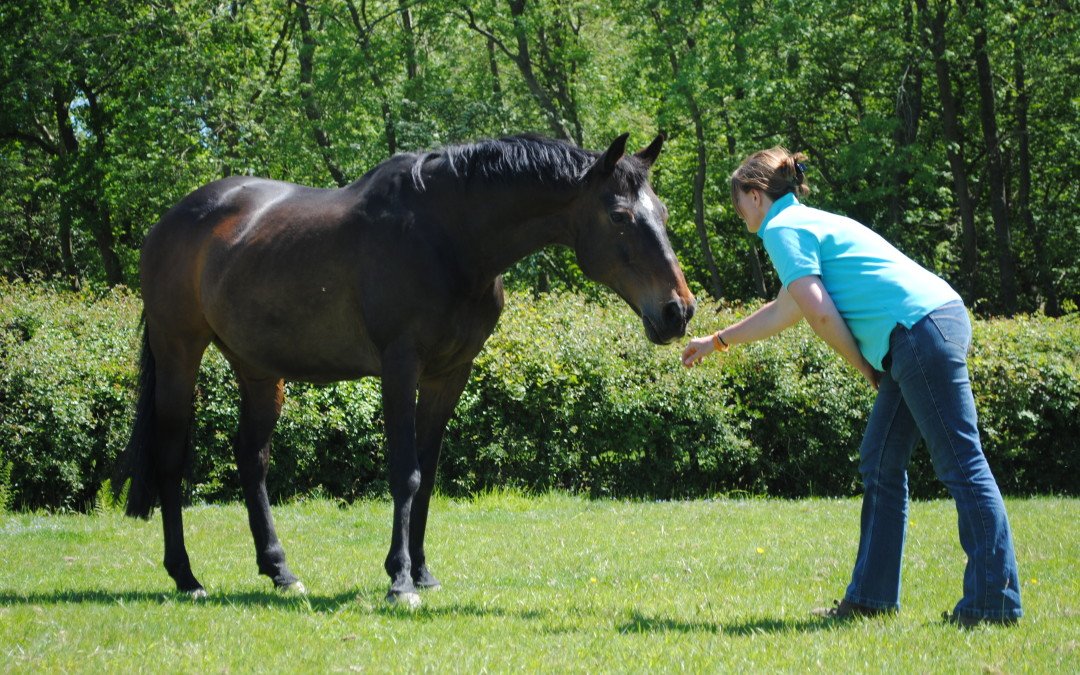
“What can horses teach me about authentic communication” and the answer is lots. When partnering with the horses:
- you get the opportunity to drop into the space of “horse time”. Away from the stresses and strains of daily life you are able to slow down, reflect and experience the power of real connection
- you have to communicate with your heart and not your head. All authentic communication starts with a heart felt connection and the horses are masters at letting us know how true we are being to ourselves
- you have to be present, grounded and paying attention. If you don’t the horse will simply ignore you
- you get to experience the power of non-verbal communication and how it can influence others
- you experience how emotions can disrupt the communication channel
The great thing about learning from horses, who are master communicators, is that you will learn how to synchronise your intention – mentally, emotionally and physically. You will get unbiased, immediate feedback on your communication style. And importantly if what you are doing isn’t working you get the opportunity to recalibrate and try a different approach. Interacting without verbal communication allows participants to discover a whole new world in the process!
Working with horses demands that you be very clear in your communication both verbal and non-verbal. Horses do not understand words and therefore rely on reading body language and energy. You will experience how to align your energy in such a way that your communication becomes clear and concise.
What type of world or work environment do you create for yourself through your communication? Is it supportive, inspiring and powerful or could it be improved? When you start using this new knowledge with others they will feel motivated, excited and willing to work with you, which will lead to new levels of performance.
To discover more how horses and help you develop your authentic communication skills (and leadership and team working skills too) lets have a chat. You can book into my diary here or better still join us on the next Art of Authentic Communication workshop.
by Julia Felton | Jan 3, 2018
Communication skills are vital to our success in business and life, and yet how many of us appreciate the unless we communicate authentically we may well be sabotaging our own success. When we fail to communicate effectively team members, colleagues, clients, suppliers and family members can get frustrated leading to stress and anxiety. And just like poor communication can have a negative ripple effect within the business, authentic communication can actually help businesses become more collaborative, innovative and creative leading to greater productivity and profitability. And its the same with your family and friends too.
So Why Is Authentic Communication Important?
Authentic Communication is a heart-centred way of communicating in which you allow your Authentic Self to do the talking and listening instead of your fear-based Ego. When we engage in authentic communication we move from just being in a transactional relationships to forming real human connection. One where the other person feels acknowledged and heard. Authentic communication is a pre-requisite for success in organisations, businesses and in any project as it allows for transparency and speed in communications.
When you communicate authentically you are able to express yourself productively and become curious in the other person’s perspective and how they are feeling about the situation. You are clear about your values and your core truth and from this place you are able to achieve different results. When leaders communicate authentically this has a profound effect on the business because the culture of the organisation is created by what people do and who they are. When leaders and team members operate from a place of authenticity then:
- trust increases
- team members feel more valued and engaged in their work
- connection and rapport improves
- it breaks down the silo mentatlity in business
- there is more collaberation and sharing of resources
- the workplace is happier as the air is “clearer”
- the business culture starts to focus on ‘we’ rather than ‘me’ as barriers are broken down
- the inside of the business matches the outside
Business relationships prosper when people trust each other, information is freely and generously exchanged and relationships are vibrant. However communication whilst simple is not easy. It is multi faceted and complex especially when one considers that so much is communicated by our body language. So unless our body language and our words are aligned and congruent the message simply will not be heard.
Surprisingly, happiness is an added benefit of authentic communication. Psychologist Sidney Jourard, found that 85 percent of a person’s happiness in life comes from happy interactions with other people. The reverse holds true as well: 85 percent of a person’s unhappiness or problems in life comes from difficulties in getting along with others
So if you are interested in honing your authentic communication skills I encourage you to join me and Tessa Gray later this month for our unique Art of Communication workshop. This is no ordinary workshop as your teachers will be Julia’s herd of horses, who are master communicators. They will test and challenge the clarity, congruence and connection of your communication, and rest assured you will leave the day more fully aware of the non-verbal impact you have on you communication success. After all, like everything else in life, communication begins with you.

by Julia Felton | Nov 8, 2017
If you want to be a great leader who attracts quality people, the key is to become a person of quality yourself. Leadership is the ability to attract someone to the gifts, skills and opportunities you offer as an owner, as a manager, as a parent. Leadership is the great challenge of life.
What’s important in leadership is refining your skills. All great leaders keep working on themselves until they become effective. Here’s how:
1. Learn to be strong but not impolite.
It is an extra step you must take to become a powerful, capable leader with a wide range of reach. Some people mistake rudeness for strength. It’s not even a good substitute.
2. Learn to be kind but not weak.
We must not mistake weakness for kindness. Kindness isn’t weak. Kindness is a certain type of strength. We must be kind enough to tell someone the truth. We must be kind enough and considerate enough to lay it on the line. We must be kind enough to tell it like it is and not deal in delusion.
3. Learn to be bold but not a bully.
It takes boldness to win the day. To build your influence, you’ve got to walk in front of your group. You’ve got to be willing to take the first arrow, tackle the first problem, discover the first sign of trouble. Like the farmer, if you want any rewards at harvest time, you have got to be bold and face the weeds and the rain and the bugs straight on. You’ve got to seize the moment.
4. Learn to be humble but not timid.
You can’t get to the high life by being timid. Some people mistake timidity for humility. But humility is a virtue; timidity is a disease. It’s an affliction. It can be cured, but it is a problem. Humility is almost a God-like word—a sense of awe, a sense of wonder, an awareness of the human soul and spirit, an understanding that there is something unique about the human drama versus the rest of life. Humility is a grasp of the distance between us and the stars, yet having the feeling that we’re part of the stars.
5. Learn to be proud but not arrogant.
It takes pride to build your ambitions. It takes pride in your community. It takes pride in a cause, in accomplishment. But the key to becoming a good leader is to be proud without being arrogant. Do you know the worst kind of arrogance? Arrogance from ignorance. It’s intolerable. If someone is smart and arrogant, we can tolerate that. But if someone is ignorant and arrogant, that’s just too much to take.
6. Learn to develop humor without folly.
In leadership, we learn that it’s OK to be witty but not silly; fun but not foolish.
7. Learn to deal in realities.
Deal in truth. Save yourself the agony of delusion. Just accept life as it is—the whole drama of life. It’s fascinating.
Life is unique. Leadership is unique. The skills that work well for one leader may not work at all for another. However, the fundamental skills of leadership can be adopted to work well for just about everyone: at work, in the community and at home.
This post originally appeared on SUCCESS.com.
by Julia Felton | Aug 2, 2017
The thing I love about summer is the weather and the fact that all the plants and flowers bloom. It makes gardens look amazing and the good weather also means all the fields that I can see from my office window are green and verdant. Nature understands the seasons and that now is the time to start stocking up for winter. Animals start eating more so they have more body fat to keep them going through the winter. And my horses are no exception. The poor girls – Bracken and Thistle – only have to look at a blade of grass and they pile on the weight, whereas with the boys – Toby and Charlie – it is a slower process.
Regardless, the challenge is that as they eat more they also create more manure, which means I have more to clear out of their field each day. Currently I have to clear two barrowloads for manure every 24 hours. Given that the horses are currently living on a steep hill, and love to be at the bottom of the hill, my abs are getting a great workout each day, as I push these full barrows of manure up the hill.
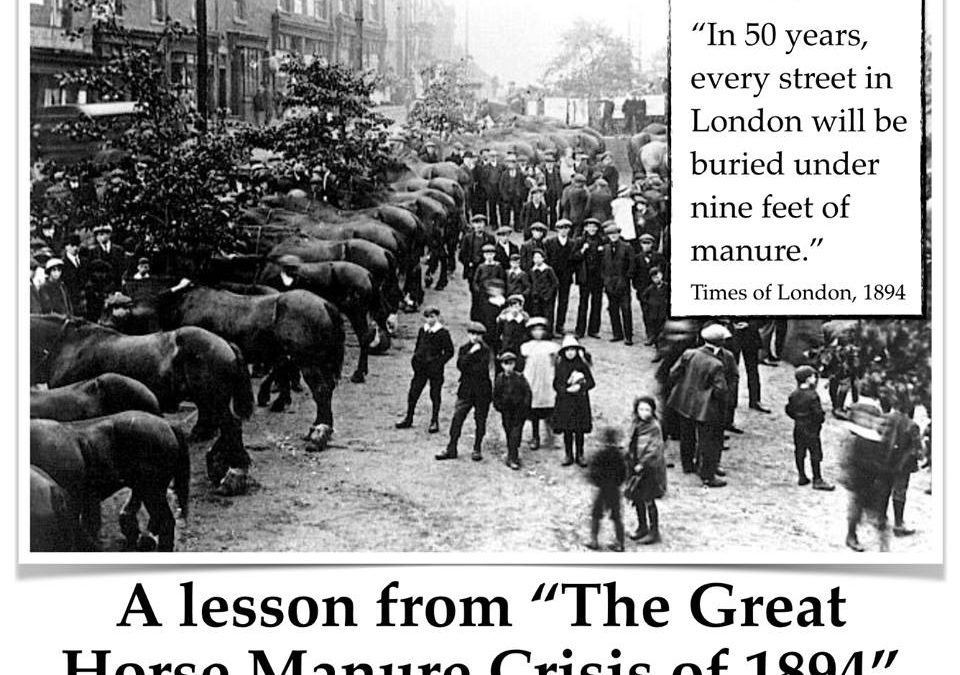
So what does horse manure have to do with business?. Actually quite a lot it seems because the The Great Horse Manure Crisis of 1894 was the first big global urban crisis that the world’s largest cities faced in modern times.
By the late 1800’s London had over 50,000 horses moving cabs and buses every day. Each one produced 15 to 35 pounds of manure and 2 pints of urine daily. At the same time, New York had over 100,000 horses producing 2.5 million pounds of manure each day. No one could figure out how to handle all this manure, and in 1894 the Times newspaper predicted based on the increase in population and horses at the time “In 50 years, every street in London will be buried under nine feet of manure.”
The crisis led to the very first International Urban Planning Conference in New York. However, it was abandoned after three days – instead of the scheduled ten – because none of the delegates could see any solution.
Many of today’s challenges look similarly insurmountable. Anyone looking at current trends and trying to battle the inertia, outdated policies or plain bad decisions of many bureaucracies, corporations and governments can easily lose hope
So what happened to end the Great Horse Manure Crisis of 1894?
Within a matter of years, the entire crisis simply disappeared. While officials looked unsuccessfully for solutions, Karl Benz, Gottlieb Daimler and other inventors and entrepreneurs were creating the very first automobiles. They were looking outside the box at solutions that the urban planners could not even consider possible. After all who would have thought that cars would replace horses. That was such a preposterous idea.
Yet, by 1912, there were more cars than horses in London and New York, as it was cheaper to own a motor vehicle than a horse-drawn carriage and economics eventually ensured that horses were no longer central to the urban transport equation. In just over a decade the number of cars sold in the US rose from 4,192 per year in 1900 to 356,000 in 1912. By 1917, the last horse-drawn streetcar in New York had been retired. What was once thought to be an insurmountable threat to humanity’s existence vanished in little over a decade and the entire incident is now a barely remembered footnote in human history
“We can’t solve problems by using the same kind of thinking we used when we created them.” ~ Albert Einstein
Of course – the age of fuel-driven vehicles has created a whole new set of problems. But today, new inventors and entrepreneurs in green energy, health, education and all areas of society are coming up with new solutions at an increasingly rapid rate. In fact the biggest challenge for business today are the mavericks who are thinking outside the box and disrupting business. Just think Uber and Air BnB. Who would have thought that these two companies could completely change the face of the travel industry – and best of all they have done it without owning any assets!
There is no getting away from the fact the business is at a tipping point. The old structures are no longer serving us and as a business owner and leader you can either decide to focus at joining the groups protesting them or you can join the many who are already creating the new paradigms and be the change you want to see in the world.
What are you deciding? Will you become a conscious entrepreneur who challenges the status quo and stands for something more, or will you shrink and play small, staying stuck in the old ways of doing things. If the former, I’d love to hear from you as I specialise in helping leaders set out of their comfort zone to challenge the status quo and in doing so become a business pioneer.
by Julia Felton | Jun 14, 2017
“There’s no such thing as a self-made millionaire. Only TEAM-made millionaires”
In last week’s Wednesday Wisdom we discussed the different leadership positions and the fact that in the herd leadership is shared. A horse herd operates as a team and to my mind teamwork is the most effective way in business to create success. Being in business is tough and there is simply no way that you can do everything by yourself. Each of us has own our brilliance and working with team members enables you to focus on your brilliance whilst letting others do theirs. The net effect is that everyone is in a state called flow, which is the state of least resistance. Then business becomes easy and fun.
But how do you get the best out of team members and inspire them to give of their best to help your business grow and be successful.? The answer is to ask better questions. So are you a teller or a questioner?
In other words, when you’re working with your team members (or outsourcers) do you tend to tell them what to do or do you engage them in a conversation by asking questions?
If you’re like most entrepreneurial leaders, chances are you’re the former. If that’s true, then my question to you is “How’s that working for you?”
My guess is it’s not working out as great as you’d like it to. In fact, I find that most entrepreneurial leaders are pretty frustrated with the people they’re “leading.” See if any of the following statements ring true for you
- “They never do what I tell them to do!”
- “It always takes her ten times longer to do what I asked her to do. If she’d just listen to me, she could get it done in one tenth of the time it’s currently taking!”
- “I can’t understand why it’s taking him so long to do what I asked him to do.”
- “I can’t figure out why she just can’t follow my directions.”
- “I didn’t hire him to think. I hired him to do what I tell him to do.”
Ouch! And I fully understand those sentiments. As an entrepreneurial leader myself I understand why you want people to do what you want them to do in the way you want them to do it (after all, you are the BOSS, right? And it is YOUR company. And you do pay THE BILLS. And they do work for YOU, right?).
Furthermore, I get the whole driven part of the entrepreneurial personality. According to my Talent Dynamics profile I have lots of dynamo energy so, by personality, I like being a teller. I like saying, as chances are you do, “Here’s what I want you to do. Now, just go do it. No questions. No debate. Just get it done EXACTLY how I told you to do it.”
But, as you well know, that approach doesn’t produce the best results
The Problem With Being a Teller
What I learned, and hopefully you are as well, is that being a teller is a counterproductive leadership approach. Why? For a number of reasons. I’ll give you three.
- Telling doesn’t create buy in. As you know, people own what they help create, which, by definition means they don’t own what they don’t help create. So, if you or I say, “Billy, I want you to do X in Y way,” how much does he own that? Virtually nil. And if someone doesn’t own a task or project or process/procedure or event or strategy or tactic, the chances of them producing the best result will always be lower than if Billy is involved in creating the solution. Telling doesn’t work because it doesn’t create buy in or ownership.
Note: We’re not talking about following systems here. We’re talking about solving problems or creating something new.
- Telling doesn’t produce the kind of people you want/need. In other words, if you’re a teller, you’re NOT developing your people to be their best (whether that’s to be a better leader or problem solver or innovator or coach or process person, etc.). Or to put it another way, if you or I are always in the telling position, then we’re not creating independent thinkers. And if we’re not creating independent thinkers, then we’ll have to keep doing all the thinking—which leads to the third reason why you don’t want to be a teller.
- Telling doesn’t create leverage. If you or I still have to do all the thinking, then we’re not creating leverage. We’re simply creating more work for ourselves. We become the bottleneck to growth. If our people don’t own the task, then we have to invest more time in managing and leading the task. If our people aren’t really excited about a task or project, then more conflict will occur, which means we’ll have to invest more time. Or, if the only people we’re happy with are people who will just do what they’re told, then we’ll always put a lid on the quality of the kind of employee we can hire (which, again, kills leverage).
Any way you add it up, being a teller, just isn’t the smartest leadership choice you or I can make if we want to grow a fast growing business or organisation.
The Better Option
The better option, if you want to get the best from your team is to learn to connect, engage and communicate with them. Even if this isn’t your natural bent, you can learn to do this.
Next week I’ll be sharing my best tips on how to connect through using questions.
by Julia Felton | Jun 7, 2017
One of the biggest insights that has been coming up for people recently, whilst attending my leadership workshops, has been related to their preferred leadership position. Very often when we think of leadership we assume that the leader has to be at the front, leading the charge. And yes the leader does need to set the direction for the business, but they don’t need to stay in that leadership position all the time. Sometimes they might find that leading from the back, or indeed the side might be a better solution.
So What Are The Three Positions of Leadership?
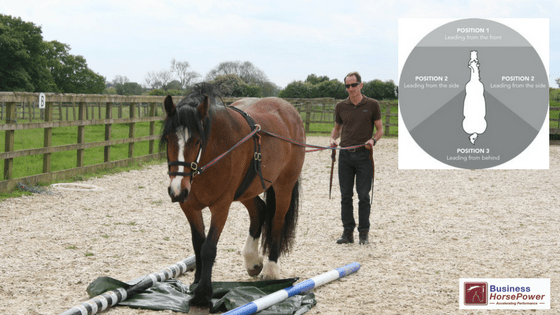
In his book Dances With Horses, Klaus Ferdinand-Hempfling identified three positions of leadership that operate on a pull-push basis and when used appropriately can achieve significant results. Position One is Leading From The Front. This leadership position is most effective in an emergency, when you need people to follow you with no negotiation. It is also a great leadership position for the CEO of a business who needs to set the strategy and direction of the business and show others where to go. However, for team members it can dis-empower them as there is no flexibility to make decisions.
Position Three is Leading From Behind. From this position you can see everything happening in front of you and so can easily course correct if things go off track. It’s a leadership position where you effectively orchestrate the energy of the group and add momentum to what is happening. Team members feel empowered however, unless the team know where you are heading, chaos can erupt as everyone heads in different directions.
Leading From The Side is Leadership Position Two. It is a very collaborative style of leadership and a great place to be to form connection with your team members. It is the place of true partnership, and is a role that all great leaders must engage in to build relationships. However, if a leader stays in this position for too long nothing gets accomplished as no-one is leading the process.
The three different positions of leadership are derived from the way that a wild horse herd operates. Typically what you will find is that within the herd there is a lead mare who operates at the front of the herd and it is her job to find suitable grazing for the herd. She navigates where to go based on the weather conditions and the needs of her herd. Do they need food, water, shelter? Whatever they need she seeks out for them.
However, in the herd leadership is not a one horse job. It is shared and this is why you will always find the lead mare working in collaboration with the lead stallion. He positions himself at the back of the herd. From here he has great perspective on what is happening in front of him. He is easily able to keep an eye out for approaching danger and keep the herd united by influencing the direction and pace that everyone is moving in.
When grazing the lead mare will often mingle with the herd and adopt leadership position two whilst checking in to ensure the rest of the herd are safe.
Great leaders recognise that the art of great leadership is knowing when to adopt each leadership position, and be able to effortlessly move between the different positions as required. That said, in my experience leaders often have a preference for one position of leadership over another. Do you know what yours is?
Once you know your preferred leadership position you can then enlist the support of others with differing preferences to help you share the leadership role. After all I think we would all agree that in todays rapidly changing environment there is simply no way that just one person can shoulder all the leadership responsibility. It needs to be Shared amongst the team, so that everyone takes responsibility and contributes to the business success.
This is what one of my clients realised after learning about the three different leadership positions: “No wonder I’m exhausted. I’ve being trying to perform all three leadership roles myself. I now see how one minute I’m setting the business strategy (position one) then I’m running back to position three to energise the business, then back to position one, and then next position two. Now I recognise this I can see how I need to enrol others to help me share the leadership. This will give me more energy and focus and help us make our team more productive”.
If you would like to experience the three different leadership positions and discover your preferred role, then why not join me on my next open workshop, where we will be exploring how to Lead On-The-Hoof and develop the leadership skills you need to be successful in today’s environment. Simply click here to find out more.
by Julia Felton | Apr 12, 2017
Have you ever stopped to consider what drives you? What gets you out of bed in the morning? What gives you motivation and inspiration to keep on going in the face of adversity? The answer to the question is purpose. The reason why you do what you do. And this is why everything in business starts and ends with purpose. If as leaders we don’t define the purpose for the business, then the business is like a rudderless ship. It has no direction, no GPS, and team members don’t know what is happening.
Purpose gives team members a shared vision. It unites the team behind a single cause. It brings clarity and certainty. It helps define the values for the business, as they need to be aligned with the purpose. And business values help decision making as they provide a framework that identifies which activities you will pursue. If following an opportunity or undertaking an activity conflicts with your values then it is easy to say No, as that action is out of alignment with what you stand for.
Purpose stands at the core of everything that we do in business and right now there is a growing trend, as companies become more consciously aware, for them to become purpose-driven. Purpose is being put clearly front and centre of everything a company does. And let’s be clear, the purpose is not self-serving, for example, to make more profits. That’s not motivating to anyone. Companies focusing on becoming purpose led are recognizing that business is a force for good and are focusing on how the business impacts and contributes to society generally.
An example of a company with a great purpose is Whole Foods. Their purpose, which they call their declaration of independence is clearly written on their website and pervades everything they do.
It states: Whole Foods Market is a dynamic leader in the quality food business. We are a mission-driven company that aims to set the standards of excellence for food retailers. We are building a business in which high standards permeate all aspects of our company. Quality is a state of mind at Whole Foods Market.
Our motto — Whole Foods, Whole People, Whole Planet — emphasizes that our vision reaches far beyond just being a food retailer. Our success in fulfilling our vision is measured by customer satisfaction, team member happiness and excellence, return on capital investment, improvement in the state of the environment and local and larger community support.
Our ability to instill a clear sense of interdependence among our various stakeholders (the people who are interested and benefit from the success of our company) is contingent upon our efforts to communicate more often, more openly, and more compassionately. Better communication equals better understanding and more trust.”
When you read this purpose statement you can’t help but feel inspired. It’s clear about what the company does, the change it is wanting to make in the world and how team members contribute to this. This purpose provides clarity, direction, focus and inspiration. As a team member you immediately know what is expected of you. A clear purpose is the fuel that ignites superior performance and delivers greater productivity and ironically profitability, as everyone is moving towards the same vision in a unified way and the business gets into a state of alignment which creates massive flow,
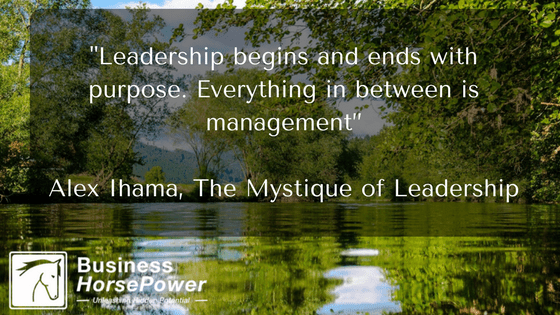
The leaders have clearly stated what needs to happen in the business and why. That’s why “leadership begins and ends with purpose. Everything in between is management”
I’d love to hear your thoughts on this and if you need any help defining the purpose for your business or just want to connect with me to discuss how purpose-driven companies are making a real difference, then I’d love to hear from you. Simply book a conversation with me here.