by Julia Felton | Mar 24, 2026
Most teams do not have a performance problem.
They have a psychological safety problem.
That may sound like a bold statement, but it is one I keep seeing play out in organisations again and again. Leaders tell me they want more ownership, more accountability, more initiative, and more innovation from their teams. Yet what they are often facing is not a lack of capability or commitment. It is a culture where people have quietly learned that trying something new is risky.
When that happens, people stop speaking up. They keep their best thinking to themselves. They wait for certainty. They avoid stepping forward unless they know they cannot be blamed. And as that pattern takes hold, momentum starts to leak out of the business.
In this episode of the Impactful Teamwork Podcast, I explore the theme Reward the Try and why psychological safety is one of the most important ingredients in building elite teams. I also share practical ways leaders can create the conditions for more experimentation, faster learning, and better decision-making.
Why psychological safety matters more than ever
We are operating in a world where certainty is in short supply.
Markets shift quickly. Technology evolves daily. Customer expectations change fast. Leaders and teams are being asked to navigate complexity, change, and ambiguity at a pace many organisations were never designed for.
In that kind of environment, teams cannot afford to wait until everything is perfect before they act.
They need to be able to test ideas, learn quickly, adapt fast, and surface risks early. None of that happens if people are worried about being humiliated, blamed, or punished for getting something wrong.
That is why psychological safety matters so much.
Amy Edmondson defines psychological safety as a shared belief that the team is safe for interpersonal risk-taking. In practice, that means people feel able to say:
- I think we are missing something
- I do not understand
- I disagree
- I made a mistake
- Here is an idea we could test
Without fear of embarrassment, punishment, or social fallout.
And that matters because execution does not usually collapse when people stop caring. It collapses when people stop feeling safe enough to contribute honestly.
The hidden cost of a fear-based culture
Many businesses unknowingly reward certainty and punish experimentation.
They praise the polished win.
They celebrate flawless delivery.
They review mistakes with more energy than they review learning.
They expect people to take ownership, but react badly when things do not go to plan.
The result is predictable.
People become more cautious.
They avoid taking initiative.
They escalate decisions upwards.
They stay silent about concerns.
They wait to be told what is safe.
This does not always look dramatic from the outside. In fact, it can look like professionalism. Meetings remain calm. People appear compliant. There is no obvious conflict.
But underneath that surface, the team is slowing down.
Innovation drops.
Decision velocity weakens.
Learning cycles get longer.
Accountability rolls uphill.
What leaders often label as a performance issue is, in reality, a trust and safety issue.
What psychological safety is, and what it is not
Psychological safety is often misunderstood.
It is not about being overly nice.
It is not about lowering standards.
It is not about avoiding difficult conversations.
It is not about letting people off the hook.
In fact, done well, it is the opposite.
Psychological safety creates high standards and low fear.
It allows teams to challenge each other honestly, admit mistakes early, test ideas before they become expensive, and learn without blame. It is not a cosy culture concept. It is a learning and performance concept.
This distinction matters because some leaders worry that making it safe to try will mean people become careless. In my experience, the reverse is true. When people feel safe enough to be honest, they tend to show stronger judgement, better awareness, and more responsible behaviour.
Fear does not create excellence. It creates self-protection.
Why trying must become visible
One of the central ideas in this episode is simple but powerful:
If trying becomes dangerous, people stop moving.
That is why leaders need to reward not just outcomes, but intelligent attempts.
In many businesses, the effort that leads to learning remains invisible. A team member tries a small experiment, surfaces an early risk, or tests a new way of working, but because the outcome is not yet a visible success, it is overlooked.
That is a mistake.
Elite teams understand that visible wins are usually built on a series of smaller tests, imperfect attempts, and validated learning cycles. The more quickly a team can test and learn, the faster it can improve decision-making and build momentum.
That is why I encourage leaders to make trying visible. Celebrate the thoughtful experiment. Acknowledge the early warning. Recognise the person who raised the issue before it became expensive.
When you do that, you send a clear signal that progress matters more than posturing.
The Try Loop: a practical way to build momentum
In the episode, I introduce what I call the Try Loop, a simple way to help teams experiment safely and learn faster.
The three stages are:
1. Test
Start small.
Ask, what is the smallest version of this idea we can test within seven days? What guardrails do we need in place around time, budget, customer impact, compliance, or reputation?
This is critical because experimentation without boundaries is not freedom, it is chaos. Guardrails create safety. They give people the confidence to act without putting the wider business at unnecessary risk.
2. Reward
Review the attempt without blame.
Use questions like:
- What did we expect?
- What happened?
- What did we learn?
- What should we do next?
The goal is not to find fault. The goal is to turn action into learning. If the review process becomes a blame hunt, people will stop trying.
3. Apply
Use the learning.
This is the step many teams miss. If nothing changes after an experiment, people quickly conclude that trying is pointless. The learning must lead somewhere. Perhaps you scale the idea. Perhaps you tweak it. Perhaps you stop and move on. But you must show that learning has been captured and applied.
That is what creates trust in the process.
Why decision velocity depends on safety
One of the most important insights in this episode is the link between psychological safety and decision-making.
When people do not feel safe, decisions get pushed up the hierarchy. Team members escalate to managers. Managers escalate to senior leaders. Senior leaders discuss issues in meetings without resolving them. Before long, the business is clogged with delay.
This is not always because people lack judgement.
Often, they are simply trying to avoid being wrong.
That is why I encourage leaders to think about the decision line. Where are decisions being made in your business? Are they staying close to the work, or are they being pushed upwards because people fear the consequences of acting?
If decisions are repeatedly escalating, the question is not simply, “Why are people not taking ownership?”
The better question is, “What is making it feel unsafe for them to decide?”
That question gets much closer to the real issue.
How leaders create safety in practice
Creating psychological safety is not about grand gestures. It is built in small, repeated moments.
Leaders create it when they:
- Frame work as learning, not flawless execution
- Admit they may be missing something
- Replace “Who messed up?” with “What did we learn?”
- Respond well when someone raises a hard truth
- Thank people for surfacing risks early
- Show through tone and body language that challenge is welcome
This last point matters more than many people realise.
A leader can say all the right words, but if their tone, expression, or body language communicates irritation, sarcasm, or judgement, the team will trust the non-verbal signal over the verbal one every time.
Teams are always reading the room.
Key takeaways from the episode
Here are the biggest lessons from Reward the Try:
1. Most teams do not have a performance problem, they have a safety problem
If people are holding back, staying quiet, or waiting for certainty, the issue may be fear rather than capability.
2. Psychological safety is about learning and performance
It is not about lowering standards. It is about creating the conditions for honest contribution, faster learning, and better execution.
3. Small experiments build momentum
Teams do not need giant leaps. They need safe, bounded tests that produce learning quickly.
4. Guardrails create freedom
Clear boundaries help people act with confidence. Without them, teams either freeze or over-escalate.
5. Review without blame
If every experiment is followed by judgement or shame, people will stop trying. Learning language matters.
6. If nothing changes after the learning, trying dies
The organisation must apply the insight gained from experiments. Otherwise people lose trust in the process.
7. Leaders shape safety in micro-moments
A raised eyebrow, a dismissive tone, or a defensive response can shut down future contribution faster than leaders realise.
Final thought
If your team seems hesitant, overly careful, or slow to act, it may not be because they lack accountability or initiative.
They may simply be waiting for permission to be imperfect.
That is why rewarding the try matters.
Because businesses do not build momentum by making experimentation dangerous. They build momentum by making it safe to test, learn, and adapt.
And in a world where certainty is disappearing, that may be one of the most important leadership disciplines of all.
Show Notes
00:46 Reward the Try Intro
01:51 Psychological Safety Debt
04:02 Risk Scale Self Check
05:31 Healthy Curiosity Framework
06:31 Corporate Story Taking Risks
08:58 Small Experiments Guardrails
12:12 What Psychological Safety Means
14:00 Google Project Aristotle
15:51 Four Ways to Build Safety
20:00 The TRY Loop Method
22:14 Virgin Airlines Reward Example
24:15 Decision Line Empowerment
25:48 Body Language and Permission
27:00 7 Day Experiment Challenge
28:46 Wrap Up and Next Steps

by Julia Felton | Mar 17, 2026
Every now and again a conversation reminds me that leadership is not just about profit, strategy, or growth.
Sometimes it is simply about people.
This week’s episode of the Impactful Teamwork podcast was recorded as part of Podcasthon Week, a global initiative where more than 1,500 podcasters across 40 countries shine a spotlight on charities and the incredible work they do.
And my guest for this special episode was Simon Errington, CEO of the charity Children in Distress.
What unfolded in our conversation was not just a story about charity work. It was a masterclass in reinvention, community, and the power of purpose-led leadership.
Because when you lead an organisation powered by volunteers, limited resources, and deep human need, the leadership lessons become incredibly real.
Let me share some of the insights that stood out.
From Crisis Response to Reinvention
Children in Distress began over 35 years ago in response to a humanitarian crisis.
When the communist regime in Romania collapsed, thousands of children were left vulnerable. Orphanages were closing, systems were collapsing, and many children were simply abandoned.
The charity stepped in to help. Over the decades they built orphanages, provided care, and supported vulnerable children across the country. But something interesting happened. Romania changed. The country evolved. Infrastructure improved. Conditions became better. Which meant the charity faced a profound leadership question:
What do we do when the world we were built to serve no longer exists in the same way?
Instead of clinging to the past, Simon and the team chose reinvention.
Today the charity still supports legacy projects in Romania, including Casa Maria, a family-style home caring for children with neurological and physical disabilities.
But they are also pivoting their strategy to support grassroots community projects in the UK.
It is a perfect example of something I talk about often on the podcast:
Leadership today is not about maintaining the status quo.
It is about reading the environment and adapting the system.
Just like a healthy herd does in nature.
Grassroots Impact: Supporting Communities Where They Are
One of the things I loved hearing about was the shift toward supporting local community leaders who are already making a difference. Instead of building new programmes from scratch, Children in Distress now focuses on funding and supporting grassroots initiatives.
One example is a project in Hull that brings Romanian families together through a weekly cooking club. Thirty children gather each week to cook traditional Romanian food, share meals, and spend time together as a community.
The aim is simple but powerful. Helping young people maintain their heritage, strengthen identity, and build confidence through shared experience. Alongside the cooking sessions there is also a Sunday school where children learn Romanian language and culture so they can stay connected to their roots.
What struck me about this project is that it goes far beyond food. It creates:
• Belonging
• Cultural identity
• Community connection
• Life skills
• Confidence
And all of these are essential ingredients for young people navigating a complex world.
The Three Pillars Supporting Young People
When I asked Simon about the charity’s priorities, three key themes emerged.
These pillars guide the projects they choose to support.
1. Wellbeing
Young people today face huge pressures. Technology, social media, isolation, and the lingering effects of COVID have all impacted their emotional resilience.
Many of the programmes funded by Children in Distress create spaces where young people can simply connect with others, interact, and build relationships.
Sometimes the most powerful intervention is simply helping children spend time together away from screens.
2. Education and Life Skills
Education doesn’t only happen in classrooms. Learning to cook. Working as a team. Communicating with others. These life skills build independence and confidence. Through practical activities children gain capabilities that will serve them throughout their lives.
3. Confidence and Community
Confidence grows when people feel they belong. The community aspect of these projects is vital. Parents attend sessions, families participate, and the wider community becomes part of the experience. This creates what I often describe as an ecosystem of support. When the system is healthy, individuals flourish.
The Leadership Challenge of Running a Charity
One part of our conversation fascinated me. Running a charity, in many ways, can be more complex than running a commercial business.
Why?
Because most of the people involved are volunteers. They are not tied to the organisation through a salary. They show up because they believe in the mission. And that completely changes how leadership works.
Simon explained it beautifully.
When you lead volunteers, you cannot simply tell people what to do.
You must:
• Build relationships
• Communicate the vision
• Nurture trust
• Keep people connected to the purpose
People volunteer because they care. But they stay because they feel valued.
This is a perfect example of what I describe in my Unbridled Teamship Roadmap, where trust, contribution, and adaptability create momentum inside teams.
Whether in a charity or a corporate boardroom, the principles are exactly the same.
Trust fuels contribution. Contribution creates momentum.
The Power of Community
Another powerful thread in our conversation was the role of community. Simon described volunteers who have spent decades knitting hats for shoebox gifts, year after year. Groups of people gathering to pack boxes filled with gifts for children who otherwise might receive nothing at Christmas. Each year the charity sends around 5,000 shoeboxes to Romania. Think about that for a moment. Thousands of people, across communities, quietly contributing their time and care.
No headlines. No applause. Just consistent acts of generosity.
In many ways this is what healthy systems look like. Small actions, repeated consistently, creating huge ripple effects.
The Big Challenge: Engaging the Next Generation
Like many charities, Children in Distress faces a growing challenge. How do you engage younger supporters?
Many long-standing volunteers have supported the organisation for decades. But the future depends on attracting a new generation of donors and volunteers. Simon believes the key lies in communicating impact clearly.
People today want to understand:
• What difference their contribution makes
• How they benefit personally
• What outcomes their time or money creates
In other words, purpose must be visible. And collaboration is essential. Charities cannot operate alone. They must partner with communities, organisations, and networks to expand their reach.
Key Takeaways from This Episode
Here are the biggest lessons I took away from this conversation.
1. Reinvention is essential
Organisations must adapt as the world changes. Holding onto old models prevents future impact.
2. Small organisations can create massive impact
You don’t need scale to make a difference. Focused action at the grassroots level can transform lives.
3. Trust is the foundation of volunteer leadership
People follow leaders they trust, especially when they are giving their time freely.
4. Community creates resilience
When people gather around a shared purpose, momentum builds naturally.
5. Purpose drives contribution
Volunteers show up because they believe in something bigger than themselves.
How You Can Help
If this conversation resonates with you, there are many ways you can support charities like Children in Distress.
You could:
• Make a small donation
• Volunteer your time
• Support their shoebox campaign
• Share their story with others
Even a single pound, multiplied across a community, can make a huge difference.
You can learn more at: childrenindistress.org
Final Reflection
One thing became clear during this conversation. Whether we are leading businesses, charities, or communities, the fundamentals remain the same. People want to contribute. They want to belong. They want to feel that their efforts matter. And when leaders create environments where trust, connection, and purpose thrive, extraordinary things become possible. Just like in a herd, when the system is aligned, movement happens naturally.
Show Notes
00:00 Why Teamwork Wins
00:46 Podcastathon Week Intro
01:10 Meet Simon Arrington
01:59 Charity Origins in Romania
03:19 Casa Maria and Shoeboxes
04:09 Pivoting to the UK
05:55 UK Projects in Hull
09:48 Key Pillars for Youth
11:59 Why Simon Volunteers
14:42 Leading Volunteers as CEO
18:43 Shoebox Campaign Community
21:52 Engaging Younger Supporters
25:16 Small Charity Big Impact
28:04 How to Donate and Volunteer
29:57 Wrap Up and Subscribe
You can contact Simon and learn more about Children in Distress at www.childrenindistress.org

by Julia Felton | Mar 10, 2026
There is a truth that many leaders do not want to face, even though they are living the consequences of it every single day, and it is this: you cannot create sustainable business momentum from a body and mind that are running on empty.
We can talk all day about strategy, execution, culture, decision-making, collaboration and growth, but if the leader at the centre of the system is tired, depleted, reactive, undernourished and stretched too thin, then that strain eventually ripples through the whole organisation. The team feels it, the quality of thinking is reduced, decision velocity slows, and what looks like a business problem often turns out to be an energy and health problem hiding in plain sight.
In this episode of Impactful Teamwork, I explored a topic that does not always get the airtime it deserves in conversations about high performance leadership, and that is health. More specifically, I explored the relationship between leader health, personal energy, physical wellbeing and business performance with health and fitness expert Brian Parana, and what unfolded was a powerful reminder that your health is not separate from your success, it is one of the core foundations of it.
If you want a healthy business, you need to start by asking whether the person leading it is creating the internal conditions for sustainable performance.
The hidden link between health and business performance
One of the things I found most compelling in this conversation was the way Brian cut through the noise and brought us back to first principles. So many people build businesses in the hope of creating freedom, choice, security, legacy or a better quality of life, and yet somewhere along the way they begin sacrificing the very thing that would allow them to enjoy it.
They skip meals because they are too busy.
They work through lunch because there is too much to do.
They stay up too late, get up too early, run on caffeine, squeeze movement out of the day, and treat their body as if it is somehow separate from their leadership role.
But of course it is not separate at all.
Your body is the vessel through which your leadership is expressed. Your physical health influences your mental clarity, your emotional steadiness, your resilience under pressure, your confidence in the room, the speed and quality of your decisions, and your ability to stay present when things get messy. In other words, health drives how you show up, and how you show up shapes the culture, rhythm and performance of your team.
This matters deeply because in my work I talk a lot about energy, trust, alignment and contribution, and all of those things are influenced by the quality of energy a leader brings into the system. If a leader is frantic, fried or constantly running on fumes, their team will feel it, even if no one ever names it out loud.
Energy is subtle, but it is never invisible.
Why your health needs to be treated like a business function
A powerful idea from the episode was Brian’s suggestion that leaders need to start thinking about self-care and health as though it were another department in the business.
That landed for me straight away.
Because when you think about it, most leaders would never dream of ignoring their finance function, neglecting sales, failing to review operations, or allowing customer service to fall apart. They understand that every one of those areas needs attention, structure and stewardship if the business is going to work well.
And yet many of them routinely neglect the one system that underpins all the others.
Their own health.
When you begin to see your health as a strategic business function rather than a private afterthought, everything changes. Looking after yourself stops feeling indulgent and starts becoming responsible. It becomes less about whether you are being disciplined enough and more about whether you are managing a critical asset wisely.
Because if you are the founder, business owner or senior leader, your health affects far more than just you. It affects your consistency, your communication, your judgement, your patience, your relationships, your creativity, your capacity to navigate uncertainty, and your ability to keep moving the business forward without becoming the bottleneck.
That is not vanity.
That is leadership.
Health is not about extremes, it is about small sustainable shifts
What I also appreciated about this conversation was that it did not descend into unrealistic advice, punishing routines or all-or-nothing thinking. There was no suggestion that business owners need to suddenly become elite athletes, train like bodybuilders or overhaul their whole life overnight.
Instead, the emphasis was on practical, grounded shifts that make a real difference over time.
This is important because the old model says you need a dramatic reinvention to create results, but nature rarely works like that. Growth tends to happen through rhythm, through repetition, through small consistent adjustments that compound over time.
The same is true with health.
The leader who drinks more water, walks daily, gets to bed earlier, eats more intentionally, and creates a system that supports their wellbeing is doing far more for their future performance than the leader who waits for a crisis before paying attention.
In business, we understand the power of marginal gains, process improvement and consistent action. We know that one percent shifts can change everything over time.
Why would health be any different?
The foundations of better health for busy leaders
During the episode, Brian shared a number of simple, practical health habits that leaders can begin implementing immediately, and what I loved about his approach was that it focused on the fundamentals rather than fads.
Hydration supports focus, clarity and performance
The first was hydration, which sounds so obvious that it is easy to dismiss, but that would be a mistake. So many leaders are functioning in a mildly dehydrated state and wondering why they feel foggy, flat or unfocused.
Brian described water as being like oil in a car engine, and it is a brilliant analogy because without enough lubrication, friction builds, heat rises and the system becomes compromised.
The same is true for the human body.
When you are even slightly dehydrated, your cognitive processes slow down, your energy drops, and your ability to think clearly is reduced. So one of the simplest ways to improve your health and support your leadership performance is to make hydration easier, more visible and more consistent throughout the day.
Not glamorous, but powerful.
Movement is a health habit that fuels leadership energy
The second foundation was movement. Not punishment. Not intensity for the sake of it. Just movement.
Our bodies were never designed to spend the majority of the day sitting still, staring at screens, rushing from one virtual meeting to the next, and then collapsing in the evening with nothing left. That pattern might be common, but it is not healthy and it certainly is not conducive to sustained leadership performance.
Walking, strength work, stretching, cycling, or simply increasing your daily steps can make a profound difference to your health, energy and emotional state. Movement helps release stress, sharpens thinking, improves mood, and creates a healthier relationship with your own body.
And importantly, it reminds you that you are not a machine.
You are a living system.
Sleep is part of your health strategy, not a reward
Sleep was another major theme, and rightly so, because leaders often try to borrow time from sleep in the name of productivity, then wonder why their thinking is dull, their patience is thin, and their decisions feel heavier than they should.
Sleep is not wasted time.
It is repair time.
It is integration time.
It is biological maintenance.
If you want better judgement, steadier emotions, stronger immunity, greater resilience and more consistent energy, then sleep needs to become part of your health strategy. You cannot keep overriding your body’s need for recovery and expect high quality performance on the other side of it.
That is not sustainable leadership, it is self-sabotage dressed up as commitment.
Nutrition is fuel, not an inconvenience
We also talked about nutrition, and again the message was refreshingly simple. You do not need to make food complicated, but you do need to stop pretending it does not matter.
Food is fuel.
It affects blood sugar, concentration, mood, energy, recovery, and your ability to sustain focus throughout the day.
Brian offered a straightforward framework based around lean protein, vegetables or fibrous carbohydrates, and moderate portions of starchy carbohydrates, which gives leaders a practical way to think about eating without becoming obsessive or overwhelmed.
What struck me most was not the detail of the nutrition advice itself, but the bigger principle underneath it.
Too many leaders are winging one of the most important drivers of their daily performance.
They would never wing the financial plan, the sales forecast, or the client proposal with the same casualness that they wing what they put into their body.
That contradiction is worth noticing.
Systems matter more than willpower
Perhaps my favourite reframe from the whole conversation was the shift away from discipline and willpower towards systems and processes.
That is such a useful mindset shift, especially for business owners and senior leaders, because it speaks their language.
Leaders already understand that if they want consistency in a business, they need systems. They need structures that make the desired behaviour easier, more repeatable and less dependent on mood.
So why do so many of them expect their health to improve purely through willpower?
If you want better health, do not just try harder.
- Create better systems.
- Put water where you can see it.
- Schedule your lunch.
- Prepare food in advance.
- Build walking into your day.
- Design recovery into your week.
- Create less friction between intention and action.
The problem is not always that people do not know what healthy behaviour looks like. Often the problem is that they have not created a realistic structure that allows healthy choices to happen inside a busy life.
That is a very different problem, and a much more solvable one.
What horses reveal about behaviour change and health
One of the most beautiful moments in the conversation came when Brian used a horse analogy that speaks directly to the way I work with clients. He brought up the old saying that you can lead a horse to water but you cannot make it drink, and then added the deeper insight, which is that you salt the oats first.
In other words, you create the conditions that make the next behaviour more likely.
- You do not force.
- You influence.
- You prepare.
- You remove friction.
- You make the desired response the natural next move.
That is such a powerful lesson, both for leadership and for health.
You cannot bully yourself into long-term wellbeing.
You need to understand what drives behaviour, what the environment is signalling, where friction exists, and what systems would help the healthier choice become easier.
Horses teach this so well because they do not respond to force in the way many humans hope they will. They respond to congruence, presence, intention, consistency and emotional truth. They mirror the state you bring.
And so do teams.
Which means your health journey is never just about your body. It is also about the kind of leader you are becoming through the way you treat yourself.
A healthy leader creates healthier teams
When leaders begin taking their health seriously, the impact does not stop with them. It begins to influence the wider team culture too.
- It gives permission for healthier rhythms.
- It signals that sustainable performance matters more than sprint-and-crash cycles.
- It normalises recovery.
- It reduces performative busyness.
- It challenges the outdated belief that exhaustion is evidence of commitment.
- It signals that sustainable performance matters more than sprint-and-crash cycles.
This is deeply important because many teams do not need another workshop on productivity. They need leaders who are modelling a more sustainable way of working, one where health, energy and performance are not treated as competing priorities but as interdependent forces.
If the leader never pauses, never rests, never nourishes themselves, never moves, never creates margin, then the team gets the message, whether it is spoken or not, that health comes second to output.
And that is where unhealthy cultures begin. A healthy business is not created by slogans on the wall. It is created by patterns, behaviours and leadership choices that make people feel safe, energised and able to contribute fully.
Final thoughts on health, leadership and sustainable success
The biggest message from this episode is one I think many business leaders need to hear again and again.
Your health is not a side issue. It is not something to sort out later when the business calms down. It is not a private problem with no commercial relevance. It is one of the key drivers of your ability to lead well.
If you want more trust, better execution, stronger collaboration and sustainable momentum, then your health has to be part of the conversation. Not because you need to become perfect, but because the way you care for your body and energy affects everything downstream.
➜ Healthy leadership creates healthier decisions.
➜ Healthier decisions create healthier cultures.
➜ Healthier cultures create healthier businesses.
So perhaps the real question is not whether you can afford to focus on your health. It is whether you can afford not to.
Listen to the episode
If this resonates, I would encourage you to listen to the full episode of Impactful Teamwork with Coach Brian Parana where we explore practical ways to improve your health, energy, wellbeing and leadership performance, and where we challenge the old belief that success must come at the expense of your body.
Because the future of leadership is not built on depletion. It is built on vitality, alignment and sustainable human energy.
Show Notes
00:00 Welcome and Guest Intro
01:58 Busy Leaders and Self Care
05:53 Self Care as a Business Department
08:25 Health Impacts Credibility
11:02 Confidence and Career Gains
13:40 Small 1 Percent Habits
15:33 Core Four Foundations
17:09 Nutrition Basics and Portions
19:27 Meal Timing and Planning
20:33 Protein Veg and Carbs Guide
22:51 Systems Over Willpower
25:04 Salt The Oats Motivation
28:14 Water Habits That Stick
32:03 Plan B For Busy Days
35:28 Framework Not Meal Plans
37:39 Food As A Budget
40:32 Resources And Final Takeaways
Connect with Brian on LinkedIn here

by Julia Felton | Mar 3, 2026
Recording Episode 100 of Impactful Teamwork caught me off guard. I expected to feel proud, maybe a little reflective, but I didn’t expect to feel emotional. Reaching a hundred episodes landed as proof of something I don’t always give myself credit for, the ability to stay with a rhythm long enough for it to become meaningful.
This episode is a behind-the-scenes view of what’s been happening in my world, why I’ve built the podcast the way I have, and the experiences that shaped the work I do today. It’s less “here are my lessons” and more “here’s how I got here”, with plenty of honesty along the way.
Why Episode 100 matters more than the milestone
A hundred episodes is a number, yes, but it’s also a marker of consistency, identity, and evolution. When I started the podcast, I didn’t have a grand plan for what it would become. What I did have was a commitment to keep exploring what makes teams work, what breaks trust, and why so many smart leaders still feel like everything lands on them.
Over time, the podcast became something I didn’t fully anticipate, a weekly learning lab that keeps me grounded. Each episode asks me to stay curious, notice patterns, and translate what I’m seeing in real teams into language that helps leaders move, not just think.
The way I record is deliberate, not casual
One of the things I pull back the curtain on in this episode is the way I have conversations with guests. I don’t send a rigid list of questions in advance, and I don’t want interviews that feel like a transaction. I want the conversation to be alive, and I want it to sound like two human beings in the same room, listening and responding in real time.
Part of that is a personal stance. I’m not anti-AI, I use it, I respect it, and I think it can be incredibly useful. What I refuse to do is outsource humanity. I’m watching more content become slicker and emptier, more automated and less felt, and I believe leaders and teams are craving the opposite, they want real presence, real honesty, and real connection.
The thread that runs through everything I teach
I also share more about the foundations of my work, and why it looks different from traditional leadership development.
My work is inspired by wisdom from nature, and in particular, the horses. I’m trained in equine-assisted leadership development, and I’ve seen again and again that horses reveal the reality of our leadership presence faster than any meeting ever will. They respond to energy, intention, congruence, and trust, not job titles or polished words.
That’s why the Unbridled Teamship Roadmap sits at the centre of what I do. It’s designed to help teams create performance that doesn’t rely on pressure, heroic effort, or one exhausted leader holding everything together.
From corporate certainty to trust collapse (and what that taught me)
Before Business HorsePower, I spent two decades in corporate life, first at Arthur Andersen and then Deloitte. I had the privilege of building a specialist data analytics division within the firm, growing it from an idea into a global service with an international team and significant revenue.
From the outside it looked like momentum, travel, influence, big stages, industry recognition. From the inside, it also carried a cost that I didn’t fully name at the time.
One of the defining moments in that chapter was the Enron scandal, and the way it rippled through Arthur Andersen. Watching a global firm unravel showed me something I’ve never forgotten, once trust is broken, the consequences are fast and brutal. Clients leave, people panic, systems strain, and uncertainty becomes the air everyone breathes. It was an early, lived lesson in why trust is not soft, it’s structural.
Toby, the moment my horse told me the truth
This episode also includes one of the stories that always makes me smile now, even though it didn’t feel funny at the time.
I bought my first horse, Toby, during that period of corporate upheaval. Then I had a whole summer where I couldn’t catch him. No matter what I tried, no matter what treats I brought, he’d simply run away.
With hindsight, it was painfully obvious what was happening. I was turning up with directive energy, a “let’s get this done” intensity, and Toby made a clean decision that he didn’t want any part of it. He didn’t argue. He didn’t explain. He just voted with his feet.
At the same time, members of my team were feeding back that I could be intimidating, overly focused, hard to approach when I was in execution mode. Horses don’t deliver feedback gently, but they do deliver it accurately, and that summer with Toby was one of the first times I began to see my leadership presence with new eyes.
Namibia, presence, and the moment everything shifted
Years later, I reached a point where corporate success no longer felt like enough, and I took a sabbatical. That decision led me to a horse rescue in Colorado, and then into Africa, including time on an elephant conservation project in Namibia.
There was a campfire conversation in Namibia that changed my life. Someone asked me what swimming with dolphins had felt like, and I realised I couldn’t remember. I’d done the thing, ticked the box, lived the story, and yet I wasn’t actually present for it.
That moment exposed a truth I didn’t want to admit: I was achieving a lot, but I wasn’t always living it.
So I stepped further out of my comfort zone and trained as a safari guide, living in the bush and learning the kind of lessons that can’t be intellectualised. In nature, awareness matters. Presence matters. Energy matters. Everything is interconnected, and nothing is wasted.
When I came back to the UK, I realised my horses had been teaching me those same lessons all along.
Why Teamship, not heroic leadership, is the future
This behind-the-scenes episode isn’t here to glorify hustle or portray reinvention as some neat, cinematic pivot. It’s an honest reflection on what happens when you outgrow your old operating system, and you decide to build something more aligned with who you are and how healthy systems actually work.
It’s also a quiet challenge to leaders who feel the weight of everything, because the answer isn’t more control, more pressure, or more lone-wolf effort. The answer is trust, contribution, and shared ownership. It’s teamship, a way of working that replaces silos with synergy and turns execution into a rhythm rather than a constant firefight.
If you’re feeling the stretch, this episode will meet you there
If you’re leading a smart team but progress feels heavier than it should, if you’re noticing decision drag, avoidance, politics, or a subtle erosion of trust, this episode will land. Not because it offers a checklist, but because it speaks to what’s really happening under the surface.
Listen to Episode 100 of Impactful Teamwork, and as you do, notice what it stirs.
Where are you being asked to lead with more presence?
Where are you relying on force when connection would create more momentum?
What might become possible if your team stopped waiting for you to carry it all?
If you want to share what resonated, message me. I read them, and I’m always up for a real conversation.all right now, and what would it look like to climb anyway?
Show Notes
00:45 100th Episode Celebration
02:05 Why This Podcast Matters
03:50 Authenticity Over AI
05:26 Who Is Julia Felton
07:27 Corporate Success Story
09:28 Enron Trust Collapse
15:13 First Horse Toby
17:45 Sabbatical And Africa
22:43 Bush Lessons In Nature
24:32 Horses Teach Leadership
27:29 Reinventing Leadership Work
29:35 Teamship And Reinvention
32:26 Retreats With Rescued Horses
33:53 Invitation And Farewell
by Julia Felton | Feb 24, 2026
Most entrepreneurs will show you the highlight reel.
Revenue months. Team photos. The “we made it” moment.
Very few will tell you about the five days off in a whole year, and three of those because the building was literally closed.
That’s why my conversation with Steve Frazier hit differently.
Steve is a serial entrepreneur and a self-sabotage coach, and he pulled back the curtain on what it really takes to build something that survives, not just something that looks good on LinkedIn.
And if you’re leading a team right now, scaling, hiring, or trying to grow without burning out, this episode is a wake-up call wrapped in practicality.
Let’s break down the biggest lessons.
1) Passion is not a poster, it’s a power source
Steve’s entrepreneurial journey started early, paper route at 11, restaurant owner by 28, building and operating multiple businesses across decades.
But the part I want you to sit with is this:
When he took over that first restaurant, it was failing, losing serious money, and everyone knew it. He worked relentlessly to turn it around. Five days off in year one. Two genuine days off.
Now, I’m not glorifying grind. I’m not here for martyrdom-as-marketing.
I am here for the truth.
Because passion isn’t an aesthetic. It’s what fuels you when the “new business energy” wears off and the real work begins.
If you’re building something without that inner fire, the first hard season will take you out.
Ask yourself:
- Do I actually care about the problem I’m solving?
- Would I still do this if nobody clapped?
- If it gets hard (and it will), what pulls me over the wall?
2) Your business will mirror your blind spots
Steve shared something brutally honest: he built a solid coaching programme, something genuinely valuable… and it failed.
Not because the offer was rubbish.
Because nobody knew about it.
He didn’t know how to reach his target market, spent money on coaching, and still never booked a call.
This is where self-sabotage gets sneaky.
Sometimes it’s not “fear of success” in a dramatic sense.
It’s the quiet avoidance of the uncomfortable basics:
- Marketing that actually reaches humans
- Testing messages in the wild
- Asking directly for the conversation
- Repeating what works instead of reinventing every week
In horse terms, this is the moment you think you’re leading, but your energy is inconsistent, and the herd does not follow. Not because they’re difficult, but because they’re honest.
Your business will do the same.
Spot the pattern:
- Great ideas, poor follow-through
- Constant rebrands instead of consistent delivery
- Paying for advice, then not implementing it
- Waiting to feel ready before you act
3) The “one basket” problem: build more than one leg to stand on
A powerful strategy Steve shared was about revenue streams.
His earlier business depended on one stream. When it didn’t land, the whole thing wobbled.
With his newer venture, “Release the Coffee Cuffs”, he built multiple streams:
- A book to build credibility and deepen expertise
- Coaching for support and accountability
- Speaking as a scalable visibility channel
Whether you love his topic or not, this is a leadership lesson.
Single points of failure create fragility.
Teams do this too.
One leader becomes the bottleneck.
One department holds all the knowledge.
One person carries the culture.
That’s not “high performance”. That’s a stress fracture waiting to happen.
Action to take this week:
- Identify your “single point of failure”, in your business or your team
- Build one additional support structure around it (process, training, shared ownership, documentation, delegation)
4) The wall exists for a reason
Steve referenced a concept I love because it’s so painfully accurate: the wall.
The wall is the point where most people stop.
Not because they can’t go further, but because they’re not willing to pay the price.
And here’s the uncomfortable truth: the price isn’t always money.
Sometimes the price is:
- discomfort
- ego bruising
- time sacrifice
- being misunderstood
- learning a new skill instead of hiding in your strengths
- letting go of the herd’s approval
Steve gave the example of someone who wanted a business dream but realised she wasn’t willing to sacrifice time with her children right now, and chose to pause.
That is not failure.
That is aligned leadership.
Because part of leading yourself is knowing what season you are in.
Winter is not the time to demand spring results.
5) Self-sabotage is often physical before it’s mental
This surprised some listeners, and I’m glad it came up.
Steve talked about physical self-sabotage, caffeine, alcohol, nicotine, lack of sleep, overeating, and the way these habits quietly drive our performance.
In business, we like to pretend we’re brains on sticks.
But teams are living systems. Leaders are living systems.
Energy always tells the truth.
If you’re running on stimulants, stress, and adrenaline, you might look productive, but you’re borrowing from tomorrow.
And that debt always gets collected.
Reflection:
- What habit am I using to override fatigue?
- What would change in my leadership if I protected my energy like a scarce resource?
6) The simplest anti-sabotage tool: daily wins, written down
One of the most practical takeaways was Steve’s “WINS for the day” habit.
At night, he writes:
- three wins from the day (business or personal)
- what he will do tomorrow
It’s simple, and that’s why it works.
It stops your brain spinning.
It builds evidence that you’re moving.
It creates direction without drama.
Try it for 7 days:
- 3 wins
- 3 priorities for tomorrow
- 1 gratitude note before sleep
Watch what happens to your clarity.
7) You do not need the herd’s approval
This line landed hard.
Steve talked about how people get uncomfortable when you change, when you opt out, when you stop doing what the herd does.
Whether it’s decaf, no alcohol, less TV, more ambition, or a new direction.
In horse herds, there is coherence, not conformity. The herd moves together because it’s safe, not because they all want the same thing.
Human herds are different.
They often punish divergence.
So if you’re building something bold, you need to build a spine strong enough to be disliked by people who benefit from you staying small.
Want the full conversation?
If you’ve been feeling stuck, scattered, or secretly sabotaging your next level, this episode will meet you where you are, and then lovingly push you forward.
Listen to my interview with Steve Frazier on Impactful Teamwork and tell me this:
Where are you hitting the wall right now, and what would it look like to climb anyway?
Show Notes
00:00 Introduction to Impactful Teamwork
00:53 Meet Steve Frazier: Serial Entrepreneur and Self-Sabotage Coach
02:12 Steve’s Entrepreneurial Journey: From Paperboy to Restaurateur
03:39 Lessons from Business Failures and Pivots
05:26 The Birth of ‘Release the Coffee Cuffs’
17:28 Strategies to Overcome Self-Sabotage in Business
20:40 The Importance of Mindset and Motivation
27:35 Conclusion and Final Thoughts
You can connect with Steve Frasier here

by Julia Felton | Feb 17, 2026
How leaving the Snake year behind can help you build trust, flow, and clean momentum with THE HERD 7-day reset.
We’ve officially stepped into the Year of the Fire Horse (Chinese New Year, 17 February 2026), and I want to say this right up front.
If you’ve been feeling a shift lately, you’re not imagining it.
That restless sense of “something has to change”, the subtle irritation with business as usual, the urge to stop tolerating what drains you, the quiet certainty that you’re ready to move.
That’s the seasonal handover.
We’re leaving the Year of the Snake, and moving into the Fire Horse.
And the question I opened my podcast with is the same one I want to open this blog with:
Are you leading like a horse, or managing like a machine?
Because if you’re honest, many leadership teams are running like clockwork… but feeling like a pressure cooker.
Lots of activity.
Not enough alignment.
Movement, but not momentum.
The Fire Horse year is an invitation to change that.
Leaving the Snake year: the season of shedding, truth, and quiet clarity
Snake years, in my experience, have a very particular flavour.
They tend to bring shedding. Refining. The kind of internal sorting that doesn’t always look dramatic from the outside, but feels huge on the inside.
Snake energy asks questions like:
- What am I doing because it’s expected of me?
- What have I been tolerating because it was easier than changing it?
- What is “working” on paper, but costing me energy, trust, or integrity?
- What truth can I no longer unsee?
It’s the year where you stop being able to lie to yourself.
That might mean letting go of strategies that never felt like you, even if everyone says “this is how business works”. It might mean releasing relationships that drained you. It might mean acknowledging the truth about your team dynamics, the polite meetings, the unspoken resentment, the decisions that keep circling because nobody wants to be blamed.
For me personally, the Snake year has been a year of noticing. Of watching patterns. Of asking myself, “Is this aligned… or is it performative?” And that is powerful.
But Snake energy also has a shadow.
It can keep you in observation mode.
It can feed analysis paralysis.
It can turn insight into a loop instead of a lever.
So here’s the pivot as we enter the Fire Horse year:
What truth did you discover in the Snake year that you are now willing to act on?
Because the Fire Horse is not interested in endless reflection.
It wants movement.
The Fire Horse invitation: momentum without chaos
Horse energy is bold, relational, and honest. It’s clean.
Horses don’t respond to titles. They don’t care about your status, your job role, or how convincingly you can speak in a meeting. They respond to what is real in you, in the moment.
Your energy.
Your intent.
Your clarity.
Your congruence.
And when you combine that with Fire, you add intensity, heat, and speed.
Fire can be glorious. It can warm the whole system and drive courageous action.
It can also burn the field down when it isn’t contained.
So the leadership question of the Fire Horse year becomes this:
Can you create momentum in your business without creating fear in your team?
Because your team wants direction. They want decisiveness. They want clarity.
They just don’t want to pay for it with:
- micromanagement
- emotional volatility
- constant urgency
- unstable priorities
- a leader who becomes the bottleneck
This is why I keep saying leadership isn’t a mechanical process. It’s a living system.
And horses, honestly, are the most accurate mirror I’ve ever found for that.
What herds teach us about collective safety
Let me share something that happened this week.
It was a cold morning and the herd looked relaxed, one of them was even lying down, almost asleep. But here’s what people forget about horses, even when they rest, they stay aware. They’re always reading the environment, reading each other, tracking subtle shifts.
Then a tractor started moving in a field further down, the wind got up, and in seconds the whole herd changed shape.
Heads lifted. Bodies aligned. They clustered into a tighter formation, all looking in the same direction.
No panic. No drama. No overreaction.
Just collective awareness, and a coordinated response that created safety.
That is what high-functioning teams are capable of too.
Not because everyone agrees all the time, but because they have:
- trust
- regulation
- truth-telling
- boundaries
- decision clarity
- strengths in the right places
- and a rhythm that supports momentum
Which brings me to the practical part.
Because inspiration is lovely, but without implementation it’s just a momentary high.
THE HERD: a 7-day reset to build trust, flow, and momentum
I created a simple seven-day reset called T.H.E. H.E.R.D. because leadership has to work in real life, not perfect life.
One letter per day.
Ten minutes a day.
And the impact can be immediate if you actually do it.
T = Trust
Trust is the foundation of herd movement. Without trust, horses don’t follow, they defend.
Teams do the same.
When trust is low, people protect themselves. They stop taking initiative, they stop challenging each other, and they stop telling you the truth.
Your Trust practice for Day 1:
Ask yourself (or your team):
“Where have I been predictable, and where have I been noisy?”
Noisy looks like moving goalposts, inconsistent expectations, emotional reactions, unclear priorities.
Then choose one small, specific promise you can keep this week, and keep it.
Trust isn’t built with reassurance.
It’s built with follow-through.
H = Heat-check your energy
Horses read nervous systems. They don’t wait for you to tell them how you feel. They already know.
And humans do this too. You’ve walked into rooms and instantly known someone was having a bad day, even if their words were polite.
Day 2 asks you to:
- Identify one energy drain you can remove or reduce (a pointless meeting, a spinning decision loop, an always-on comms channel)
- Do a 60-second regulation reset before one key conversation (feet grounded, shoulders soft, slower breath, clear intention)
You are the emotional weather system in your team.
If you want the herd calm and responsive, you go first.
E = Expose the unsaid
Unspoken truth creates drag.
It creates silo behaviour, passive resistance, meetings that look polite but feel dead.
Day 3 question:
“What are we not saying that needs saying?”
Then your job is to hold the space without defending, justifying, or rescuing people from silence.
Listen. Reflect. Name one next step.
This isn’t about turning work into therapy.
It’s about clearing the air so movement is possible again.
H = Hold the boundary
Horses respect fences because fences create safety and clarity.
Teams need fences too.
Day 4 is about one clean boundary that protects energy and focus:
- what’s in, what’s out
- what gets tolerated, what doesn’t
- what standards matter
- what behaviour is non-negotiable
- how time is protected
Say it. Set it. Hold it.
Don’t build fences you won’t maintain.
E = Execute the decision
This is your Fire Horse day.
Horses don’t debate a gate for three weeks. They sense, decide, and move.
Teams get stuck when decisions are unclear, ownership is fuzzy, or blame culture makes people freeze.
Day 5 challenge:
Pick one stuck decision and decide it within 24 hours.
Then communicate:
- what we decided
- why we decided it
- who owns the next step
- when we’ll review
Decision clarity is oxygen.
R = Release contribution
In a herd, every horse has a role. Not a job title, a role.
Teams waste potential when people are stuck doing the wrong work, or when leaders hold the reins too tightly.
Day 6 asks you to choose one person whose strengths are under-used and say:
“This is what you’re brilliant at. I want you to lead this. Here’s what success looks like. Here’s what you can decide without me. Here’s where I’ve got your back.”
That’s how you unlock contribution without chaos.
D = Debrief the rhythm
The herd doesn’t just move, it rests. It recalibrates. It returns to rhythm.
Nature doesn’t sprint all year. It pulses.
Day 7 reflection:
- What created flow?
- What created friction?
- What do we keep, stop, and try next week?
Then choose one habit to embed for the next 30 days.
That’s how you build sustainable momentum, not just a short burst of effort.
The real leadership shift: Snake helped you see, Horse helps you move
If the Snake year gave you truth, the Fire Horse year asks for courageous action.
Not frantic action.
Not performative action.
Clean, aligned, relational action.
Leadership that feels like a living system.
So here’s my invitation to you:
Pick one letter of THE HERD that your team needs most right now, and start there this week.
And if you want the one-page PDF guide to share with your team, listen to the episode and then message me with THE HERD.
Because the field is always giving you feedback.
Your team is always giving you feedback.
The question is, are you listening like a horse… or pushing like a machine?
Show Notes
00:00 Welcome to the Year of the Fire Horse (Chinese New Year 2026)
00:57 Lead Like a Horse, Not a Machine: Authentic Energy & Presence
03:57 What the Snake Year Taught Us: Shedding, Truth, and Alignment
06:58 Fire Horse Invitation: Clean Momentum Without Chaos or Burnout
10:14 Herd Wisdom in Action: The Tractor Story & Collective Safety
13:17 The 7-Day HERD Reset Overview (10 Minutes a Day)
14:09 Day 1 — Trust: Consistency, Congruence, and Keeping Promises
16:19 Day 2 — Heat: Regulate Your Energy and Remove Drains
19:06 Day 3 — Expose the Unsaid: Speak Truths with Courage and Care
21:04 Day 4 — Hold the Boundary: Create Safety with Clear Fences
22:18 Day 5 — Execute the Decision: Increase Decision Velocity
23:52 Day 6 — Release Contribution: Empower Strengths-Led Ownership
25:19 Day 7 — Debrief the Rhythm: Build Sustainable Momentum
26:31 Wrap-Up: Snake Helps You See, Horse Helps You Move + Get the PDF
27:45 Final Thoughts & What’s Next: 100th Episode Teaser
by Julia Felton | Feb 10, 2026
There’s a moment in this episode where Victor drops a line that lands like a boot on the ground.
“Excuses never build excellence.”
And honestly, I felt my whole nervous system go, yes. Because whether you’re leading a platoon or a product team, excuses are the first weeds that creep into the field when trust, clarity, and ownership start slipping.
In this conversation with Victor Martinez, President and Founder of Elite Life Coaching, we explored what it takes to build teams that perform under pressure, create trust that holds, and ditch the “I don’t have time” story that keeps people stuck.
This one is packed with sharp truth, and a few uncomfortable mirrors. Let’s get into the key learnings and takeaways, with actions you can apply immediately.
Key Lesson 1: The most common excuse is a lie we’ve normalised
Victor says the number one excuse he hears from clients is:
“I don’t have time.”
And he’s not wrong.
It’s the socially acceptable way to say:
- I’m overwhelmed
- I’m avoiding discomfort
- I’m not prioritising this
- I don’t believe it will work
- I’m scared I’ll fail
Victor’s lived experience makes this hit harder. He talks about being blown up in Iraq, and how it rewired his relationship with time.
Time isn’t money. You can’t earn it back.
That’s not motivational poster stuff. That’s reality.
Takeaway for leaders
If your team keeps saying “no time”, you’re not dealing with a scheduling problem.
You’re dealing with a priorities and energy problem.
Actions to apply this week
- Ask your team: “What are we pretending is urgent that isn’t?”
- Create a “stop doing” list (yes, literally write it down)
- Replace “I don’t have time” with: “It’s not a priority right now because…”
That one sentence will clean up a lot of self-deception.
Key Lesson 2: The military is a “team of teams” (and so is your business)
Victor describes the military as a system of teams nested inside other teams.
Platoon. Company. Battalion. Brigade. Division.
Everything works when the teams know their role, know how they connect, and move toward a shared mission.
This is where I wanted to stand up and cheer, because business leaders forget this all the time.
They optimise individual departments, then wonder why the whole organism is limping.
Takeaway for leaders
A high-performing business isn’t a collection of high-performing individuals.
It’s a connected ecosystem with clear handovers, shared purpose, and mutual reliance.
Actions to apply this week
- Map your “team of teams” on one page:
- Who relies on who?
- Where do handovers break?
- Where are you duplicating effort?
- Run a 30-minute cross-team sync:
- “Here’s what we’re doing”
- “Here’s what we need”
- “Here’s what we’re changing”
The goal is coordination, not control.
Key Lesson 3: Know who is on your team, and what they bring to the fight
Victor makes it plain.
You need to know the strengths and weaknesses of the people around you.
On the battlefield, this is survival.
In business, it’s performance, speed, and morale.
When people are in the wrong roles, the cost is massive:
- delays
- friction
- miscommunication
- blame
- burnout
Takeaway for leaders
Stop expecting every person to be brilliant at everything.
Build a team like a herd, each member has a role in the system.
Actions to apply this week
- Ask each team member:
- “What work gives you energy?”
- “What drains you?”
- “Where do you do your best thinking?”
- Reassign one responsibility based on strength (even small shifts matter)
- Watch what happens to energy and ownership
Key Lesson 4: Trust is built by example, not speeches
Victor’s answer to “how do you build trust?” is beautifully simple:
Be the example.
Not lip service.
Not “do as I say”.
Not leadership slogans.
In horse herds, trust is built through congruence. The leader’s body says what their energy says. No mixed signals.
Humans? We can fake words. We can’t fake patterns.
Takeaway for leaders
Your team trusts your behaviour, not your intentions.
Actions to apply this week
- Identify one standard you expect from others (punctuality, communication, accountability)
- Audit yourself first:
- Are you modelling it consistently?
- Are you breaking it and excusing it?
- Repair one trust wobble quickly:
- “I said X”
- “I did Y”
- “Here’s what I’ll do differently”
Trust doesn’t collapse in one dramatic moment, it erodes in tiny contradictions.
Key Lesson 5: Rogue team members require courageous conversations
This part was gold because it’s what so many leaders avoid.
Victor calls it out:
Leaders often don’t want to have difficult conversations because they don’t want to “stir the boat” or hurt feelings.
But avoiding it hurts everyone.
And he’s blunt about the military reality:
There’s no room for lone wolves when lives are at stake.
In business, it’s not life-or-death, but it can still destroy momentum and culture.
Takeaway for leaders
Protect the team, not the comfort of avoidance.
Actions to apply this week
- Have the conversation you’ve been dodging
- private
- clear
- anchored in impact on the team and mission
- Use this framework:
- Behaviour: “Here’s what I’m seeing”
- Impact: “Here’s what it’s causing”
- Expectation: “Here’s what needs to change”
- Support: “Here’s what I’ll provide”
- Consequence: “If it doesn’t change, here’s what happens next”
Kindness without clarity isn’t kindness, it’s chaos.
Key Lesson 6: Loyalty and camaraderie are performance multipliers
This was a standout theme I don’t hear enough in business.
Victor speaks about loyalty to:
- the mission
- the team
- the organisation
- the brand
And he shares the idea of building a climate where people are proud to belong.
In nature, belonging is safety. Safety creates calm. Calm creates performance.
Takeaway for leaders
People don’t commit to companies, they commit to cultures where they feel proud, safe, and seen.
Actions to apply this week
- Define 3 “pillars” for how your team behaves (not fluffy values, real behaviours)
- e.g. candour, ownership, collaboration
- Make them visible in team meetings
- Reward what you want repeated:
- sharing ideas across silos
- owning mistakes early
- supporting others under pressure
Key Lesson 7: The fastest path to success is a coach or mentor
Victor was asked on another podcast: what’s the fastest path to success?
His answer:
Get a coach. Get a mentor.
Someone who knows where the potholes are.
Someone who can see your blind spots.
Someone who tells you the truth when you’re bargaining with excuses.
And I couldn’t agree more.
If you want your team to elevate, leaders need to elevate first.
Actions to apply this week
- If you’re a leader without support, ask:
- “Who challenges me with care?”
- “Who sees what I can’t see?”
- Build coaching into your leadership rhythm:
- weekly 1:1s that focus on thinking, not tasks
- questions that build ownership, not dependence
Final Reflection: Excellence is a choice, then a habit
This episode is a call to stop drifting.
To stop tolerating:
- excuses disguised as busyness
- silos disguised as autonomy
- avoidance disguised as kindness
- mediocrity disguised as realism
The real work is building a team culture that can handle pressure without fracture.
A herd that moves together.
A business ecosystem that doesn’t rely on one exhausted leader pulling the cart uphill.
Show Notes
00:00 Introduction to Impactful Teamwork
00:58 Meet Victor Martines: From Battlefield to Boardroom
01:52 No Excuses: Building Excellence in Business
02:59 Time Management and Energy Management
04:08 Lessons from the Battlefield: Teamwork and Leadership
05:51 Building Trust in Teams
14:59 The Importance of Loyalty in Teams
23:54 The Power of Mentorship and Coaching
25:14 Upcoming Books and Resources
27:38 Conclusion and Final Thoughts
You can connect with Victor Martinez here
by Julia Felton | Feb 6, 2026
I’m going to say the quiet part out loud.
Most leadership teams aren’t stuck because they lack talent, tools, or ambition.
They’re stuck because the energy is off.
Trust feels thin. Decisions drag. People hide behind roles, or worse, they perform “busy” while momentum bleeds out of the business. And no, another framework won’t fix that if the living system underneath is stressed, fragmented, and bracing for impact.
Horses have taught me this truth in the most confronting, liberating way:
You don’t get performance without safety, clarity, and connection.
This is why I talk about Teamship, not leadership. Teamship is the shift from “hero leader at the top” to shared responsibility and collective momentum, where everyone leads from where they stand.
Let’s break it down, the old way vs the new way, herd-style.
The Old Way: Control, Compliance, and Quiet Resentment
You know this terrain.
-
Leaders over-function, the team under-functions
-
Meetings are full, clarity is empty
-
People wait for permission, then complain about the bottleneck
-
Trust becomes transactional (“I’ll trust you if…”)
-
Energy gets spent on politics, not progress
It looks like a team.
But it behaves like a group of stressed animals sharing the same field, watching the horizon for threats.
In a horse herd, that never lasts. The system self-corrects. Quickly.
Because survival demands alignment.
The New Way: Teamship, Shared Power, Unstoppable Momentum
Teamship is a modern way of working together that creates:
And it’s built on three levers I see again and again in high-performing teams:
1) Game-Changing Trust
2) Energised Execution
3) Curiosity That Reinvents
Let’s take each one and make it practical.
Lever 1: Game-Changing Trust (Not the Fluffy Kind)
Trust is not “we get on well”.
Trust is: I can predict you. I can rely on you. I feel safe telling the truth.
In a herd, trust is everything. A horse won’t follow a leader because of a title. They follow because that leader is steady, congruent, and aware.
What trust looks like in human teams
-
People speak early, not late
-
Feedback is direct, clean, and kind
-
Commitments are kept, or renegotiated fast
-
Mistakes are owned without theatre
Your trust-building actions this week
-
Run a micro Trust Audit: ask 3 questions in 1:1s
-
“Where do we lose time as a team?”
-
“What do you hesitate to say out loud?”
-
“What would make working together feel easier?”
-
Make one bold repair: name a broken promise or messy moment and clean it up
-
Set 3 team agreements: communication, decision-making, handovers
Trust isn’t built in a speech.
It’s built in the small, repeated moments where people see you mean what you say.
Lever 2: Energy Is the Fuel, Not an Afterthought
Let’s get edgy about this:
If your team is exhausted, no strategy will land.
In nature, horses conserve energy and use it intentionally. They don’t sprint all day, then wonder why they’re burnt out. They cycle. They recover. They reset.
Most businesses do the opposite.
They run on adrenaline, urgency, and “just push through”, then act shocked when engagement drops and sick days rise.
What energised execution looks like
Your energy actions this week
-
Energy check-in at the start of meetings: “0–10, where are you today?”
-
Protect one deep work block for the team: no meetings, no interruptions
-
Create a recovery ritual: weekly review, gratitude, lessons learned, then stop
Energy is either your superpower or your kryptonite.
Choose deliberately.
Lever 3: Curiosity That Reinvents (Instead of Blame That Repeats)
When momentum stalls, most teams go into judgement:
That’s fear pretending to be logic.
In a horse herd, curiosity is survival. They explore, test, and respond to the environment in real time.
Curiosity is what breaks the loop.
What curiosity looks like in teams
-
“What are we not seeing?”
-
“What assumption are we protecting?”
-
“Where is the system asking to evolve?”
Your curiosity actions this week
-
Replace blame with a better question:
-
Run a 20-minute reinvention huddle:
-
Reward the try: celebrate learning, not just outcomes
Curiosity is the bridge between friction and flow.
The Future Vision: A Team That Moves Like a Herd
Imagine this:
-
Decisions are made faster, with less drama
-
People take ownership without being chased
-
Your leaders stop being the bottleneck
-
Conflict becomes clean, then useful
-
Your business builds momentum that doesn’t depend on you pushing every day
That’s Teamship.
Not perfection.
Alignment.
Ready to Turbo-Charge Your Team?
If you can feel the truth of this in your bones, you don’t need more theory.
You need a clear diagnosis and a practical next step.
Book a Turbo-Charge Your Team Audit and we’ll pinpoint exactly where trust, energy, and curiosity are breaking down, and what to do first to restore momentum.
Or tune into Impactful Teamwork, where I share grounded strategies inspired by nature and herd dynamics, for leaders who want performance and humanity.
If you want, paste the messy reality of what’s happening in your team right now (two paragraphs max), and I’ll turn it into a punchy “old way vs new way” narrative you can use in your next leadership meeting.
by Julia Felton | Feb 3, 2026
Most businesses don’t “suddenly” fail.
They sink slowly.
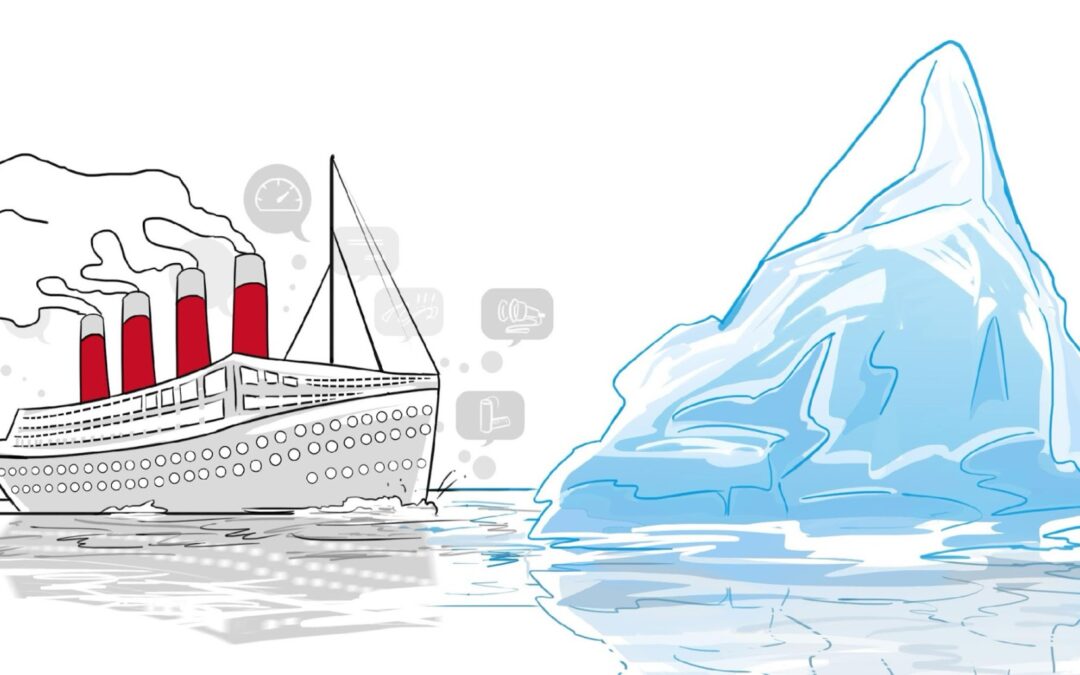
Not because they hit an iceberg out of nowhere, but because they ignored the warning signs that were flashing in plain sight.
In this episode of Impactful Teamwork, I unpack reinvention through a story you already know, the Titanic. Not for drama, but for truth.
Because if you’re leading a scaling business right now, you’re navigating icy waters whether you admit it or not.
And your job is not to be fearless.
Your job is to be awake.
Reinvention is not “new”, it’s evolution
Two weeks ago, I talked about reinvention or extinction, and I’m doubling down today.
Reinvention is:
- taking the best from the past
- adapting it for the future
- staying responsive as the world shifts beneath you
It’s why leaders now spend a huge chunk of their time reinventing, not just “managing”. Because the pace of change doesn’t care about your org chart.
We’ve seen what happens when businesses don’t evolve:
- Nokia didn’t adapt fast enough
- Blockbuster didn’t take streaming seriously
- Netflix reinvented itself again and again, from distribution to production
The lesson is brutal and liberating:
the market rewards the teams who notice early and move together.
The Titanic didn’t just hit an iceberg, it ignored six signals
Here’s the part most people miss.
The Titanic had warning signs. Six of them.
And when I look at teams struggling with misalignment, silos, decision drag, burnout, trust breakdown, I see the same pattern.
Let’s walk through the six signs, and what they look like in modern business.
1) The missing handover: “We’ll just figure it out”
On the Titanic, a last-minute leadership change happened, and no proper handover took place. Crucially, the keys to an important cabinet never got passed on.
In business, this looks like:
- someone leaves and their knowledge leaves with them
- key context lives in someone’s head, not in the team
- “handover” is a rushed chat and a half-written doc
- the team inherits a mess and calls it “resilience”
Bold truth: if your business can’t survive a key person leaving, you don’t have a team, you have a dependency.
Action:
- Create a “handover ritual” for any role change (even internal moves).
- Document the why, not just the what.
- Make ownership visible, not assumed.
2) No binoculars: the team can’t see what’s coming
The lookouts didn’t have binoculars. Not because they didn’t exist, but because they were locked away, and nobody thought to break in and get them.
That’s such a metaphor it hurts.
In business, “no binoculars” looks like:
- no real-time data
- no customer feedback loop
- no horizon scanning
- no proper team retros
- leaders relying on intuition while drowning in noise
This is where attention becomes a leadership superpower.
Most teams aren’t failing because they’re incompetent, they’re failing because they’re distracted.
Action:
- Run a monthly “Iceberg Scan” meeting: what risks are emerging, what signals are we dismissing?
- Ask: What are we pretending not to see?
- Make one person responsible for “external signals”, rotate it monthly.
3) No safety drills: no one has embodied Plan B
On the day the ship sank, the emergency drill was cancelled. People hadn’t practised. So when chaos hit, confusion led.
In business, this is:
- no contingency planning
- no decision rules under pressure
- no rehearsal for crisis moments
- a culture that assumes “it’ll be fine”
And honestly, in today’s climate, Plan B isn’t enough.
You need Plan C, D, and E, because disruption doesn’t come politely.
Action:
- Pick one scenario per quarter and rehearse it.
- Ask: If our biggest client left tomorrow, what do we do in 48 hours?
- Build decision velocity by clarifying “who decides what” before you need it.
4) Not enough lifeboats: the illusion of “we’ve got it covered”
The Titanic had insufficient lifeboats because they believed it couldn’t sink.
That’s complacency dressed up as confidence.
In business, it looks like:
- under-resourcing key functions
- expecting heroic effort to fill gaps
- “stretching the team” becoming the norm
- cutting capacity while demanding innovation
And it gets worse. Even the lifeboats they did have weren’t filled to capacity because people didn’t know what to do.
That’s what happens when you under-resource and under-train.
Action:
- Identify your “lifeboat functions”: customer success, delivery, operations, sales pipeline, leadership cover.
- Ask: Where are we one sick day away from chaos?
- Build redundancy as strength, not waste.
5) The message never reached the captain: signal loss and misaligned priorities
A crucial iceberg warning message wasn’t passed to the captain because the crew were focused on customer service and first-class comfort.
It’s a painful reminder:
You can do the wrong thing brilliantly.
In business, this is:
- busywork masquerading as productivity
- internal politics trumping reality
- “serving the stakeholders” while ignoring the fundamentals
- urgent crowding out important, again and again
Action:
- Create an “MSG rule” in your team: what must be escalated, always.
- Define “red flag channels” for risk messages.
- Reward people for surfacing uncomfortable truths early.
6) Past success becomes a trap: yesterday’s brilliance creates today’s blindness
The first officer did what had worked before: turn the ship to avoid collision.
But this time it was too late, and the manoeuvre likely made it worse.
This is the leadership edge:
Past success is not proof of future safety.
In business, it shows up as:
- “We’ve always done it this way”
- relying on a leader’s heroics instead of team capability
- defaulting to old patterns under pressure
- confusing confidence with clarity
Action:
- Ask in every strategy meeting: What assumption are we carrying from the past that might now be false?
- Build “pattern interrupt” moments into decisions.
- Invite one person to play “devil’s advocate” and make it a respected role.
The real lesson: Titanic Syndrome is a corporate disease
This is what I call Titanic Syndrome:
organisations facing disruption bring about their own downfall through arrogance, attachment to past success, or failure to recognise emerging reality.
It’s not just about markets.
It’s about attention, leadership, trust, decision-making, and willingness to reinvent before you’re forced to.
And here’s the hopeful bit:
You don’t need to be perfect.
You just need to be awake.
Your reinvention prompt for this week
Take five minutes and answer this honestly:
- What iceberg are we pretending isn’t there?
- Where is a “missing handover” quietly building risk?
- What have we normalised that’s actually a warning sign?
- What would we change if we stopped clinging to past success?
Then do one brave thing:
start the conversation inside your team.
Ready to go deeper?
If this landed, go listen to the full episode of Impactful Teamwork and let it challenge how you’re leading, how your team is communicating, and what you’re not paying attention to.
And if you want support spotting the icebergs, speeding up decisions, and building a team that can reinvent without drama, message me and we’ll talk.
What’s one warning sign you’re choosing to face this week?
Show Notes
00:00 Introduction to Impactful Teamwork
00:52 The Importance of Reinvention
02:39 Lessons from the Titanic
04:23 Six Warning Signs Before the Sinking
11:34 Business Parallels and Personal Anecdotes
16:44 Conclusion and Final Thoughts
18:01 Podcast Outro and Call to Action

by Julia Felton | Jan 27, 2026
Why my conversation with Brian Vogel matters more than ever
Let me be blunt.
If you’re leading people right now and you’re not coaching them, you’re firefighting.
And sooner or later, you’ll burn out… or they will.
In this week’s episode of Impactful Teamwork, I sat down with Brian Vogel, founder of Sun Dog Coaching and co-founder of Sensible HR.
What unfolded was one of those conversations that quietly rewires how you see leadership.
Not flashy.
Not fluffy.
Deeply practical.
And deeply human.
This is an episode for leaders who feel the weight of responsibility and know the old “manager” playbook no longer cuts it.
From HR Veteran to Coach at Heart
Brian spent 25 years in HR, across enterprise, scale-ups and start-ups.
He knows the system from the inside.
But what struck me most was how honest he was about getting pulled away from what actually lights him up.
Like so many leaders, Brian became highly skilled at many things…
Without stopping to ask which ones brought him energy.
It took a coach asking one deceptively simple question:
“What do you really love about your work?”
The answer wasn’t compliance.
It wasn’t payroll.
It was coaching.
That moment matters.
Because how many leaders do you know (maybe you) who are brilliant at what they do… yet quietly disconnected from what gives them life?
Coaching, Swimming and the Power of Visible Progress
Before HR, Brian was a competitive swimmer and swim coach.
And this is where the metaphor landed hard for me.
In swimming, results are immediate.
You don’t debate progress.
You see it on the pace clock.
Brian shared how coaching swimmers taught him something leaders often forget:
Performance is the outcome of behaviours, repeated over time.
Not KPIs.
Not dashboards.
Not clever strategies.
Behaviours.
Which brings us to one of my favourite lines from the entire conversation.
Results Are Just Aggregated Behaviours
Let this land.
“Results are nothing more than aggregated behaviours.”
Read that again.
If you’re frustrated with results, the work is not “more pressure”.
The work is noticing, affirming and adjusting behaviours.
That’s leadership.
That’s coaching.
Brian summed up the leader’s role beautifully:
👉 Affirm what’s working
👉 Adjust what’s not
Simple.
Not easy.
But transformational when practiced consistently.
The Most Underrated Leadership Tool: The One-to-One
We went deep on one-to-ones, and I’ll say this plainly:
If your one-to-ones feel like project updates, you’re wasting the most powerful leadership lever you have.
Brian calls it the Manager Trinity:
- One-to-ones
- Coaching
- Feedback
And here’s the reframe many leaders miss:
The one-to-one is not your meeting.
It’s theirs.
His suggested structure is beautifully human:
- 10 minutes for them
- 10 minutes for you
- 10 minutes for their development
And if something has to drop?
It’s your agenda.
That’s how trust is built.
That’s how performance compounds.
Delegation Isn’t About Letting Go, It’s About Growing Others
One of the most honest parts of the conversation was around delegation.
Leaders often say:
“I’ll just do it myself, it’s quicker.”
And in the short term, they’re right.
In the long term?
They create dependency, frustration and boredom.
Brian’s advice to emerging leaders was clear:
👉 Give people more responsibility
👉 Stretch them
👉 Stop protecting them from challenge
Nobody grows when everything stays comfortable.
And here’s the kicker…
Often the tasks you hate are someone else’s zone of genius.
I’ve lived this myself.
Assuming others would hate what I hated… and unintentionally holding them back.
Working Genius and Why Burnout Isn’t About Hours
We touched on the Six Types of Working Genius, developed by Patrick Lencioni, and it landed powerfully.
Just because you’re good at something
Doesn’t mean it gives you energy.
Burnout, as Brian shared, often isn’t about working too many hours.
It’s about working too many hours in your frustration zone.
Read that slowly.
If you’re constantly drained, the question isn’t “How do I do less?”
It’s “What am I doing that costs me energy rather than fuels it?”
Mental Fitness: The Inner Game of Leadership
One of the richest parts of this episode was our conversation about mental fitness.
Brian works with leaders using the Saboteur model from Positive Intelligence.
In simple terms:
- Saboteurs are the fear-based voices in your head
- The Sage is the calm, wise, creative part of you
Here’s the truth many leaders avoid:
You cannot lead others if you can’t lead your own mind.
Energy leaks start internally.
Beliefs ripple outward.
And yes, your team feels it.
Leadership Is Human Work, Not Role Management
One moment that really stayed with me was when Brian talked about knowing your people.
Not superficially.
Humanly.
Knowing their partner’s name.
Knowing if they have children.
Knowing what matters to them.
Not prying.
Caring.
Because people don’t go above and beyond for leaders who treat them like resources.
They show up for leaders who see them.
WIN: What’s Important Now
We closed the conversation with a deceptively simple concept from Lou Holtz.
WIN = What’s Important Now
Not everything.
Not everyone.
Now.
Big momentum is built through small, intentional wins.
The question I’m leaving you with (and the one I left listeners with at the end of the episode) is this:
What’s your win this week?
What’s important now?
Show Notes
00:00 Introduction and Guest Welcome
01:09 Brian Vogel’s Background and Career Journey
02:08 Transition to Coaching and Founding Sundog Coaching
05:13 The Importance of Coaching in Leadership
07:53 Effective One-on-One Meetings
10:51 Delegation and Team Development
13:51 Understanding Working Genius and Avoiding Burnout
17:21 Mental Fitness and Positive Intelligence
29:44 Final Thoughts and Key Takeaways
You can connect with Brian Vogel here
Request the Saboteurs Assessment by emailing he***@************ng.com