by Julia Felton | Oct 25, 2025
We’ve been taught that when teamwork breaks down, the answer is more tools.
📊 Shared docs.
📍 Project boards.
💬 Messaging apps.
All helpful — but all surface-level. Because collaboration isn’t about access. It’s about awareness.
That became crystal clear in a recent poll I ran on LinkedIn. I asked:
“What makes teamwork feel most natural?” Here’s how leaders voted:
-
37% said Mutual accountability
-
26% said Clear expectations
-
26% said Time to build connection
-
Only 11% said Knowing who’s best at what
That last number matters.
❓ Why Aren’t We Prioritising Team Insight?
If only 1 in 10 leaders think understanding strengths makes collaboration easier — that signals a deeper problem:
We’re focusing more on performance output than people clarity.
But here’s what I’ve seen after working with hundreds of leaders and leadership teams: The teams that flow instead of force aren’t the ones working harder. They’re the ones who know each other deeply.
They don’t just know job titles. They know:
-
Who energises the group during pressure
-
Who quietly holds space for details
-
Who needs time to process before contributing
-
Who thrives when they’re trusted to lead without hovering
Without that understanding? Teams default to task-checking, not real collaboration.
⚠️ How Misalignment Quietly Shows Up
Even in strong teams, lack of people-insight plays out in subtle, costly ways:
-
Duplicated work
-
Confused ownership
-
Meetings that go in circles
-
Quiet resentment between high-performers
-
Over-reliance on the leader to mediate or decide
These are not communication problems. They’re connection problems.
💡 What I’ve Learned Guiding Teams Through Real Alignment
In my work at Business HorsePower, I’ve seen what happens when leaders move beyond surface solutions.
Teams that once felt reactive, disconnected, or tense begin to operate with a new level of flow and ownership. People stop stepping on each other’s toes. Decisions speed up. Trust deepens, not through slogans or tools, but through clarity of contribution.
This shift isn’t accidental. It’s the result of a deeper understanding of how teams function beneath the surface — a core part of what I teach through the Unbridled Teamship Roadmap.
One of its foundational accelerators?
🔍 Know the Herd
This isn’t about personality tests. It’s about creating space to:
-
Discover what each person naturally contributes
-
Spot when roles shift (as they do in fast growth)
-
Foster relational trust, not just role clarity
When you know the herd, collaboration becomes natural, not forced.
🧭 A Simple Self-Check for Leaders
If you want to know where your team really stands, ask yourself:
-
Do your team members know each other’s strengths — or just their tasks?
-
Can each person say what unique value their teammate brings?
-
Do people collaborate because they want to — or because they have to?
If those questions stir some uncertainty, you’re not alone. And that’s why I created something simple and practical to help
📬 Get Insights That Stick — in Just 20 Minutes a Month
Every month, I host a short, free Teamship Teaching session for growth-focused leaders. It’s just 20 minutes, on Zoom.
Each session covers one part of the Unbridled Teamship Roadmap, with tools you can take straight back to your team.
Next up, we’re diving into how to Stop Forcing Results: Start Flowing with the Natural Pulse of Your Business.
You can register here to join us
.

by Julia Felton | Oct 24, 2025
Let’s be honest — bringing a horse into the boardroom might be a bit of a stretch (and a logistical nightmare 🐴💼). But the truth is, there’s so much we can learn from them about leadership in today’s complex, fast-paced world.
The growing fields of emotional intelligence and neuroscience are finally catching up to what horses have known forever: leadership isn’t just about intellect or strategy. It’s about relationships, presence, and emotional awareness. It’s about energy.
Back when I worked at Deloitte, the Global Human Capital Trends report revealed that 86% of companies cite developing leadership capability as their number one challenge. Over a decade later, that number hasn’t budged much — and it’s no wonder. The world has changed, but too many leaders are still clinging to outdated playbooks.
From Command to Collaboration
The old paradigm of command-and-control leadership is crumbling. We’re no longer in the Information Age — we’ve entered the Collaboration Era.
Horses have been modelling this for millennia. In the wild, survival depends on shared leadership, mutual awareness, and collective responsibility. Every member of the herd is accountable for the safety and direction of the group. They move together, fluidly and instinctively, because their lives depend on it.
There’s no single “hero” horse barking orders. Instead, leadership is distributed — dynamic, responsive, and built on trust.
Sound like something your business could use more of?
The Lone Leader Problem
Here’s what I see in too many organisations: the exact opposite. The leader, isolated and exhausted, stands on the fringes of their own team. Communication breaks down, frustration builds, and results suffer.
It’s not that these leaders aren’t talented — they’re just stuck in the wrong model. They’re carrying the weight of the herd alone, rather than creating a culture where everyone shares the load. And just like a horse that’s been driven out of the herd, they start to feel the sting of isolation and fear.
That’s why so many leadership teams come to work with me and my herd — because the horses make the invisible visible in seconds.
Why Horse-Assisted Coaching Works
Here’s the thing: leadership isn’t about what you do. It’s about who you are being.
You can learn all the management frameworks in the world, but if your energy, intention, and authenticity are out of alignment, your team will sense it instantly. Horses certainly will. They don’t care about your job title, your success, or your strategy deck — they care about your presence.
In a Horse Assisted Coaching session, you’ll step into the arena (no riding required!) and engage in simple ground-based activities with the herd. Every movement, every thought, every flicker of emotion is mirrored straight back at you. Horses pick up on energy shifts from nearly a kilometre away. You can’t fake confidence or congruence — they’ll call you out in real time.
It’s not role-play — it’s real-play.
Feedback From the Horse’s Mouth
What happens next is powerful. You start experimenting with different ways of showing up — shifting your focus, adjusting your energy, being clearer or more grounded — and instantly, the horses respond. You see, feel, and embody the feedback, not just intellectually but emotionally and physically.
That’s why it sticks. Unlike traditional leadership training, which engages only your rational brain, horse-assisted learning works through the limbic system — the emotional centre that governs trust, intuition, and connection.
You don’t just learn to say the right thing. You learn to be the kind of person who naturally inspires trust and followership.
Lessons That Last Far Beyond the Arena
What unfolds in the paddock quickly translates to the workplace. Leaders begin to:
-
Build stronger, more authentic relationships
-
Communicate with clarity and intention
-
Foster trust without forcing it
-
Create psychological safety and shared accountability across teams
And it all happens in a supportive, non-judgemental environment that encourages exploration and self-awareness. Because when leaders change the way they show up, their teams — and their results — change too.
The bottom line:
You don’t need a horse in the boardroom to lead like one. You just need to learn how to listen, connect, and lead from presence — not pressure.
And that’s exactly what my herd and I help leaders do.
👉 Ready to experience leadership at a whole new level? Join me for an Unbridled Leadership Experience and discover what your team’s been trying to tell you — without saying a word.

by Julia Felton | Oct 21, 2025
If you’ve ever led a team in hospitality, you know the truth: teamwork isn’t “nice to have”, it’s survival. From the first guest smile to the last swipe of a room key, the pressure is relentless. In this week’s episode of Impactful Teamwork, I sat down with Karen Borain – 43 years in hospitality, 35 with Southern Sun, and a career leading training and development right up at CEO level. We went deep on what actually works when the clock is ticking and the lobby is full. Here’s your fast, practical download.
From “Hotel Manager” to Leader: Get Out of the Weeds
Hospitality is famously hierarchical. Titles scream “manager,” but the work screams for leadership. Karen’s blunt truth: too many leaders drag their first job up the ladder with them. F&B stars still doing ordering. Former reception legends still “just jumping in” at the desk. That loyalty to yesterday’s skillset strangles today’s team.
Try this: run a one-week diary audit.
- Manage & Lead: Time spent getting work done through others.
- Technical Only You Can Do: Budgets, sensitive HR, keep these.
- Work Someone Else Is Paid To Do: Stop it. Today. Let them shine.
You don’t prove your value by rescuing tasks; you prove it by creating clarity, momentum and results through others.
Communication Isn’t “A Nice Chat”—It’s Your Operating System
Hospitality teams fail in the gaps – handoffs, assumptions, unspoken expectations. When front office is smooth but the room isn’t guest-ready, the blame game ignites and the guest feels it.
Make clarity your habit:
- Common purpose at every level (team, peer team, property): “We create guest-ready experiences, every time.”
- Role clarity: Who owns what, how success is measured, and when to escalate.
- Team norms: “How we work together under pressure” agreed before the weekend crush.
Fix the Silos: Coach the Peer Team, Not Just the Vertical
Your heads of department will happily introduce themselves by the teams they manage. Then they forget the team they’re in, the peer team around the GM’s table. Karen’s team-coaching move is brilliant: reset that group’s identity, define their shared purpose, and codify how they collaborate across the operation. When the HODs work horizontally, the kitchen and floor follow suit. Momentum flows.
Workshop prompt for your next HOD meeting:
- What do you bring to this peer team?
- What do you need from this peer team?
- What’s our one-line shared purpose?
- What are three non-negotiable norms we all commit to?
Lead a Multi-Generational, Multi-Reality Workforce
Today’s teams blend seasoned pros with students on weekend shifts. Assumptions break fast: some recruits genuinely haven’t made tea at home; some veterans struggle with new D&I language. That’s not a problem, that’s a design brief.
Leader moves:
- Meet people where they are. Train what’s actually missing, not what “should be known.”
- Leverage difference. Invite newer team members to rethink “how we’ve always done it.” Tap experienced staff for craft, standards, and judgment under pressure.
- Make learning continuous. Gen Z walks when growth stalls. Offer pathways, micro-modules, and cross-exposure between departments.
Onboarding That Sticks: Buddy Up, Don’t Drown
In a high-turnover environment, you’re always in forming mode. Throwing people into the deep end costs you guests, morale, and money.
Use a Buddy System:
- Pair new hires with role-model operators who live the team’s purpose and standards.
- Give buddies a clear checklist: purpose, safety, standards, escalation, “one shift to mastery” essentials.
- Recognise your buddies publicly—they’re multiplying your leadership.
SOPs + Humanity: Automate Smart, But Don’t Lose the Soul
Automation is brilliant… until it breaks. We’ve all witnessed the lobby meltdown when self-check-in goes down. SOPs matter; connection matters more. Train both: the standard and the stance – presence, care, ownership.
Teach the stance:
- If it touches the guest, we own it (even when another department “caused” it).
- We solve here and now, then we tidy the process later.
- We escalate with facts, not friction.
Purpose Powers Performance (And Cuts Through Drudgery)
Cleaning 18 rooms can feel soulless. Making every room guest-ready is a purpose. One lands like a chore; the other lands like a promise. Purpose turns grind into craft.
Implement today:
- Rewrite every role’s purpose line.
- Room attendant: “Make each room guest-ready, first time.”
- Front desk: “Set the tone for a seamless, welcoming stay.”
- Night manager: “Guard the quiet and safety of our sleeping guests.”
- Start huddles with a purpose reminder + one micro-win.
Delegate the Doing, Own the Energy
Hospitality is a marathon disguised as a sprint. Leaders don’t need to be everywhere, they need to steward energy:
- Plan peaks. Time the hardest tasks to your team’s natural highs.
- Build recovery. Micro-breaks, water, stretch, rotate roles on long shifts.
- Celebrate small wins. Shout-outs in real time fuel stamina and pride.
When Things Go Off the Rails, Look for These Signals
- Blame spikes at handoffs (front office vs housekeeping).
Fix: reset the peer team’s norms: shared ownership, clear escalation.
- Leaders “helping” by taking tasks back.
Fix: diary audit + stop-doing list.
- New starters drift, veterans grumble.
Fix: buddy system + role purpose + daily clarity.
Try This in the Next 7 Days (Practical & Implementable)
- Run the 3-bucket time audit (Lead/Manage, Only-You Technical, Someone-Else’s Job). Create a Stop-Doing List and honour it.
- Write purpose lines for every role in your team and share them at the next huddle. Ask: “What would ‘guest-ready’ look like for your role today?”
- Host a 30-minute HOD reset: agree a one-line peer-team purpose and three norms for handoffs and escalations. Put them on the wall.
- Launch a buddy system for onboarding with a simple checklist. Recognise two standout buddies publicly this week.
- Energy check-ins twice per shift: quick pulse (1–5) + one action to lift the average by one point (water, rotate, three-minute reset outside).
- No-blame escalations: “I own the guest; I loop in the fix.” Track time-to-resolution, not “who caused it.”
The Edgy Truth
If you’re still proving your value by doing other people’s jobs, you’re not leading, you’re blocking. If your HODs don’t see themselves as a team, your guests will feel the cracks before you do. If your onboarding is a shrug, your turnover is a self-inflicted wound. This isn’t about being nice; it’s about being unbeatable under pressure.
Listen In + Next Step
This blog is the companion to my latest Impactful Teamwork episode with Karen Borain—packed with real-world tactics from the front line of hotels. Listen now for the full conversation and steal the scripts, the questions, and the coaching moves we unpacked.
Ready to turn these ideas into momentum across your whole operation? Book a Turbo-Charge Your Team Audit and we’ll map where energy, clarity, and collaboration are leaking, then fix it fast.
Show Notes
00:00 Introduction and Guest Welcome
01:35 Karen Borain’s Background in Hospitality
04:26 Challenges in Leadership and Management
06:59 Empowering Teams and Delegation
10:52 Multi-Generational Workforce Dynamics
15:49 Team Coaching and Breaking Down Silos
22:21 Onboarding and Succession Planning
28:09 The Future of Hospitality and Technology
33:04 Conclusion and Final Thoughts
Karen’s contact details:
www.linkedin.com/in/karen-borain-17749a/
https://karenboraincoach.com/

by Julia Felton | Oct 14, 2025
Are you carrying too much of the leadership burden?
If you’re like most business leaders I meet, you’re spinning plates – strategy, decisions, delivery, people. Your team look to you for every answer, and that constant pressure creates chaos. Bottlenecks appear, execution slows, and exhaustion creeps in.
The truth? In today’s complex, fast-paced world, leadership can’t rest on one person’s shoulders anymore. The heroic “I’ll do it all myself” model is broken. The businesses thriving right now – Netflix, Spotify, Oracle, and Comcast – have discovered something powerful: shared leadership.
This isn’t about giving up control. It’s about unlocking collaboration, distributing responsibility, and fuelling momentum.
The Leadership Load Is Too Heavy for One Person
Once upon a time, one leader could know it all. In the industrial era, a factory manager could see everything happening on the floor and make every decision. That world no longer exists.
Today, information moves faster than light. Leaders are expected to be strategists, therapists, technologists, and brand ambassadors—often all before lunch. The CEO role has become superhuman and unsustainable.
It’s time to face it: the problem isn’t you. It’s the outdated system we’re still trying to run businesses on. The notion that one individual can hold every answer is a dangerous illusion. Shared leadership isn’t a sign of weakness; it’s a sign of evolution.
Two Brains Really Are Better Than One
Research backs it up. A Harvard Business Review study found that companies with co-CEOs outperform their peers, generating 9.5% annual shareholder returns compared to 6.9% for solo-led firms. That’s not luck, it’s leverage.
When two leaders with complementary strengths share responsibility, balance emerges. One brings analysis and structure, while the other fuels creativity and culture. The result? Clarity, innovation, and momentum.
Netflix provides a masterclass in co-leadership. Co-CEOs Ted Sarandos and Greg Peters have a clear division of labour: Sarandos drives content, marketing, and communication, while Peters focuses on tech, HR, and product. Because they’ve worked together for over a decade, trust flows naturally between them. Each knows when to lead and when to follow.
That’s the essence of shared leadership – clarity, complementarity, and connection.
When Co-Leadership Fails (and Why It’s Not the Model’s Fault)
Of course, shared leadership doesn’t always go smoothly. Salesforce tried it twice, and both times, it fell apart. Yet the failure wasn’t structural; it was human. Ego got in the way.
Co-leadership only works when both leaders genuinely share power and purpose. If one clings to control, collaboration collapses. In a herd of horses, the same rule applies. The lead mare sets direction, the stallion protects from behind, and sentinels at the sides stay alert for threats. Each contributes to the herd’s success. If one dominates, the balance breaks and chaos follows.
Nature has mastered shared leadership for millennia. Corporate leaders are only just catching up.
The Three Positions of Leadership
When I work with clients (and my herd), I teach that leadership isn’t a title—it’s a position of energy. There are three positions that create momentum in any business:
- Leading from the Front (Directional Leadership)
This is visionary energy, the ability to set pace, purpose, and clarity. It’s about deciding where you’re going and why. But if you rush ahead too fast, the team can’t keep up. Vision without connection creates distance.
- Leading from the Middle (Relational Leadership)
This is the heart of leadership. It’s about alignment, communication, and trust. Here, leaders hold the space for honest conversations and collaboration. Yet staying in this position too long can stall action. Connection must always be paired with movement.
- Leading from Behind (Delivery Leadership)
This is execution energy, the calm, supportive force that turns ideas into impact. From behind, you can see the whole picture, spot misalignment early, and gently steer the team back on course. When done well, it’s the most energy-efficient position of all.
Just like a herd rotates leadership depending on what’s needed, high-performing teams flow between these positions.
Action Point:
👉 Identify your default leadership position. Do you sprint ahead with direction, hold space in the middle, or drive execution from behind? Experiment with switching positions this week and observe what shifts.
The Diamond Model of Leadership
At the core of shared leadership lies what I call the Diamond Model of Leadership created by Teaching Horse, and it’s a framework I use with all my clients. It contains four critical cornerstones:
- Attention – Are you present and aware of what’s truly happening?
- Direction – Can you articulate the path clearly?
- Energy – Do you show up consistently, grounded, and focused?
- Congruence – Do your actions match your words?
When these four are aligned, trust thrives. Your team feels safe, seen, and inspired. But if one corner is weak, say your attention wavers or your energy scatters, the diamond cracks.
Horses sense this instantly. If your body language doesn’t match your intention, they won’t follow. Teams operate the same way.
Action Point:
👉 Audit your diamond. Where are you strongest—attention, direction, energy, or congruence? And where might a small adjustment reignite trust and flow?
Why Shared Leadership Fuels Business Momentum
Shared leadership doesn’t just reduce pressure on the CEO. It amplifies performance across the board.
When leadership is distributed:
- Decisions happen faster because information moves freely.
- Innovation increases because diverse perspectives collide.
- Engagement grows because people feel ownership.
- Bottlenecks disappear because accountability is shared.
- Burnout decreases because energy is balanced.
Everyone leads from where they stand. Everyone contributes their strengths. Everyone shares responsibility for the outcome.
In my Unbridled Teamship Roadmap, we call this combination Game-Changing Trust, Impactful Contribution, and Unbridled Adaptability. Together, they build unstoppable momentum.
Because when trust is strong, energy is harnessed, and curiosity is alive—leadership becomes a collective force, not a personal struggle.
Lessons from the Herd
In a horse herd, leadership constantly shifts. One leads when it’s their turn; another steps up when conditions change. It’s fluid, responsive, and rooted in trust.
Now imagine if business teams worked the same way.
No silos.
No ego battles.
Just seamless unity.
That’s what Teamship looks like in action: purpose aligned, energy flowing, and everyone contributing to the collective goal.
Action Point:
👉 In your next team meeting, ask: “Where could we share leadership more effectively?” Try rotating meeting facilitation or co-owning a key project. Watch how engagement rises.
The Courage to Let Go
Let’s be honest – shared leadership requires courage. It means trusting others to decide. It means loosening your grip on control. It means letting go of being the hero.
But when you do, everything changes. Pressure gives way to partnership. Command turns into collaboration. Burnout transforms into balance.
Nature already knows this truth. The herd survives and thrives because leadership is shared.
So, maybe it’s time to stop carrying it all alone. Maybe the most powerful thing you can do as a leader is to let others lead too.
Because the future of leadership isn’t about standing alone at the front. It’s about leading together.
Show Notes
00:00 Introduction to Impactful Teamwork
00:45 Exploring Shared Leadership
03:04 Challenges and Benefits of Co-Leadership
06:45 Case Studies: Successes and Failures
13:31 The Diamond Model of Leadership
22:17 Applying Shared Leadership in Your Business
23:17 Conclusion and Further Resources

by Julia Felton | Oct 7, 2025
We’ve all been there. You’re working hard to keep your team focused, but the leader at the top – maybe even your CEO – is creating chaos instead of clarity. In this week’s episode of the Impactful Teamwork podcast, I unpack why chaotic leadership is so disruptive, what it means for your culture and performance, and most importantly, five practical strategies to help you navigate the storm.
Because let’s be honest: chaos at the top ripples down faster than anything else. It stifles innovation, undermines trust, and often leaves teams firefighting instead of thriving. Yet from the outside, the business can still look like it’s booming. Revenue may be up. The board may be satisfied. But inside? Teams are exhausted, disengaged, and wondering how long they can keep holding things together.
The good news: while you can’t always change a CEO’s personality, you can influence how your team responds and how you lead through the turbulence.
The Hidden Cost of Chaotic Leadership
McKinsey research shows that 45% of company performance is directly tied to CEO effectiveness. That means when the person at the top is scattered, controlling, or constantly changing direction, the whole business pays the price. Add to that Gallup’s finding that 70% of employees leave managers they don’t trust, and you start to see how quickly chaos erodes momentum.
Chaotic leadership:
- Creates toxic cultures where psychological safety vanishes.
- Fuels “organisational whiplash” as priorities change daily.
- Blocks collaboration and accountability.
- Leaves teams stuck in survival mode instead of performance mode.
And yet, from the outside, everything can look fine. Numbers go up. The board turns a blind eye. It’s the people inside – people like you – who carry the hidden cost.
5 Strategies to Navigate Chaos with Clarity
In the podcast, I share a playbook for dealing with a chaotic CEO. These strategies are grounded in research from Harvard Business Review and shaped by the natural intelligence of horse herds, which always find coherence in the face of disruption.
1. Manage Up with Intention
This isn’t about appeasement. It’s about alignment.
Find out what outcomes matter most to your CEO – growth, investor confidence, customer satisfaction – and frame your conversations through that lens.
Action Step:
Use the SCR framework (Situation – Complication – Resolution) when presenting to the CEO. Concise, outcome-driven messaging reduces overwhelm and positions you as a strategic asset rather than a blocker.
Just like a lead mare signals danger clearly to her herd – here’s the risk, here’s the way forward – your clarity cuts through the noise.
2. Build Agreements on Communication and Roles
Chaotic CEOs often change direction midstream, creating confusion and wasted effort. What you need are clear agreements: Who decides? Who executes? Who gives input? What’s the cadence of meetings?
Action Step:
Set explicit agreements with your peers about decision-making and communication. Think of them like fences in a pasture. Boundaries don’t stifle flow – they create safety and predictability so momentum can build.
3. Amplify External Voices
Sometimes, internal feedback falls on deaf ears. But CEOs rarely ignore clients, investors, or board members. Bring those external perspectives into the conversation.
Action Step:
Back up your recommendations with social proof – a frustrated customer quote, investor feedback, or board observations. If you don’t already have one, consider forming a “virtual board” of trusted external advisors who can provide unfiltered insight.
Nature mirrors this: horses respond instantly to shifts in their environment. Leaders who ignore external signals put the whole herd at risk.
4. Form Coalitions with Your Peers
A lone voice can be dismissed. A united leadership team is much harder to ignore.
Action Step:
Build trust with your peers and agree on a joined-up approach before meeting the CEO. Presenting a united front shifts influence from ego to eco – from individual agendas to collective stewardship.
In horse herds, safety comes from staying together. Isolation is dangerous. For leaders, the same rule applies: coherence beats chaos when you stand as one.
5. Practice Strategic Patience
You won’t change a chaotic CEO overnight. Progress happens in layers – small wins that build credibility, quarter by quarter.
Action Step:
Ask yourself:
- What quick win can I deliver this week to build trust?
- What shift can I demonstrate this quarter to show momentum?
- What long-term seed can I plant for next year?
Horses model this beautifully. In a storm, they don’t fight the wind – they conserve energy, huddle for safety, and wait it out. Patience, positioning, and persistence are what carry them through.
From Chaos to Coherence: Lessons from the Herd
These five strategies align directly with my Unbridled Teamship Roadmap:
- Trust grows when you manage up with clarity and build coalitions.
- Contribution is amplified when external voices and aligned roles are brought in.
- Adaptability is lived through patience and learning to reframe chaos into coherence.
The shift is from ego to eco, from chaos to clarity, from compliance to candour. And that’s what creates turbo-charged teams – even when turbulence reigns at the top.
Your Turn: Reflect and Act
So where does this leave you? Ask yourself:
- Is your team stuck in toxic, turbulent, or tolerable mode? Or are you already moving toward turbo-charged?
- Which of the five strategies could you apply this week to bring more clarity into your team’s world?
- What external voices could you amplify to make your case stronger?
Remember, you don’t have to transform a chaotic leader overnight. But you can protect your team, influence the system, and create a ripple of clarity that steadies the whole organisation.
And if you suspect chaos is quietly draining your team’s performance, take my Turbo-Charge Your Team Quiz to find out where trust is breaking down, contribution is blocked, and adaptability is needed most.
Show Notes
00:00 Introduction to Chaotic Leadership
01:52 The Impact of a Chaotic Leader
03:16 Research Insights on Leadership Effectiveness
04:57 Strategies to Manage a Chaotic Leader
05:15 Scenario: Navigating Chaos as Susan
06:29 Strategy 1: Manage Up with Intention
09:47 Strategy 2: Build Agreements on Communication and Roles
11:54 Strategy 3: Amplify External Voices
14:33 Strategy 4: Form a Coalition with Peers
16:59 Strategy 5: Practice Strategic Patience
19:05 Conclusion and Reflection
by Julia Felton | Sep 30, 2025
Start with the obvious: nothing moves without your people
Here’s the uncomfortable truth many leaders forget: if nobody shows up, or they show up disengaged there is no business. In service-led companies especially, your people are the product. Their energy, attention, and care are what clients feel and what your bottom line measures. That’s why Ulli Hildebrand, the Strategic Talent Architect at PinPoint Solutions and I meet in the middle: I say teamwork is the competitive advantage; she says talent is the competitive advantage. We’re both pointing to the same north star that results flow through humans.
Action: Ask yourself, “What would stop if my team didn’t show up tomorrow?” Whatever you list is the real engine of your business. Protect and fuel it.
Leadership is motivation and mindset before mechanics
Too many people stumble into leadership because it’s the next rung on the ladder, not because they’re motivated to help others succeed. Competence in an individual role doesn’t equal readiness to lead. Leadership is the daily choice to make your people’s progress your priority. That means asking more than telling and listening more than fixing. If it isn’t your natural pattern, you can still lead, just install prompts to nudge the behaviour.
Action: Add one daily cue on your screen: “Who needs my support today?” Then check in with one person to remove a blocker.
Boundaries aren’t indulgent; they’re performance infrastructure
The always-on culture blurs work and life until both feel foggy. Stress rises, focus drops, and productivity gets replaced by presenteeism. Ulli’s take: boundaries are a leadership responsibility. If you send emails late at night, your team will mirror you, no matter what you say. Schedule messages, make response windows explicit, and model switching off.
Action: Choose a visible boundary this week (no weekend replies, scheduled sends, or shared “focus hours”). Tell the team what you’re doing and why, then keep the promise.
Remote work needs real rituals, not wishful thinking
Flexibility is fantastic, but without structure it becomes a stress loop, lots of microbursts of activity that feel like constant work yet don’t add up to focused output. One simple fix we both love: the “fake commute.” Step outside before you start and after you finish to mark transitions. It separates the roles and clears the head.
Action: Experiment with a start/stop ritual for five consecutive workdays (walk round the block, journal for three minutes, or tidy the desk). Notice the difference in your attention and mood.
Culture is behaviour at scale and it either accelerates or suffocates strategy
Most companies are clear on what they want (revenue, margin, market share) and vague on how they’ll behave to get there. That gap is where trust leaks and performance stalls. If you claim to value innovation but punish mistakes, creativity dies. If you promise bonuses for last year’s results and withhold them because this month looks weak, trust dies. Culture lives in what leaders do, not what they say.
Action: Name the three non-negotiable behaviours that would make your strategy inevitable. Publicly reward them when you see them, even in small ways.
Scaling exposes the cracks you’ve been tolerating
At 20 people, you can hustle and “shoot from the hip.” At 100, the same habits become bottlenecks, usually at the CEO’s desk. Growth needs systems, not heroics. As Ulli put it, there’s only so much any one person can carry. If everything routes through you, you’ve designed a queue, not a company. The fix is smarter structure and shared ownership, not a bigger to-do list.
Action: List the last five decisions only you could make. For each, write a simple threshold or rule that would let a capable team member decide next time.
If your team must ask before they act, they aren’t empowered; they’re permissioned. That’s slow and exhausting. Teach decision-making, define guardrails, and then celebrate “not calling the boss.” When you’re away, tell the team, “Make the call; I’ve got your back.” Nothing builds confidence and speed like being trusted with real responsibility.
Action: Pick one decision category (discounts under £X, service recovery up to £Y, content approvals within Z standards) and hand it over with clear examples. Review outcomes, refine the rule, repeat.
The less you’re the expert, the better you can lead
When you’re the deepest expert, it’s tempting to grab the wheel. That smothers initiative. If you aren’t the expert, you must lead through clarity, coordination, and trust. Your job becomes designing the game so your experts can win—setting outcomes, aligning interfaces, and removing friction. It’s liberating for everyone.
Action: In your next meeting, resist solving the hard problem. Instead, frame the outcome and constraints, then ask, “What’s your best way forward?”
Reward the try if you want innovation to survive
Every leader says they want creativity; few protect the conditions it needs: psychological safety, time to think, and the freedom to make small mistakes without blame. Trial and error is how new value is found. If the first failed attempt equals punishment, the smartest people will stop trying—or leave.
Action: Add a five-minute “What did we learn this week?” slot to your team meeting. Celebrate a thoughtful experiment—even if the result was “not that way.”
Horses don’t read job titles, they read energy
In the arena, horses mirror us. Ulli shared how her horse would wriggle in the cross-ties until she calmed and focused. The message is universal: your presence sets the tone. Scattered energy confuses teams; grounded attention settles them. The fastest way to shift performance is to shift the energy you bring into the room.
Action: Before your next tough conversation, take two slow breaths and choose one intention (clarify, encourage, or decide). Enter with that single focus and notice how the dynamic changes.
The quiet courage of keeping promises
Perhaps the most under-rated leadership move we discussed is simply doing what you said you would do. Pay what you promised. Give the time off you endorsed. Hold the boundary you modelled. When leaders keep commitments, trust compounds; when they don’t, cynicism spreads fast.
Action: Scan your open promises (big and small). Close one today and communicate it clearly.
What this all adds up to
Talent truly is your unfair advantage but only when leadership is a service, boundaries are honoured, and culture aligns with strategy. Scaling then becomes the art of distributing capability, not hoarding control. Empowered teams move faster. Clear behaviours make decisions cleaner. Focused leaders create calmer, more effective rooms. And yes, your clients feel all of it. If you want a practical boost, tune into this week’s episode with Ulli Hildebrand on Impactful Teamwork. We unpack these ideas with real stories you can apply immediately—and we keep it human, because performance without people isn’t sustainable, and people without performance isn’t a business.
Show Notes
00:00 Introduction to Impactful Teamwork
00:53 Guest Introduction: Ly Hillebrand
01:36 The Importance of Talent in the Workplace
03:37 Challenges in Leadership Roles
05:33 Setting Healthy Boundaries in the Workplace
07:51 The Impact of Remote Work on Productivity
14:40 Scaling Companies: Challenges and Solutions
19:06 Creating a High-Performance Culture
19:52 Understanding Business Goals and Culture
20:29 The Importance of Tolerating Mistakes
21:50 Contradictions in Viewing Personnel as Costs
24:58 The Ripple Effect of Leadership
26:57 Encouraging Work-Life Balance
29:11 Empowering Teams Through Decision-Making
34:13 The Value of Non-Expert Leadership
35:44 Lessons from Horses on Leadership
37:54 Conclusion and Final Thoughts
You can connect with Ulli on LinkedIn – https://www.linkedin.com/in/ulrikehildebrand/ and find her solutions at https://pin-pointtalent.net/
by Julia Felton | Sep 23, 2025
Reinvention isn’t optional anymore. It’s the lifeblood of sustainable business momentum. And right now, with the world in flux—markets shifting, AI rewriting industries, and customer expectations changing daily—leaders who cling to “the way we’ve always done it” are essentially planning their own decline.
Research shows that once a company stalls, it has less than a 10% chance of ever fully recovering. That’s terrifying. But it doesn’t have to be your story.
In this edition of The Unbridled Business Revolution, I’m unpacking why reinvention matters, what stops leaders from doing it soon enough, and how you can weave reinvention into the very DNA of your business.
Reinvention Is Nature’s Playbook
The autumn equinox is nature’s reminder that renewal and rebirth come from letting go. Trees shed leaves not because they’ve failed, but because they’re preparing for what’s next. Businesses need the same rhythm. Yet too many leaders cling to strategies and products that worked once but now drag them into decline. Reinvention means spotting the signs early and planting seeds for the next curve before the old one peaks.
Try this: Ask yourself: What am I clinging to in my business that served me once but is now slowing me down?
The Hidden S-Curves You Can’t Afford to Miss
Reinvention isn’t just about financial results. Research shows successful businesses track three hidden S-curves that shape long-term success:
- Competition – How is the basis of competition shifting in your industry? Price? Service? Values? Are you playing yesterday’s game?
- Capabilities – Do your systems, skills, and technology serve the future—or only the past?
- Talent – Are you growing and retaining the very people who will fuel new growth, or are you cutting the muscle you’ll need most?
Revolutionary shift: If you’re not monitoring these three curves, your financial curve will eventually collapse.
The Talent Trap That Kills Reinvention
Here’s the irony: when times look good, many businesses stop investing in talent. They freeze development, reduce headcount, and push harder for margins. But the people they lose are often the ones with the vision, energy, and creativity to reinvent.
And here’s the hard truth—different stages of business need different leaders. Start-ups need game-changers. Mature companies need strategists. Transformation requires visionaries. The same CEO isn’t always right for every phase.
Ask yourself: Do you have the right leadership energy in place for this stage of growth—or are you holding on to the wrong fit because it feels safer?
Reinvention Is Personal Too
This isn’t just about organisations. Leaders must reinvent themselves. In my corporate career, I thrived at creating new concepts and markets. But as the business matured, it needed a detail-focused operator, not me. I went from star player to misfit almost overnight.
The lesson? Reinvention isn’t failure—it’s recognising when your energy fits the curve, and when it’s time to pivot.
The Meta-Skill That Fuels Reinvention
The CEO of Google DeepMind recently said the single most important skill for the future isn’t coding, or even AI—it’s learning how to learn. Why? Because knowledge dates faster than ever. Industries reinvent in the time it takes a student to finish a degree.
That’s why I call so-called “soft skills” meta-skills. Curiosity. Adaptability. Critical thinking. These are the jet fuel of reinvention.
What to do now: Build a culture where curiosity is rewarded, not punished. Encourage experiments. Celebrate lessons from failures. That’s where reinvention thrives.
Lessons From the Herd
Horses don’t cling to the past. They adapt moment to moment. They entrain with one another to move as one herd, flowing seamlessly to safety and opportunity.
From working with my herd, I know this: radical reinvention happens when three levers come together—trust as the bedrock, energy as the fuel, and curiosity as the catalyst. That’s how you move from stagnation to unstoppable momentum.
Key Takeaways for Leaders Who Dare to Reinvent
- Anticipate disruption. Don’t wait for decline—reinvent while you’re still winning.
- Track hidden curves. Monitor competition, capabilities, and talent as closely as profits.
- Invest in people. Don’t cut the very muscle you need to grow.
- Audit leadership fit. Different growth phases need different leadership energy.
- Make curiosity a core value. Reinvention is born from questions, not certainty.
Final Provocation
The world is reinventing itself whether you like it or not. Economies, industries, even leadership itself are shifting under our feet. The real question is: will you shape the future—or will the future leave you behind?
This equinox season is your invitation to release what no longer serves and step boldly into your next chapter. Reinvention isn’t a one-time event. It’s a way of leading, a way of being, and the only way to thrive in chaos.
So—what will you reinvent first?
Show Notes
00:00 Introduction to Impactful Teamwork
00:54 The Significance of the Autumn Equinox
01:32 The Necessity of Business Reinvention
03:06 Understanding the Product Lifecycle
06:02 The Hidden S-Curves of Successful Companies
10:31 The Importance of the Right Leadership
14:44 Learning to Learn: The Future of Skills
20:40 Conclusion and Final Thoughts

by Julia Felton | Sep 16, 2025
This week on Impactful Teamwork, I sat down with Andy Price, founder of Initial IT, for a straight-talking tour of small-business cybersecurity. He cut through the myths fast. Most attacks on SMEs aren’t cinematic, targeted capers; they’re opportunistic scans that probe the internet for weak doors. Find one, and the attackers walk in. When that happens, it’s not only systems that go down — trust, sales and team morale go with them. Let’s stop treating this as “the IT guy’s job” and start treating it as teamship.
The uncomfortable truth about modern attacks
Forget the hoodie-in-a-dark-room stereotype. Cybercrime runs like an industry, with office hours, targets and KPIs. Automated tools sweep for vulnerabilities and strike wherever they find one. Two patterns cause the most pain. First, data exfiltration: client information gets stolen and sold, and you end up notifying regulators and apologising to customers while your reputation takes a beating. Second, ransomware: your files are encrypted, operations stall and you’re left choosing between a ruinous payout or a slow, painful recovery. Either choice hurts. Crucially, small doesn’t mean safe. Attackers often don’t know who you are until they’re already inside.
Cyber Essentials: your minimum viable defence
There’s a sensible baseline every scaling business should adopt: Cyber Essentials. It’s a UK government-backed standard that forces practical discipline. Are your devices patched? Do you kill default passwords? Are joiners provisioned correctly and leavers fully removed? Is multi-factor authentication enabled as standard? None of this is glamorous; all of it is effective. Increasingly, bigger clients and public bodies expect suppliers to meet this bar. In other words, good security posture is now commercial hygiene and a competitive signal, not a box-ticking chore.
Your people are the perimeter
Breaches rarely start with world-class codebreaking. They start with a busy human who clicks a convincing link, shares a credential or skips a process. If the organisational response is blame, people learn to hide mistakes — and silence turns small incidents into disasters. Psychological safety isn’t fluffy; it’s operational security. Train the team regularly. Show real phishing examples. Run simulations that feel authentic. Most importantly, praise early reporting. When “I think something’s off” is celebrated, people speak up faster. Speed reduces damage.
Backups: worthless until priceless
Here’s a line from Andy I’ll repeat forever: backups are worthless; restores are priceless. Leaders usually get serious about backups after getting burned. Don’t wait for that lesson. You need offsite, immutable backups that can’t be altered or deleted — even by an attacker with access. USB drives on a desk won’t cut it. Nor will a simple sync to a cloud folder that could be encrypted or wiped. Go for snapshot-based backups stored in a separate, managed vault, and actually test restores so you know the real recovery time. Think seatbelts: you don’t plan to crash, but you plan for the possibility.
Keep policies brutally practical
Security theatre wastes time; security clarity protects it. Keep the rules short and usable.
- Passwords: longer is stronger. Use a password manager and enforce multi-factor authentication across systems.
- Access: apply least-privilege. People get what they need to do the job — no more.
- Joiners/Movers/Leavers: automate provisioning and deprovisioning so no “zombie” accounts linger.
- Vendor sprawl: prune ruthlessly. Every extra app is another door to guard.
- Incident drills: table-top your worst day. Who talks to clients? Who informs the regulator? Where’s the playbook?
- Device hygiene: patch cycles, encrypted drives and remote wipe as standard.
AI: accelerate the good, anticipate the bad
AI is changing the game on both sides. On the inside, it helps us triage tickets, detect anomalies and eliminate drudge work. On the outside, criminals use it to craft flawless phishing emails, clone voices and create slick lures. Consequently, your threshold for “looks legit” needs to rise. At the same time, human skills — judgement, curiosity and candour — become even more valuable. Use AI to reduce noise, not to outsource your relationships or ethics. Write the first draft yourself, then refine with AI. And always verify through a second channel: if “the bank” calls, you hang up and call the number on the back of the card. No exceptions.
Culture beats criminals
You can buy tools. You can’t buy trust. Security culture grows the same way team trust grows: clear standards, consistent behaviour and mutual accountability. As leaders, our job is to make the secure path the easy path. Remove friction from good practice rather than piling on hoops people will dodge under pressure. Treat cyber like health and safety — embedded in the way you work, not bolted on at the end. When protecting the herd becomes part of everyone’s role, your team acts like an immune system. Threats still come; your response becomes instinctive.
The real cost of a breach
Let’s be candid. A breach isn’t a single invoice; it’s a momentum killer. Pipelines pause while you firefight. Prospects hesitate because they sense risk. Your best people burn out cleaning up chaos. Leadership attention gets hijacked for weeks. The external bill stings, but the invisible costs bite harder. If you pride yourself on being values-driven, protect the value clients trust you with: their data. That’s table stakes for modern leadership.
From command to collaboration
Old school says security belongs to IT and IT belongs in the corner. Teamship says security is a shared responsibility because everyone has influence. In practice, that might mean a five-minute “security moment” at your all-hands each month. It could mean a rotating “threat spotter” in each team who flags suspicious patterns. It might mean OKRs that link security hygiene to business outcomes. This isn’t driven by fear; it’s fuelled by pride. We are the kind of business that looks after our people, our clients and our future.
Talent, energy and finding the spark
My favourite part of talking with Andy was his backstory — the student labelled “not academic” who discovered the right environment and lit up. That’s the essence of Impactful Teamwork. When people find work that fits their natural energy, performance soars. Cyber follows the same logic. Spot the Spades who love “winning” the defence game, the Clubs who obsess over patch cycles and process, the Diamonds who’ll evangelise new tools, and the Hearts who will coach psychological safety. Harness that mix and your resilience multiplies.
Try this this week
- Run a “phish freeze.” Show three real emails — one genuine, two fake — and have the team vote. Discuss why.
- Enable MFA everywhere that touches client data. Do it today, not next quarter.
- Book a Cyber Essentials gap review. Even if you’re not ready to certify, close the obvious holes.
- Audit backups with two questions: when did we last test a restore, and how long did it take? If you don’t know, you don’t have a strategy.
- Rewrite your incident playbook in plain English. Remove blame, add speed and make the first step obvious.
Key take-aways
- Opportunistic attacks are the norm; exposure equals risk.
- Cyber Essentials provides a strong, commercially credible baseline.
- People form your first and last line of defence — train them and reward early reporting.
- Offsite, immutable and tested backups turn crises into recoveries.
- AI raises the bar for both attackers and defenders; keep the human in the loop.
- Culture, not tools, determines resilience.
- Breaches drain trust, energy and momentum far beyond the incident itself.
If this sparked a “we should sort that” moment, gather your leadership team for a 20-minute huddle and pick one action to ship this week. Want an expert lens on your setup? Connect with our guest, Andy Price of Initial IT — his details are in the show notes. Protect the herd. Protect the momentum. That’s what impactful teamwork looks like.Words cyber security and a padlock
Show Notes
00:00 Introduction and Guest Welcome
01:54 Understanding Cybersecurity Threats
02:48 Strategies for Small Businesses
14:58 The Importance of Data Backup
20:13 Andy’s Journey into IT
27:11 The Impact of AI on Business
34:16 Conclusion and Resources
Connect with Andy at https://www.initialit.co.uk/ or via his email an**@**********co.uk

by Julia Felton | Sep 11, 2025
by Julia Felton | Sep 9, 2025
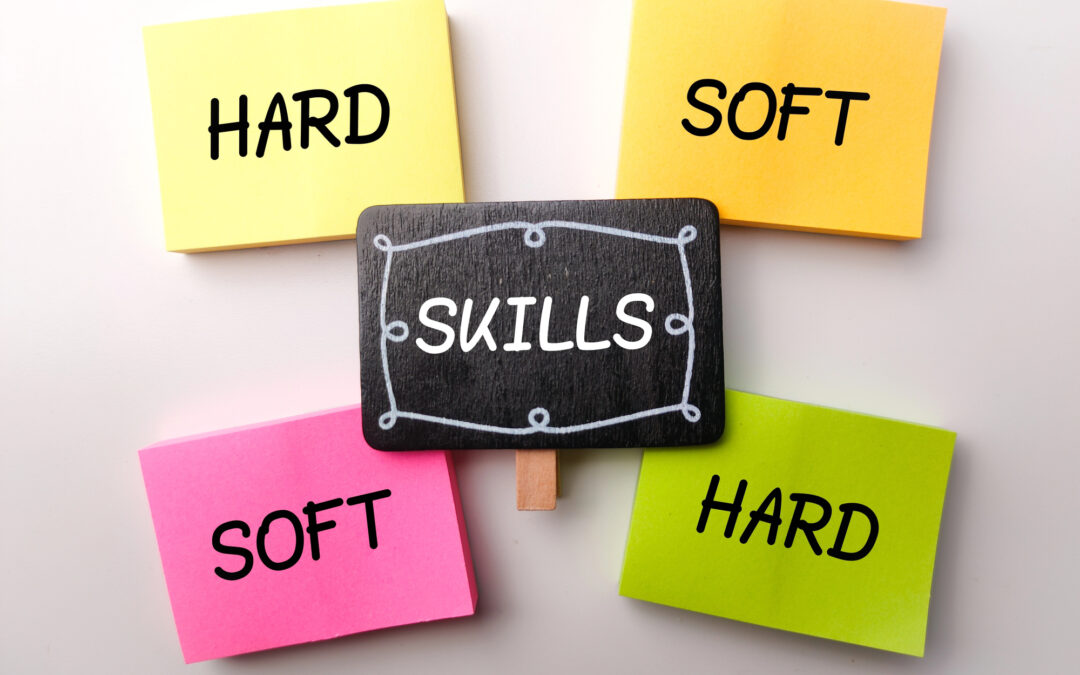
Today I want to challenge the myth that soft skills are somehow “soft.” Let’s get real: there’s nothing soft about the skills that keep businesses alive—skills like communication, empathy, adaptability, and trust. These are survival skills. They’re leadership superpowers. And in a world increasingly shaped by AI, automation, and constant change, they’re the difference between teams that thrive and teams that fracture.
The Myth of “Soft” vs “Hard” Skills
The term soft skills actually comes from the US Army in the 1960s. Hard skills were about weapons and machinery—tangible, technical capabilities. Everything else got dumped into the “soft” bucket. That language stuck, but here’s the danger: words shape perception. Call something “soft” and leaders undervalue it. Call it what it really is—your leadership superpower—and suddenly we treat it with the weight it deserves.
Hard skills might get you hired. But it’s your ability to lead, build trust, and inspire others that will keep you—and your business—at the top.
Action point: Stop using the term soft skills in your business. Reframe them as leadership superpowers or professional essentials to elevate their importance in your culture.
The Business Case for Soft Skills
Let’s cut through the fluff with some facts. The World Economic Forum lists 10 out of 16 top skills for the 21st century as soft skills—creativity, collaboration, emotional intelligence, critical thinking, and curiosity. Deloitte predicts that by 2030, two-thirds of jobs will require soft-skill intensity. And here’s the kicker: the UK economy alone loses £29 billion annually to the soft skills gap.
Meanwhile, research shows that investing in these skills can boost productivity by 12% and revenue by up to $90,000 per employee. That’s not soft—that’s hard ROI.
Action point: Audit your team’s current strengths in communication, collaboration, and adaptability. Where are the gaps? Fill them now before they cost you.
Why AI Makes Human Skills More Valuable
There’s panic in some circles about AI stealing jobs. I see it differently. AI is stripping away the repetitive, process-driven tasks that drained our energy. That frees us to focus on what machines can’t replicate: empathy, curiosity, connection, and trust.
Think about it: AI can crunch your P&L faster than you ever could. But it can’t build psychological safety in a team meeting. It can’t resolve conflict with empathy. And it certainly can’t inspire people to go the extra mile because they believe in your vision.
Action point: For every AI skill you upskill your team in, pair it with a human skill. If you train someone on data tools, also invest in their communication and collaboration training. Balance tech with trust.
Agility: The Real Competitive Advantage
Here’s the uncomfortable truth: 85% of jobs in 2030 don’t exist yet. So technical skills are a moving target. The only sustainable edge is agility. And agility is powered by communication, adaptability, and creativity—yes, soft skills.
This is why in the Unbridled Teamship Roadmap we focus on three levers:
- Game-Changing Trust: Without trust, teams fragment.
- Impactful Contribution: Everyone has a role, a rhythm, and a responsibility.
- Unbridled Adaptability: The ability to reinvent again and again.
These aren’t abstract concepts. They’re exactly what horse herds teach us. Under pressure, horses don’t scatter—they come together, move in unison, and adapt. That’s agility in action.
Action point: Ask yourself—does your team scatter or convene under pressure? Build rituals that strengthen unity when challenges hit.
The Cost of Ignoring Soft Skills
Without these superpowers, hybrid and remote work collapses. Research shows 70% of employees will work remotely at least five days a month by 2025. Without emotional intelligence, resilience, and self-leadership, that quickly turns into disengagement and burnout.
And let’s not forget customer experience. AI bots can handle simple requests, but when problems get complex, customers want humans who listen and empathise. Every unresolved complaint is a missed chance to build loyalty—or a reason for a loyal customer of 30 years to finally walk away.
Action point: Train frontline staff in empathy, listening, and conflict resolution. Every complaint is an opportunity to deepen trust and create raving fans.
Soft Skills as Drivers of Transformation
Here’s the paradox: digital transformation isn’t driven by technology—it’s driven by people. PwC estimates 30% of jobs could be automated by 2030, but you can’t automate trust, creativity, or curiosity. Transformation succeeds when teams have the resilience, adaptability, and influence to navigate disruption.
That’s why I always say: your business is a living system. Just like a horse herd, it thrives when every member contributes, trusts, and adapts together.
Action point: Build time for reflection and reinvention into your culture. Encourage your team to ask “what if?” and “why not?”
From Survival to Superpower
Horses have shown me that leadership isn’t about control—it’s about connection. They don’t follow the loudest or strongest, but the most trustworthy and emotionally intelligent. That’s the same in business.
So let’s ditch the outdated language. Soft skills aren’t soft. They’re survival skills. They’re your hardest currency in a volatile world. And they’re the foundation of your lasting leadership legacy.
Final Action Steps:
- Run a Soft Skills Audit: Where is your team strong on trust, empathy, and adaptability—and where are they brittle?
- Pair AI with EQ: For every tech skill you invest in, invest in a human skill.
- Model Curiosity: Ask more questions, invite new perspectives, and reward reinvention.
- Strengthen Trust Daily: Keep your promises, show vulnerability, and prioritise psychological safety.
Because let’s be clear: technical skills may open doors, but it’s your leadership superpowers—trust, empathy, adaptability—that keep you in the room and ensure your team thrives with unstoppable momentum.gift you can give your team. It’s the foundation of your leadership legacy.
Show Notes
00:00 Introduction to Impactful Teamwork
01:10 The Misconception of Soft Skills
04:31 The Importance of Soft Skills in the Modern Workplace
06:41 AI and the Future of Work
08:25 Building Relationships in a High-Tech World
10:09 Soft Skills as a Competitive Advantage
19:10 The Role of Soft Skills in Customer Experience
24:26 Final Thoughts and Call to Action