


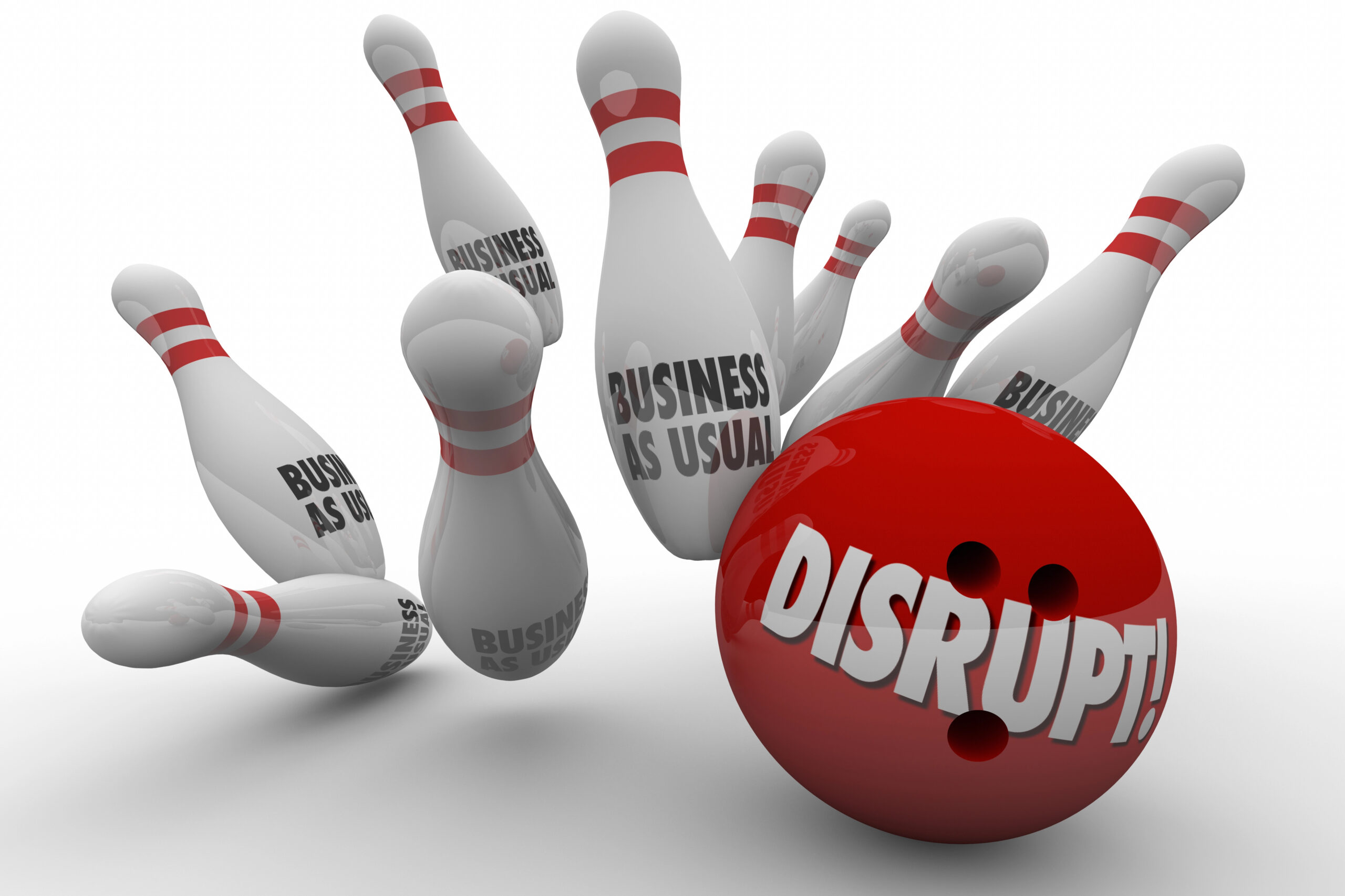
If your business feels harder to run right now, you are not imagining it.
Over the past few months, I have been having more and more conversations with senior leaders who are quietly expressing the same concern. They are doing all the right things, they have strong teams, clear strategies, and a real commitment to their businesses, and yet everything feels more effortful than it used to.
Decisions are taking longer.
Energy feels lower.
Progress feels harder to sustain.
What is becoming increasingly clear is that this is not a capability issue. It is not a leadership issue. It is, in fact, a reflection of the environment we are now operating in.
We are not simply experiencing more pressure. We are living through a period of fundamental business reinvention.
The Ground Has Shifted
When we take a step back and look at the wider landscape, the scale of change becomes undeniable.
In the last decade alone, 20% of global companies have gone out of business, while 30% are currently experiencing declining revenues. Even more strikingly, over half of the original Fortune 500 companies have disappeared since the year 2000
These are not small fluctuations or temporary disruptions. They signal a deeper structural shift in how businesses operate and survive.
Alongside this, we are seeing continued waves of layoffs across multiple sectors, combined with the rapid rise of AI and digital transformation. Inside organisations, teams are being asked to deliver more with fewer resources, all while navigating an unprecedented level of change.
Only a few years ago, a major transformation programme might have occurred once or twice a year. Today, the research suggests that the average employee is managing up to ten significant changes at any one time
It is therefore no surprise that people feel stretched and overwhelmed.
The Real Challenge: The Pace of Reinvention
It would be easy to conclude that the issue is simply one of increased pressure. However, I believe the deeper challenge lies elsewhere.
The real issue is the pace at which businesses now need to reinvent themselves.
Historically, business models were designed to last for decades. Many of us grew up with the idea that a successful company could remain stable for a lifetime. That is no longer the case.
Today, the average lifespan of a business model has reduced dramatically, often to as little as three years before it needs to evolve or adapt
This means that standing still is no longer a viable option. Even maintaining the status quo requires active reinvention.
Why Optimisation Is No Longer Enough
In response to these challenges, many leaders naturally turn to optimisation. They refine their strategy, adjust their plans, and seek to improve efficiency within existing structures.
While this approach may have worked in the past, it is often no longer sufficient.
Optimisation assumes that the underlying model is still fit for purpose. Reinvention, on the other hand, acknowledges that the model itself may need to change.
This distinction is subtle but important.
When a business model is no longer aligned with the external environment, pushing harder within that model tends to create friction rather than momentum. Teams become fatigued, decision-making slows down, and energy begins to dissipate.
A Lesson from Nature
Much of my work is inspired by time spent with horses, and they offer a powerful lens through which to view this challenge.
Horses do not respond well to pressure alone. Instead, they respond to alignment, clarity, and congruence. If something feels out of balance, they simply do not move.
I see the same dynamic in organisations.
When the way a business creates value is no longer aligned with the needs of the market, everything begins to slow down. Decision-making becomes more difficult, energy levels drop, and trust can begin to erode.
This is not a reflection of the people within the system, but of the system itself.
Reinvention as a Series of Small Shifts
One of the most common misconceptions about reinvention is that it requires a complete overhaul of the business.
In reality, reinvention is rarely one large, dramatic change. Instead, it is a series of smaller, intentional shifts that collectively create a new way of operating.
In the latest episode of the Impactful Teamwork podcast, I explore fifteen different ways that businesses can begin to reinvent themselves. These are not theoretical concepts, but practical areas where leaders can make meaningful adjustments.
Rather than attempting to address all fifteen at once, the value lies in using them as a lens to identify where your own business may be out of alignment.
Where to Begin
While all fifteen areas are important, there are a few that stand out as particularly relevant in the current environment.
1) Adapting Products and Services
Customers today are often looking for immediate value and practical outcomes. Long-term promises, while still important, are no longer enough on their own.
This may mean rethinking how your products and services are structured, perhaps by creating more flexible offerings or focusing on delivering quicker, tangible results.
2) Elevating the Customer Experience
There has been a clear shift from transactional relationships to experiential ones. Customers are increasingly seeking not just a product or service, but a meaningful experience.
This requires a deeper understanding of the customer journey and a more intentional approach to how clients feel at each stage of their interaction with your business.
3) Diversifying Revenue Streams
Relying on a single source of income can create vulnerability, particularly in uncertain times. Many businesses are now exploring additional revenue streams, such as subscription models or complementary services, to create greater resilience.
4) Rethinking Organisational Structure
Traditional hierarchical models can sometimes slow decision-making and limit responsiveness. An alternative approach, which I refer to as Teamship, focuses on shared leadership, collective accountability, and empowering individuals to take ownership.
When done well, this can significantly increase both agility and engagement.
5) Strengthening Culture as a Performance Driver
Culture is no longer simply a background element of the business. It plays a central role in enabling reinvention.
A culture that encourages experimentation, supports learning, and allows people to take calculated risks is essential in an environment where adaptability is key.
The Central Question: Why Do You Create Value?
At the heart of all reinvention lies a single, powerful question:
Why does your business exist?
When there is clarity around this, it becomes much easier to make decisions, align teams, and maintain momentum. Purpose provides direction, particularly in times of uncertainty.
It also creates a sense of meaning that extends beyond targets and metrics, helping both customers and team members to feel more connected to the work being done.
Turning Insight into Action
It is important to emphasise that reinvention does not require you to address every aspect of your business at once.
In fact, attempting to do so would likely create more overwhelm.
Instead, I encourage you to reflect on where things feel slightly out of alignment. Where are processes slower than they should be? Where is energy lower than expected? Where are you holding onto ways of working that no longer serve you?
Often, the answer to these questions will point you towards the area where reinvention is most needed.
Continue the Conversation
In this week’s episode of the Impactful Teamwork podcast, I explore all fifteen reinvention strategies in more detail, along with practical examples and insights to help you apply them within your own business.
If this article has resonated with you, I invite you to listen to the full episode and reflect on how these ideas might translate into your own context.iosity could become one of the most powerful leadership tools in your business.
Show Notes
00:50 AI Reset Reality
03:21 Reinvention Imperative
06:31 Horses And Alignment
07:07 15 Reinvention Lens
07:49 Offer And Platform
09:42 Solutions To Experience
12:33 Revenue And Process
15:41 Teamship And Supply
17:33 Markets And Partners
20:22 Brand Purpose Culture
23:08 The Final Why
23:59 Pick One Shift
25:34 Quiz And Next Steps