by Julia Felton | Mar 24, 2015
Trust “is both a mindset and a toolbox for 21st-century leadership”. Robert A. McDonald, Chairman, President and CEO, The Procter & Gamble Company
In today’s networked world, Trust has become the new currency – the critical competency for individuals, teams, organisations and even countries. Trust impacts every situation and relationship whether personal or professional.
Trust acts like a lubricant. It reduces friction and creates conditions for evolving high performance teams. How well the team works together is the true indicator of future success or the ability to manage through the struggle of relentless change. Without trust there would be no harmony in the team and business and dis-ease would prevail.
When we work in a high trust team things get done quicker and more easily. There is less conflict, less back-stabbing, less politics and more time spent on value added activities like innovative and customer service.
However, trust within teams does not happen overnight. As Joachim Low, the winning German Football Team World Cup coach noted “We’ve been together now for 55 days. We started this project 10 years ago, so this is the result of many years’ work, beginning with Jurgen Klinsmann. We’ve continued that work and our strength has been our constant progress. We’d not made this ultimate step before, but champions do what they will do. We believed we’d win it. We’re looking back over ten years of preparation and hard work. This team has developed a spirit which is unbelievable. We’re proud to be the first European team to win a title in Latin America, in Rio, in Brazil, in a footballing country par excellence… and this makes us proud.”
So what are the four key actions that team members must cultivate if they are to build and maintain trust with their fellow team members:
Commitment
Commitment is an important part of building trust. Every team member must acknowledge they play an important role in creating the success of the team and helping it achieve its goals. When one team member fails to deliver it has a knock on effect on everyone else in the team. This is why no matter if personal or professional obstacles present them team members must seek ways to keep their commitment to the team. Just as they need to rely on others, others must be able to rely on them.
Competence
Team members must trust that their teammates are competent and can successfully complete the tasks relevant to the team’s success. For example, each team member should be able to focus on an assigned task without worrying about teammates following through with their assigned tasks. Individual team members must realize when they need help and ask for it, instead of concealing weaknesses from the group. When team members show vulnerability to their teammates and the teammates respond in an efficient and helpful manner, trust will grow between them.
Communication
Consistent and meaningful communication is necessary for building a trusting relationship within a team. For instance, if a team member finishes a task early, they should communicate to their teammates that they are finished and ask if they can help another team member with their part of the work. If one team member discovers vital information that is relevant to the team’s success, such as a deadline change or a lack of resources, they should communicate it to the other members as soon as possible.
Collaboration
True collaboration won’t happen without a sense of trust between team members. When team members collaborate, they share creative ideas without fear that another team member will take credit for their ideas. Through collaboration innovative ideas are born. It is definitely a case of 1+1=3. When team members trust each other they are more likely to show their vulnerability, which in turn will build more trust within the team.
In summary trust anchors every successful team. When team members demonstrate commitment, competency, communication and collaboration then others will trust them and superior performance will result both in terms of productivity and profitability. However, when a team is forming who do you trust? In the words of Ernest Hemingway “The best way to find out if you can trust somebody is to trust them.”. Building trust is a two way street as you need to give trust in order to get it.
by Julia Felton | Jan 27, 2015
Whether you are a business owner or an employee it is essential that you find the right person or job role that is a match for you. I know given the tough economic conditions we’ve been through recently that it is tempting for a candidate to apply for any job for and for recruiters who needs to find resource to accept a less and ideal candidate.
Stop. This is such a flawed strategy for both parties and ultimately ends up costing everyone valuable time, energy and money as:
- The candidate ultimately won’t enjoy the job. Sure they might be able to do the role, but are they giving 110% to it. If the role is not aligned to their own passion and purpose they simply won’t be as productive or creative in the role as they could be.
- For the business owner they are not utilizing the team members best strengths and so ultimately the productivity and engagement of the team member declines and the net result is less profitability for the business.
What both parties crave for is a situation where the team member is working to their strengths, and delivering massive value to the business . This occurs when the team member is in a state we call flow. Put simply, flow is the path of least resistance. When team members are in flow, productivity rises, results increase, occurrences line up, everyone has more fun and feels more connected to the organisation and it’s goals.
When a team member is in flow they feel energised, focused and fully engaged in the task at hand. Often there can be a distortion of time as their internal clock does not seem to match the external clock – perhaps you have experienced this when you have been doing something you love and time just literally seems to fly by. That’s a time that you were in flow.
So how do you know if you are in flow:
- If you are feeling stressed, overwhelmed or anxious, then it’s a fairly good indicator you are out of Flow.
- The opposite is true when you are in Flow, you feel joy and even rapture whilst performing the task. In the work place, this results in a harmonious environment.
The challenge I come across time and time again are team members that are in the wrong roles. They are not playing to their strengths and as a result the are sabotaging the success of the business. This is not usually intentional it is just that unless you are in flow you are unlikely to be able to access the hidden 90% of your potential that exists.
Imagine the benefits if all your team members were operating at or above their peak performance level. Imagine what an impact that would have both on the motivation of the employee but also on the organizational results. Customers would feel more cared for, projects would get delivered on time and the harmony in the workplace would be infectious. This is the type of workplace where trust pervades as everyone is doing their role to their very best.
One tool that I use to help my clients and their business get into flow is something called Talent Dynamics. Based on an ancient Chinese philosophy, the I Ching, it allows each person in a team or organisation to understand the quickest and easiest way for them to get into and stay in Flow by working with their strengths. It also helps them understand where they are most able to add value to the organisation. Simply, by understanding the value you contribute to a team, then you can immediately help identify potential Business Development opportunities.
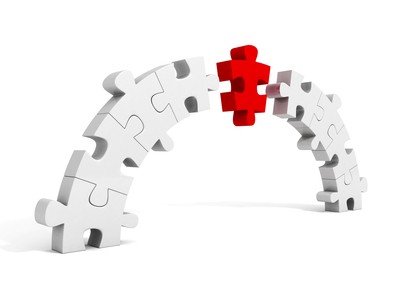
If you manage a team then by profiling your whole team you can create mutual understanding and get the whole team into flow. Understanding the strengths of team mates and how they contribute and add value to the business allows you to better communicate and it is easier to gain trust and respect with each other and so deliver results in performance and profitability.
So whether you’re a business owner or a candidate make sure that you find the perfect role for you – one that speaks to your strengths and where you can add real value.
The first step to finding out your strengths is to identify where you are most trusted in business. You can take the quick 30 second assessment at http://bit.ly/trusttest.
by Julia Felton | Nov 19, 2014
“There’s no such thing as a self-made
millionaire. Only TEAM-made millionaires”
Teamwork is to my mind the most effective way in business to create success. Being in business is tough and there is simply no way that you can do everything by yourself. Each of us has own our brilliance and working with team members enables you to focus on your brilliance whilst letting others do theirs. The net effect is that everyone is in a state called flow, which is the state of least resistance. Then business becomes easy and fun.
But how do you get the best out of team members and inspire them to give of their best to help your business grow and be successful.? The answer is to ask better questions. So are you a teller or a questioner?
In other words, when you’re working with your team members (or outsourcers) do you tend to tell them what to do or do you engage them in a conversation by asking questions?
If you’re like most entrepreneurial leaders, chances are you’re the former. If that’s true, then my question to you is “How’s that working for ya?”
My guess is it’s not working out as great as you’d like it to. In fact, I find that most entrepreneurial leaders are pretty frustrated with the people they’re “leading.” See if any of the following statements ring true for you
- “They never do what I tell them to do!”
- “It always takes her ten times longer to do what I asked her to do. If she’d just listen to me, she could get it done in one tenth of the time it’s currently taking!”
- “I can’t understand why it’s taking him so long to do what I asked him to do.”
- “I can’t figure out why she just can’t follow my directions.”
- “I didn’t hire him to think. I hired him to do what I tell him to do.”
Ouch! And I fully understand those sentiments. As an entrepreneurial leader myself I understand why you want people to do what you want them to do in the way you want them to do it (after all, you are the BOSS, right? And it is YOUR company. And you do pay THE BILLS. And they do work for YOU, right?).
Furthermore, I get the whole driven part of the entrepreneurial personality. According to Talent Dynamics I have lots of dynamo energy so, by personality, I like being a teller. I like saying, as chances are you do, “Here’s what I want you to do. Now, just go do it. No questions. No debate. Just get it done EXACTLY how I told you to do it.”
But, as you well know, that approach doesn’t produce the best results
The Problem With Being a Teller
What I learned, and hopefully you are as well, is that being a teller is a counterproductive leadership approach. Why? For a number of reasons. I’ll give you three.
1. Telling doesn’t create buy in. As you know, people own what they help create, which, by definition means they don’t own what they don’t help create. So, if you or I say, “Billy, I want you to do X in Y way,” how much does he own that? Virtually nil. And if someone doesn’t own a task or project or process/procedure or event or strategy or tactic, the chances of them producing the best result will always be lower than if Billy is involved in creating the solution. Telling doesn’t work because it doesn’t create buy in or ownership.
Note: We’re not talking about following systems here. We’re talking about solving problems or creating something new.
2. Telling doesn’t produce the kind of people you want/need. In other words, if you’re a teller, you’re NOT developing your people to be their best (whether that’s to be a better leader or problem solver or innovator or coach or process person, etc.). Or to put it another way, if you or I are always in the telling position, then we’re not creating independent thinkers. And if we’re not creating independent thinkers, then we’ll have to keep doing all the thinking—which leads to the third reason why you don’t want to be a teller.
3. Telling doesn’t create leverage. If you or I still have to do all the thinking, then we’re not creating leverage. We’re simply creating more work for ourselves. We become the bottleneck to growth. If our people don’t own the task, then we have to invest more time in managing and leading the task. If our people aren’t really excited about a task or project, then more conflict will occur, which means we’ll have to invest more time. Or, if the only people we’re happy with are people who will just do what they’re told, then we’ll always put a lid on the quality of the kind of employee we can hire (which, again, kills leverage).
Any way you add it up, being a teller, just isn’t the smartest leadership choice you or I can make if we want to grow a fast growing business or organization.
The Better Option
The better option, if you want to get the best from your team is to learn to connect, engage and communicate with them. Even if this isn’t your natural bent, you can learn to do this. In fact, the reason I’m writing this post today is because one of my clients said to me this week—when we were discussing an employee situation and I was role-playing out the conversation for him, “Julia, one of the things I appreciate about you is that you’re so good at asking questions. I’m not. That’s just not how I’m wired.”
To which I responded, “Thanks for the compliment, but I’m not wired that way either.” Learning to use questions to lead isn’t a natural ability for most of us, it’s an acquired skill. And it’s not that hard to do on a skill level, it’s only hard on an implementation level. So, here are a few ideas to help you get started on unleashing your inner questioner.
1. Learn to see yourself as a developer of talent, not a boss. At the end of the day, most of us like to be tellers because we see ourselves as “the boss.” When we own the boss hat, most of us like to be in the teller role (I hired you. I pay you. Do what I tell you to do). And as long as we own that mindset, we’ll struggle with asking questions. However, if you can make the mental shift from boss to talent developer, you’ll begin to see your role completely differently (which is key because talent developers create leverage, whereas bosses don’t).
2. Make questioning your first response. I know this may feel pedantic, but when someone asks you a question, ask them a question back. Refuse to just give the answer (something that most of us who are male will always struggle with :-). Instead, when someone asks, “So, what do you think I should do?” throw it back to them, “First, tell me what you think you should do?” If they say, “I asked you first.” Just respond, “Well, how do you think I’d respond?” Return question for question. As hard as this is, don’t give the first answer.
3. Open your team conversations with questions. Instead of saying, “Taraji, we have a problem here. And here’s what I want you to do.” Open the conversation with a wide open question. “Tariji, as you know, we have a problem here. What do you think is creating it?” Or, “What’s your best thinking about how to solve this?” Or, “Do you have any ideas about how we can eliminate this in the next 30 days?”
Yes, there is an art to asking good questions (for example, wide open questions are better for creating independent thinkers), but what’s more important is that you embrace the principle that being a questioner is a better leadership choice than being a teller. Once you do that, you’ll acquire the skill set over time through trial and error. But you’ll never get there if you don’t embrace this concept as a core leadership practice.
So do you? Do you really believe that being a leader who leads through questioning is better than being a leader who leads by telling? I hope so because the choice you make will have profound consequences for you and your company for years to come. So, choose wisely! Remember,
“If you want to get the most from your people, then you need to draw the best that is in them—out of them.”
By the way, if you’re thinking, “But asking questions sure takes a lot more time than telling,” then you probably don’t own the idea that a leader isn’t a boss, a leader is a talent developer who leverages the time, talent, treasures, resources, intellectual property and connections of their people to produce a result.
Oh, and one last thought. This practice is irrelevant to size. It doesn’t matter if you’re leading a two person team or a two thousand person team, the same principle holds.
Go forth and ask better questions.
by Julia Felton | Sep 26, 2013
Step 6 in creating a Joined Up Business is resource effectively and to do this you need a Joined Up team. So many entrepreneurs I see are struggling to harness more clients and cash because they are the centre of the business as a result the business cannot grow. I have always said that success is a team sport as so if you want to up level your business you need to bring valuable team members. Yet time and time again I see people making poor decisions regarding the resources they need. So why is this? The reason is that often we like to hire (engage the services) of people like us but that is the death knell for a small business. People like us like the same tasks that we like so the result is that the other tasks (the ones we hate and procrastinate about) never get completed.
I m sure many of you are familiar with the wheel of life. You map all the areas of your life and aim to get everything in balance because only if the wheel is in balance can it turn effectively. On the way to the airport this morning I had a stark reminder of what happens when things get out of balance because I got a flat tyre. Being out of balance – with only three tyres – meant I could not go forward and so had to pull over onto the hard shoulder of the motorway. And the only way to efficiently and effectively get me moving again was to summon in support in the form of the Green Flag man. He came and changed my tyre for me so I could get going again. It was a really great analogy for me of how often the same thing happens in business. We forget to focus on an area until it goes wrong and then we either have to try and fix it ourselves or find support and team members to get this challenge resolved.
So how do we find the right people to work with us in our Joined Up Team ? How do we identify individuals that we can work with who can add real value to our business. Well the trick is not to hire people like us but rather the opposite because these people will love doing the tasks we hate. The tool I use to help me determine the right person to hire is Talent Dynamics. This short assessment helps people identify their natural strengths and so reveals the areas of business where they can add the most value because they are in flow. So what is flow? Flow is the state we are in when time flies by and we love what we are doing. Everything seems easy, yet time and time again I see business owners stepping out of flow because they seem to think that business should be hard. They fail to realise that they are delivering the most value when they are doing what they love and things are easy.
Within Talent Dynamics there are 8 different archetypes and you can read all about them here. Each archetype has different strengths and activities that they are best suited to work on in a business. Maybe you have high dynamo energy like the creators – they have their head in the clouds and are great at strategy and creating new ideas but lousy at follow up and detail. Contrast this with the traders (tempo energy people) who love detail and have their ear to the ground. They love to know what is going on and are great at detail. Give them customer facing roles where they can nurture the clients and they will flourish.
Then there are blaze energy people who just love connecting with others. It’s all about the people for them so they are great at networking, deal making and raising the visibility of your business. In contrast steel energy people are all about the task and analytical detail. The process is more important for them than the people so these people relish roles like accountancy and finance that are meticulously detailed. It’s important to note that we all have our unique energy blueprint and can all “do” all the energies but you will be more efficient, productive and therefore happy if you focus on the activities that you have the greatest affinity and propensity to excel at.
Once you understand where your strength and talents lie it is easy then to hire people with complementary skills. In doing so you create a Joined Up Team that is balanced and gets all the tasks of he business accomplished. You can take your talent dynamics test here and if you need any help in creating your Joined Up Team just let me know and we can schedule a Joined Up Business Strategy Session to jump start your business to the next level.

by Julia Felton | Nov 14, 2012
I came across this 1928 article (anonymous) called ‘10 Ways to Kill a Team’. I smiled as a I read it and thought you’d enjoy:
- Don’t go to team meetings. Complain about the inconvenience of scheduling – place – time.
- If you do go, go late and offer a creative excuse. Do create distractions when arriving.
- If the weather doesn’t suit you, don’t even think of going. It’s not convenient anyway.
- If you attend, find subtle fault with the work of the team leader and team members.
- Never accept leadership as it is easier to criticise than to do things and take the heat.
- Get sore if you are not appointed to special teams, but if you are, don’t participate.
- If asked by the team leader for your opinion, don’t give it – complain after the meeting.
- Do the minimum, when others jump in to help, complain that a clique runs the team.
- Don’t pay your dues or coffee / birthday / anniversary fund collections, or pay very late.
- Don’t recruit new members, “Let George do it”. Complain about quality and production.
Do you know anyone who does these things?!
If any of these resonate then I would strongly urge you to look at your team and how to engage them in your business. One great way to do this is to get your team members to take a Talent Dynamics profile test. You can take the test here.

by Julia Felton | Sep 4, 2012
Today I am sharing what one of my amazing clients Carly Hope, the Sales Angel wrote about her experience with Horse Assisted Leadership Transformation on Sunday at one of my Success Unbridled Retreats.
“At the start of this year a horse and business whisperer signed up for a coaching call with me. At the time, I didn’t know how or why she and her horses would be part of my life but I knew for certain that they would be. Yesterday I took my VIP group to spend the day with Julia Felton and her wonderful herd of horses and it was truly life changing.
On arrival in the depth of the Sussex countryside, my sat nav said “you have arrived at your destination”and in that very second a large and impressive hawk swooped down and hovered above my car. I later googled “symbolism of the hawk”and the list read
- Attention
- Vision
- Power
- Energy
- Leadership
- Intensity
This is no coincidence as we experienced these things in abundance over this special weekend.
On Saturday evening I set out to meet the herd for the first time. As I walked into their field, I tried to regulate my breath and energy to match the magical stillness in the air and it took a while. When you get on the level with these amazing animals the results are powerful (beyond any spa day) there was an awareness available that I have never before experienced…one that isn’t freely available in this busy life we lead.
I can’t help but find amusement in humans, busying ourselves with ipads and shopping, spending our time immersed in social media…..and yet I have never felt better than sitting still in a field with these clever animals watching the herd chew grass.
I realised in that moment that we have so much to learn from these beautiful horses.
The next day we greeted my VIP clients and my friend Allison Marlowe and the fun started. We spent the day immersed in deep learning, never about the horses and always about ourselves. The horses gently nudge us into alignment, so that our actions meet our heart and our thoughts. They teach us to be in the moment, to enjoy the simple things and as one of my clients beautifully observed to just let go and have a big poo.
As I drove home on the evening the M25 was filled with Olympic traffic but the sun was setting in the distance and I didn’t see the traffic. I didn’t feel like I was in the same body that had made the journey the previous morning.
I almost hesitated to write this note, it is hard to put into words how emotionally beautiful it was to be with the horses, how healing their field is, and how I have learned more about my next steps in life then I could from a traditional classroom.
I know in my role as a sales trainer that whole body learning is essential – that the masculine principles of “how” to do things don’t always work in isolation. That to be truly successful we must address the feeling behind our actions. I believe the horses give us the opportunity to get close to our truth and move forward. The divine feminine is the gift of gentle yet powerful leadership, I am committed to seeking mentors who embody the principles and inspire me..
I just didn’t know she would be a pony!”
One of the most profound things that this amazing about this group of successful women entrepreneurs discovered during the day was the power of teamwork. Accustomed often to working alone the team exercises they undertook with the horses really drew the group together and everyone began to realise the power of collaboration. We even uncovered the Talent Dynamics profile of each person and based with this knowledge everyone could figure out how best they could add value to the team during the exercises with horses. It was amazing to watch.
I will be running days with the horses in September around the theme of what horses can teach us about authentic sales, along with Carly Hope do if this speaks to you let me know and we will send you more details.

by Julia Felton | Aug 14, 2012
Nature Gives Us Clues
If you were going to pick a model from nature for how to create and operate as a great team, which animal would you pick?
How about lions, tigers, hippos or bears?
Those species are known to eat their young, or the new guy or gal on the team, in our analogy. That doesn’t make for good team building!
How about wolves or hyenas?
These animals are known to constantly have ego fights for dominance—definitely not good for trust and the morale of a team.
How about salmon?
Certainly their long struggle to swim upstream in dedication to duplicate (procreate) the team has to be a good role model, right? Yeah, well, the only problem is, once they have finally done the quiver (seriously, that’s what they do—they align themselves next to each other and “quiver” while they each do their part of the act), they die. That can’t be good if every time new people are brought into your team the leaders die. So salmon are out.
I know what you are thinking… eagles, right?
Eagles are good role models for soaring to individual heights, but they are poor team players. They are known to be territorial, pretty hostile toward one another and constantly stealing prey from one another. Get this… momma eagle usually lays two eggs and most often the bigger of the two siblings (which is usually the female, as they come out bigger) kills the other sibling while mom looking on (harsh, right?). No, you don’t want the new recruits killing each other or the leaders stealing sales and clients from each other. Eagles, team players? Not so much.
No, the animal species you want to learn from and emulate in working together as a team are… ducks.
Ducks, because they work together to accomplish feats that seem unimaginable and impossible for most any other animal.
Ducks fly distances of hundreds or even thousands of miles, a distance almost no other animal can travel and it’s possible only because they do it as a team.
As you know, ducks fly together in formation. As each duck flaps its wings, it creates uplift for the bird following and that is perpetuated throughout their V formation. Each duck takes its turn leading the flock in flight. When the lead duck gets tired, it fades from the front and is enveloped back into the fold of the flock and naturally another bird takes the lead. By working together, the whole flock adds 71% more flying range than if each bird flew alone.
Like ducks, people naturally gravitate toward organizations that will shelter and protect them and make their life easier than if they were left to fend for themselves. I have found that people want to belong; they want to be a part of a team. It gives them a sense of purpose, where they can be a part of something bigger than themselves.
I also find that most people perform to their greater potential when on a team than when on their own. They rise to meet the expectations of the team; if left alone to their own motivations, they wouldn’t push themselves nearly as hard.
I find that lots of people do more for the recognition of others than for their own satisfaction. Thus, team environments are a powerful force for drawing out the best within our individual potentials for achievement.
Amazing feats are created when the collective whole becomes greater than the sum of the individual parts. That occurs when teamwork is working well.
So in business, people who share a common direction and sense of community can get where they are going quicker and easier when they travel on the thrust of one another.
As leaders, it is our job to cast the vision and enroll others to share in that vision. As teams, we need to help one another and to offer encouragement and support as the success of the individual creates uplift for the rest of the flock… or team.
Over the next few posts I will reveal the single most sabotaging factor of why teams even made up of great people will fail, and the two most important ingredients for building great teams who perform way beyond their individual capabilities.
Do you perform better when supported and challenged by teammates? Why?
Want to better understand the dynamics of your team, then take a Talent Dynamics profile test and find out?
Inspired by Darren Hardy of Seeds to Success

by Julia Felton | Aug 8, 2012
If you want to build a successful team for your business, you need to avoid the five causes of team dysfunction. Patrick Lencioni, a leadership expert and organizational consultant, shares the five team dysfunctions and what you should do about each.
- Absence of trust. “Team members need to be able to admit their weaknesses and mistakes, to acknowledge the strengths of others, and to apologize when they do something wrong.”
- Fear of conflict. “Great teams argue. Not in a mean-spirited or personal way, but they disagree when important decisions are made.” Avoiding conflict only leads to mediocrity.
- Lack of commitment. “When team members openly share opinions on a decision, they don’t wonder whether anyone is holding back. When the leader has to step in and make a decision, team members will accept that decision because they know their ideas were heard and considered.”
- Avoidance of accountability. “The best kind of accountability on a team is peer-to-peer. Peer pressure is more efficient and effective than going to the leader, anonymously complaining and having them stop what they are doing to intervene. Members of great teams confront each other when they see something that isn’t serving the team.”
- Inattention to results. “Team members have to be focused on the collective good of the team. Too often, they focus their attention on their department, their budget, their career aspirations, their egos. Great teams put the tangible results of the team ahead of their individual needs.”
Talent Dynamics is the best way I know to get teams into flow and to build accountability and trust within an organisation. If your team suffers from dysfunctionality then get in touch now to find out how Talent Dynamics can help your team

by Julia Felton | Jul 7, 2012
What is it that all successful people have in common? They have focus. An unrelenting determination to make it to the finish line no matter what. Certainly having a great reason why you are doing what you are doing is important but what I observe that often drives some to succeed where others fail is deadlines. There is something magical about committing to deliver a product/service by a certain date and then meeting that target. It motivates us and keeps us going. From my own experience I certainly know that I am so much more focused and productive if I have a deadline. As business owners I know you appreciate the importance of meeting your clients deadlines – we wouldn’t dare miss these, would we – and yet many of us fail to set deadlines or have focus in our own businesses. Kind of bizarre isn’t it that we don’t practice for ourselves what we do for others.
In his book Botty’s Rules, entrepreneur Nigel Botterill describes an interesting analogy about focus and deadlines. He likens being in business to a race like the Grand National. As a jockey you would not swap horses in the middle of the race. Great jockeys are focused on the finish line (the deadline) and with a rugged determination push their horse onwards to win the race. They are in the moment and nothing can stop them. They never consider changing horse mid-race and yet business owners (particularly entrepreneurs) often do this. They look for the next new shiny object or project that they can get involved in, without ever finishing the project they are currently working on.
Jockeys only ride one horse at as time, and as business owners in my experience it is best just to focus on one project at a time. Keep the deadline short so that you can see the finish line and be motivated to achieve this. For small business owners there is nothing more demoralising that looking at that To Do list that simply keeps getting longer and longer because you start new projects without finishing something else first. If anything will quash your desire to succeed it will be this as you can easily become overwhelmed.
If you recognise the traits of lack of focus and being attracted to new projects without finishing the one project you are working on right now then you may well be a Creator, as a creator is someone who loves new things but is notorious for starting something and not finishing. I should know as I am one!. To be successful in business all Creators need to work alongside people who are good finishers and can get into the process of meeting the deadlines. The visionary approach of the Creator needs to be balanced by the detailed and grounded approach of a Trader.
To find out which business profile you are and who else you need on your team to be successful take the Talent Dynamics Test here. It takes just 15 mins to complete the test and it may change your life and the way you do business forever.
Don’t forget to leave your comments and share your profile.