by Julia Felton | Dec 2, 2025
Have you ever thought about running your business like a Broadway show?
Not in the jazz-hands sense. In the “we perform at a world class level every single night, no matter what breaks, who is missing, or what chaos erupts backstage” sense.
In this episode of Impactful Teamwork, I spoke with Broadway dresser Teri Pruitt, who has worked on iconic shows like Wicked, The Lion King, Miss Saigon and more.
What she shared about backstage life is basically a live masterclass in high performance, trust and teamship.
Here is the blog breakdown of that conversation, and how you can apply Broadway leadership lessons in your business.
1. The Show You Never See: Hidden Teamwork That Makes It All Work
When we watch a Broadway show, we see the stars, the lights, the magic.
What we don’t see is the army behind them.
Dressers, swings, understudies, stage managers, props, set, tech, wardrobe. On Wicked alone, Teri told me there is a 14 person dressing crew, plus swings who cover when others are out.
And here is the kicker.
On almost every performance, the exact same group of people has never done the show together.
Illness. Injuries. Holidays. Life.
Yet the audience still experiences the same standard, the same wow, the same “how on earth do they do that?” show.
Business takeaway:
If your performance depends on a few heroes always being there, you do not have a team, you have a risk.
Ask yourself:
- If three key people were out tomorrow, would the “show” still run at the same standard?
- Is your backstage structure as intentional as your front stage promises?
2. Building Trust Fast With People Who Change Every Night
Most leaders complain about onboarding taking months.
On Broadway, new swings and covers have to be ready to go in a matter of performances, not quarters.
Teri explained how they train:
- First, new dressers shadow and watch.
- Then they run the track while Terry follows them.
- After that, they are on, alone, responsible.
Her line to them is brilliant:
“I’m going to let you stumble, but I’m never going to let you fall.”
That is trust in action. You are allowed to learn, but you are not allowed to fail alone.
Business takeaway:
This is the culture of experimentation we talk about in theory, lived in practice. You cannot develop capable people if you never let them carry the weight.
Reflect:
- Where can you let your team “stumble” safely, while making sure they never hit the floor?
- Are you holding on to work because you do not trust, or because you have not trained?
3. Problem Solving In Real Time: Plan B, C And D
This bit made me laugh and wince at the same time.
Example one:
An actor’s boot zip completely broke in a quick change. He had to go back on stage. No time for repair, no spare that fit. Terry grabbed gaffer tape, taped the boot internally so he could dance safely, then coordinated backstage to source another pair for later in the show.
Example two:
There is a goat character in Wicked who wears a tail. One night he went on without it. The stage manager flagged it. Teri had already created a backup goat tail in a box stage left from a previous incident, so she grabbed it, fixed it, and got back to her original cue on time.
That is not fluffy “be agile” talk. That is real time improvisation built on experience, foresight and systems.
Business takeaway:
Things will break. People will forget. Systems will glitch.
The question is not “how do we prevent anything from ever going wrong?”
The question is “how quickly and gracefully can we recover when it does?”
Try asking:
- Where are the “zipper breaks” in your business that you keep pretending will not happen?
- What are your backup tails, taped boots and plan Bs that mean the client never feels the wobble?
4. From Me To We: Teamship, Not Ego
Backstage on Wicked sounds a lot like a healthy herd to me.
Teri described it this way:
- Everyone knows their role.
- Everyone is watching the whole system, not just their bit.
- If someone is in the wrong place, you “shove with love” to get them safe and in position.
- You might be “responsible mainly for three actors”, yet you see the entire acting company as your responsibility.
Yes, there is hierarchy, there are stage managers and supervisors. But there is also this deep sense of shared responsibility. The show belongs to everyone.
That is pure teamship. Collective accountability.
Not “my department”, “my silo”, “my ego”, but “our performance”.
Business takeaway:
Your team does not need to be nice. They need to be honest, committed and willing to shove with love when something is off.
Consider:
- Are you creating a culture where people can call things out quickly without drama or blame?
- Do people feel responsible only for “their bit”, or for the whole experience you are delivering?
5. Consistency Without Killing Creativity
Wicked has been on Broadway for 22 years.
There are also productions in London, on tour, in Brazil, in Asia, in Australia. Different theatres, different casts, different cultures. Yet if you go to see Wicked in London or New York, the show feels the same.
How?
Because the creative team has:
- Clear scripts, choreography and costume plots.
- Associate directors and choreographers who go out and set up each version of the show.
- A strong footprint that can flex slightly to local constraints, like whether the theatre can take trap doors.
This is the holy grail many businesses are chasing.
Consistency of experience, with space for local adaptation.
Business takeaway:
You cannot scale chaos. You can only scale clarity.
Ask:
- Where do you need a stronger “production bible” for how things are done?
- Where are you over-controlling and killing local innovation, instead of setting guardrails and letting people adapt?
6. Give Them An A: Start From Trust, Not Suspicion
The moment that really landed for me was when Teri talked about trust.
Her advice for leaders was simple and radical:
“Give trust until trust is taken away.”
She linked this to Benjamin Zander’s book The Art of Possibility, and his famous “Give them an A” story. He told his music students they all had an A at the start of the semester, then asked them to live into it.
When you start from suspicion, your people are busy proving they are not untrustworthy. That is a waste of energy.
When you start from trust, you invite their best.
Of course, sometimes trust is broken, and you need boundaries, consequences and hard conversations. Terry shared a moment where she had to escalate a persistent problem to her supervisor very directly. That was not drama, that was protecting the integrity of the show and the people depending on her.
Business takeaway:
Trust is not naive. It is a strategic choice about where you place your energy.
Reflect:
- Do new people in your team feel like they start with an A, or like they are under suspicion?
- Where do you need to have the courageous conversation you have been avoiding to protect the “show”?
Key Takeaways: How To Bring A Bit Of Broadway Into Your Business
Here are some practical actions you can take this week:
- Audit your backstage.
Map who and what it really takes to deliver your “show” to clients. Where are the hidden heroes and the fragile points?
- Create safe stumbles.
Design one area where a team member can take ownership of a task, with you shadowing and supporting rather than controlling.
- Build your Plan B list.
Identify three critical failure points and create your “backup goat tail” solutions now, not when the curtain is already up.
- Practice shove with love.
Encourage your team to call things out kindly but clearly. Celebrate the person who protects the team by speaking up.
- Experiment with “Give them an A”.
Choose one person or project and consciously start from trust. Tell them what A-level contribution would look like and invite them into it.
If your team operated more like a Broadway company, where everyone is clear, prepared, trusted and collectively responsible, how different would your daily experience feel?
That is the invitation from this conversation with Teri
Stop trying to run a perfect, tightly controlled show in your head. Start leading a living, breathing ensemble that can adapt, improvise and still deliver something remarkable, performance after performance.
So, over the next week, what is one small “Broadway move” you are willing to make in your leadership?
Show Notes
00:00 Introduction and Guest Introduction
00:34 Teri’s Broadway Background
01:50 Teamwork Behind the Scenes
03:53 Challenges and Problem Solving
05:14 Building Trust and Rapid Training
08:08 Collective Responsibility and Team Dynamics
11:43 Handling On-Stage Mishaps
16:08 Learning and Iteration in Theatre
18:43 The Long Road to Broadway
19:32 The Importance of Trust and Levity
21:35 Handling Ego and Conflict
24:26 Consistency Across Global Productions
27:46 Lessons from Theatre for Business
31:32 Closing Thoughts and Farewell
You can connect with Teri at https://www.linkedin.com/in/teri-pruitt-a2b341101/
by Julia Felton | Sep 9, 2025
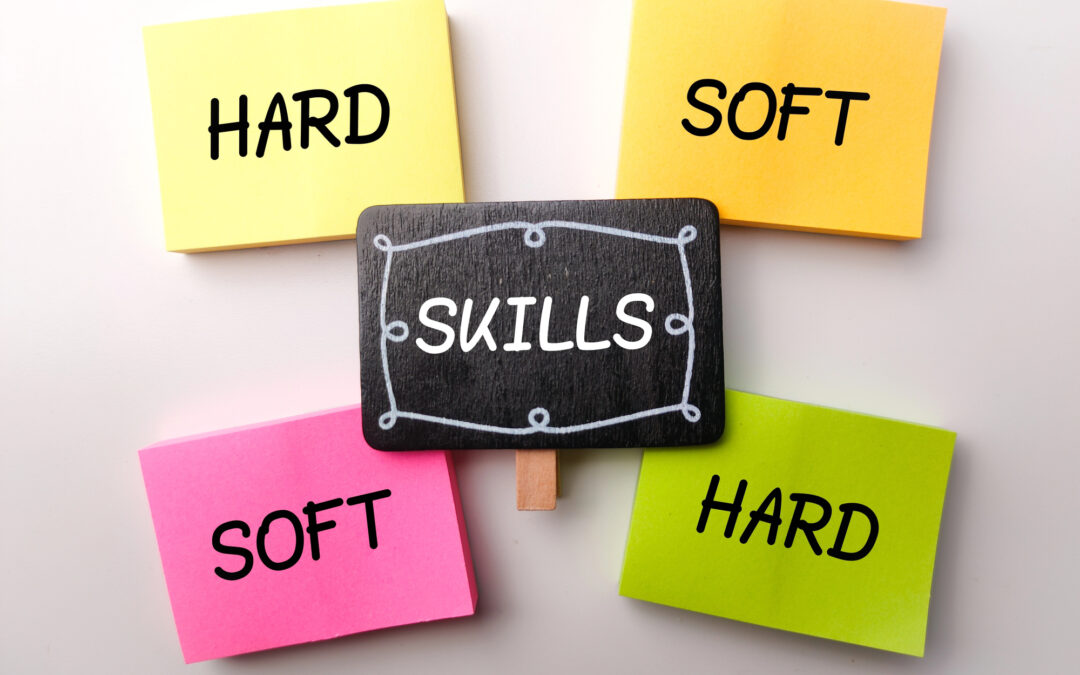
Today I want to challenge the myth that soft skills are somehow “soft.” Let’s get real: there’s nothing soft about the skills that keep businesses alive—skills like communication, empathy, adaptability, and trust. These are survival skills. They’re leadership superpowers. And in a world increasingly shaped by AI, automation, and constant change, they’re the difference between teams that thrive and teams that fracture.
The Myth of “Soft” vs “Hard” Skills
The term soft skills actually comes from the US Army in the 1960s. Hard skills were about weapons and machinery—tangible, technical capabilities. Everything else got dumped into the “soft” bucket. That language stuck, but here’s the danger: words shape perception. Call something “soft” and leaders undervalue it. Call it what it really is—your leadership superpower—and suddenly we treat it with the weight it deserves.
Hard skills might get you hired. But it’s your ability to lead, build trust, and inspire others that will keep you—and your business—at the top.
Action point: Stop using the term soft skills in your business. Reframe them as leadership superpowers or professional essentials to elevate their importance in your culture.
The Business Case for Soft Skills
Let’s cut through the fluff with some facts. The World Economic Forum lists 10 out of 16 top skills for the 21st century as soft skills—creativity, collaboration, emotional intelligence, critical thinking, and curiosity. Deloitte predicts that by 2030, two-thirds of jobs will require soft-skill intensity. And here’s the kicker: the UK economy alone loses £29 billion annually to the soft skills gap.
Meanwhile, research shows that investing in these skills can boost productivity by 12% and revenue by up to $90,000 per employee. That’s not soft—that’s hard ROI.
Action point: Audit your team’s current strengths in communication, collaboration, and adaptability. Where are the gaps? Fill them now before they cost you.
Why AI Makes Human Skills More Valuable
There’s panic in some circles about AI stealing jobs. I see it differently. AI is stripping away the repetitive, process-driven tasks that drained our energy. That frees us to focus on what machines can’t replicate: empathy, curiosity, connection, and trust.
Think about it: AI can crunch your P&L faster than you ever could. But it can’t build psychological safety in a team meeting. It can’t resolve conflict with empathy. And it certainly can’t inspire people to go the extra mile because they believe in your vision.
Action point: For every AI skill you upskill your team in, pair it with a human skill. If you train someone on data tools, also invest in their communication and collaboration training. Balance tech with trust.
Agility: The Real Competitive Advantage
Here’s the uncomfortable truth: 85% of jobs in 2030 don’t exist yet. So technical skills are a moving target. The only sustainable edge is agility. And agility is powered by communication, adaptability, and creativity—yes, soft skills.
This is why in the Unbridled Teamship Roadmap we focus on three levers:
- Game-Changing Trust: Without trust, teams fragment.
- Impactful Contribution: Everyone has a role, a rhythm, and a responsibility.
- Unbridled Adaptability: The ability to reinvent again and again.
These aren’t abstract concepts. They’re exactly what horse herds teach us. Under pressure, horses don’t scatter—they come together, move in unison, and adapt. That’s agility in action.
Action point: Ask yourself—does your team scatter or convene under pressure? Build rituals that strengthen unity when challenges hit.
The Cost of Ignoring Soft Skills
Without these superpowers, hybrid and remote work collapses. Research shows 70% of employees will work remotely at least five days a month by 2025. Without emotional intelligence, resilience, and self-leadership, that quickly turns into disengagement and burnout.
And let’s not forget customer experience. AI bots can handle simple requests, but when problems get complex, customers want humans who listen and empathise. Every unresolved complaint is a missed chance to build loyalty—or a reason for a loyal customer of 30 years to finally walk away.
Action point: Train frontline staff in empathy, listening, and conflict resolution. Every complaint is an opportunity to deepen trust and create raving fans.
Soft Skills as Drivers of Transformation
Here’s the paradox: digital transformation isn’t driven by technology—it’s driven by people. PwC estimates 30% of jobs could be automated by 2030, but you can’t automate trust, creativity, or curiosity. Transformation succeeds when teams have the resilience, adaptability, and influence to navigate disruption.
That’s why I always say: your business is a living system. Just like a horse herd, it thrives when every member contributes, trusts, and adapts together.
Action point: Build time for reflection and reinvention into your culture. Encourage your team to ask “what if?” and “why not?”
From Survival to Superpower
Horses have shown me that leadership isn’t about control—it’s about connection. They don’t follow the loudest or strongest, but the most trustworthy and emotionally intelligent. That’s the same in business.
So let’s ditch the outdated language. Soft skills aren’t soft. They’re survival skills. They’re your hardest currency in a volatile world. And they’re the foundation of your lasting leadership legacy.
Final Action Steps:
- Run a Soft Skills Audit: Where is your team strong on trust, empathy, and adaptability—and where are they brittle?
- Pair AI with EQ: For every tech skill you invest in, invest in a human skill.
- Model Curiosity: Ask more questions, invite new perspectives, and reward reinvention.
- Strengthen Trust Daily: Keep your promises, show vulnerability, and prioritise psychological safety.
Because let’s be clear: technical skills may open doors, but it’s your leadership superpowers—trust, empathy, adaptability—that keep you in the room and ensure your team thrives with unstoppable momentum.gift you can give your team. It’s the foundation of your leadership legacy.
Show Notes
00:00 Introduction to Impactful Teamwork
01:10 The Misconception of Soft Skills
04:31 The Importance of Soft Skills in the Modern Workplace
06:41 AI and the Future of Work
08:25 Building Relationships in a High-Tech World
10:09 Soft Skills as a Competitive Advantage
19:10 The Role of Soft Skills in Customer Experience
24:26 Final Thoughts and Call to Action

by Julia Felton | Aug 5, 2025
It turns out you don’t need to be in the boardroom to sharpen your leadership skills. Sometimes, the best leadership lessons emerge when you least expect them—like on a sailing holiday in Greece. After a week under the Mediterranean sun, navigating the open waters with my partner and nine other boats in a flotilla, I came back feeling more connected, more grounded—and full of reflections about leadership, teamwork and business.
Here are some of the leadership lessons I brought back with me, straight from the deck of a Beneteau 323.
1. The Power of Shared Leadership
This trip marked our third sailing holiday, but when I rewind the clock to our first adventure, I’m reminded how essential shared leadership really is. I hadn’t planned to do any training—I thought I’d spend the week relaxing by the pool while my partner completed his Day Skipper practical. What actually happened was quite different: I joined the crew, learned the ropes (literally!), and earned my Competent Crew certificate.
And thank goodness I did.
Because when we set sail on that first flotilla trip six months later, having a shared understanding of how the boat operated—and my partner not having to shoulder all the responsibility—meant we worked together as a team. I brought a different perspective, focusing more on safety and systems, while he focused on navigation. Together, we made a more effective, resilient crew.
Action: Ask yourself—how are you enabling shared leadership in your team? Who else can hold the reins with you?
Reflection: True leadership isn’t about knowing everything—it’s about knowing how to empower others to lead with you.
2. The Power of Beliefs: Old Experiences Shape New Realities
Before these flotilla adventures, my only sailing experience was in dinghies—and let’s just say that included three capsizes and a few dunkings, thanks to my partner’s enthusiastic steering! That experience left a deep impression. I developed a belief that sailing with him meant getting wet—and potentially being in danger.
So when we first took out a larger keelboat, even though it was far more stable, my nervous system was on high alert. I was terrified we’d capsize.
It wasn’t until I learned more about the stability of these boats, spoke to others, and built new experiences that I was able to let go of that limiting belief. And that’s when I started to actually enjoy sailing.
Action: What limiting beliefs are you carrying into your leadership or team interactions? What outdated ‘truths’ need to be re-evaluated?
Reflection: Beliefs formed in one context don’t always serve us in another. It’s time to let go of the stories that are no longer true.
3. Roles, Responsibilities, and Accountability Create Flow
Sailing taught me—yet again—the importance of clearly defined roles. When it was time to depart a port, there were multiple tasks that had to be done efficiently and safely. Naturally, we divided them: I was in charge below deck, securing items and closing hatches, while my partner handled the sails and navigation.
Each of us knew what to do. No confusion. No duplication. Just flow.
And the reason it worked? Systems. During my training, I’d been given a checklist to ensure the boat was ready to sail. That simple structure gave me confidence. It also freed up mental space because I didn’t have to remember everything—I just had to follow the process.
Action: Have you clarified who is doing what in your business? Do your people have clear systems and checklists to follow?
Reflection: When everyone knows their role and what’s expected of them, it creates empowerment, efficiency and trust.
4. The Value of Supportive Teams
One of the main reasons we continue to sail as part of a flotilla is the incredible support structure it provides. There’s a lead boat with a captain, an engineer and a social host—all of whom are available to assist if anything goes wrong.
And trust me, things do go wrong.
Like the time our anchor jammed mid-drop and we had 50 feet of chain dangling from the front of our boat. We couldn’t dock, we couldn’t move, and we definitely couldn’t fix it alone. But thanks to the flotilla team, help arrived—and after two hours and some serious manpower, the problem was solved.
Action: Who are your “flotilla captains”? Do your team members have people they can call on when something goes wrong?
Reflection: Psychological safety at work is just like sailing safety on the water. People perform better when they know help is at hand.
5. Proper Planning Prevents Poor Performance
There’s a reason that phrase is a cliché—it’s true. When we didn’t plan our manoeuvres properly, everything got a bit chaotic. My partner would suddenly say, “Let’s tack now!” and I’d freeze—unsure of what to do, feeling flustered.
But when we planned together—”Step one: bring in the mainsail; step two: adjust the jib”—the manoeuvre was seamless.
And this is so true in business too. When things are moving fast, it can feel like you don’t have time to plan. But pausing to clarify the steps means fewer mistakes, less chaos, and better outcomes.
Action: Where can you slow down to plan more effectively this week?
Reflection: Clarity breeds confidence. A calm, prepared team is a high-performing team.
6. Emotional Energy Sets the Tone
During one of our more rushed manoeuvres, my partner became visibly anxious. His energy shifted—he became erratic, issuing conflicting commands—and I froze. It reminded me how much a leader’s energy sets the tone for everyone else.
I had a fascinating conversation with a Navy captain on the trip who echoed this. He said that in high-pressure situations, the leader’s calmness anchors the entire crew. Whether you’re navigating a yacht or leading a team through a business storm, the principle is the same.
Action: How are you managing your emotional energy in moments of stress?
Reflection: Your energy is contagious. Staying grounded helps your team stay steady in uncertain times.
7. Don’t Lose Sight of the Bigger Picture
While helming the boat, I often picked a point on the horizon to steer towards. It gave me focus—but it also narrowed my field of vision. One day, I was so fixated on that point that I failed to notice a massive ferry bearing down on us from the side!
In business, this happens all too often. We’re so focused on the goal that we miss what’s happening around us—market shifts, team fatigue, or emerging risks.
Action: Take a moment to look up from your to-do list. What are you not seeing?
Reflection: Peripheral awareness is just as important as focus. Great leaders take in the full horizon.
Final Thought: From Busy to Brilliant
One of the biggest lessons from this trip was about attention—where we place it, how we manage it, and the impact it has on our performance.
That’s why I’m running a 20-minute webinar on August 12th called “From Busy to Brilliant: How Strategic Attention Fuels High-Performance Teams.” If you want to learn how to leverage attention to drive business results, I’d love for you to join me. Simply register at here
Whether you’re on a sailboat in Greece or in the thick of your next big project, the lessons are there—if you’re willing to pause, observe, and learn. I came back from holiday not just refreshed, but re-inspired.
Here’s to navigating your own leadership journey with more clarity, calm, and connection.
Show Notes
00:00 Introduction: Lessons from a Greek Holiday
02:19 The Power of Shared Leadership
09:18 Roles, Responsibilities, and Accountability
11:17 Team Dynamics and Support Systems
17:27 The Importance of Planning
21:41 Maintaining Strategic Attention
23:46 Conclusion and Upcoming Webinar

by Julia Felton | Jun 3, 2025
Why Leaders Must Create Cultures Where Teams Thrive, Not Just Survive
Welcome to this week’s episode of Impactful Teamwork. I’m your host Julia Felton, and today we’re unpacking a powerful yet often overlooked question: Is your business environment silently sabotaging your team’s performance?
It’s a conversation rooted in one of the key themes from my book Unbridled Business: Unlocking Nature’s Wisdom to Reinvent Leadership, and it’s been inspired by an increasing number of conversations I’ve had with leaders about psychological safety, performance pressure, and the invisible forces affecting team health and productivity.
Let’s take a deep breath, step back, and ask: What kind of environment are you really creating for your team?
Business Isn’t Physically Dangerous… But It Can Still Harm You
Unlike our ancestors, we no longer face daily threats from predators but the modern workplace has its own dangers. Stock market volatility, disruptive technologies like AI, global conflicts, remote working shifts, and regulatory changes all contribute to a high-stakes, high-stress environment.
And then there are the internal dangers:
- Intimidation
- Humiliation
- Rejection
- Isolation
- Feeling undervalued or unsafe
These aren’t just soft issues—they affect performance, engagement, and mental health.
🟢 Action Step: Reflect on your team’s day-to-day experience. Are stress levels high? Are people protecting themselves more than collaborating? These are signals that the environment might be toxic.
The Science of Safety: Why Biology Drives Performance
Our bodies are biologically wired to survive—not necessarily to perform under pressure. Like horses in a herd, when we sense danger, we shut down. In business, this translates to missed opportunities, siloed teams, and covered-up mistakes.
But when people feel psychologically safe, they open up. They collaborate. They innovate.
🟢 Action Step: Foster a circle of safety, where people feel they belong, are trusted, and can trust others. This encourages contribution, creativity, and cohesion.
Nature’s Metaphor: The Herd Knows Best
In a horse herd, survival depends on unity. Newcomers must earn their place through humility and alignment. When trust is low, bachelor herds form and challenge the leader.
It’s no different in business. Excluded team members create their own “herds”—silos—fueling politics, slow decision-making, and disengagement.
🟢 Action Step: Watch how new hires are integrated. Are they welcomed and supported—or left to fend for themselves? A warm welcome into the team’s “herd” sets the tone for long-term success.
The Chemicals Behind Culture: More Than Just Motivation
Let’s explore the feel-good chemicals that drive human behaviour—and how they shape team culture:
Endorphins & Dopamine: The Achievement Chemicals
These give us the rush of accomplishment. But when overused (think relentless KPIs and bonus culture), they create a dopamine-driven culture where people prioritise results over relationships.
🟢 Action Step: Celebrate small wins and progress but don’t make dopamine the only reward. Tie achievement to team success, not just individual performance.
Serotonin & Oxytocin: The Connection Chemicals
These build trust, loyalty, and empathy. They’re essential for teamwork and collaboration.
🟢 Action Step: Build in regular rituals of recognition, gratitude, and team bonding. These cultivate serotonin and oxytocin and strengthen the circle of safety.
Cortisol: The Hidden Killer in the Office
Cortisol is your body’s stress signal. It’s useful short term—but deadly when it lingers. It impairs cognition, weakens immunity, and raises anxiety.
Unlike zebras who shake off stress after a scare, we humans ruminate—keeping cortisol levels high. This is where toxic cultures emerge.
🟢 Action Step: Audit your culture. Are people always on edge? Do they speak up in meetings or stay quiet for fear of repercussions? A calm culture equals clear thinking and peak performance.
Why Leadership Needs to Start With Safety
Simon Sinek’s concept of the Circle of Safety is rooted in trust. When leaders put people first, performance naturally follows. But when leaders ignore safety and trust, the team retreats into self-preservation.
🟢 Action Step: Show your team you care. Not through grand gestures, but in small daily actions checking in, listening actively, acknowledging effort.
Sick Cultures Cost More Than You Think
Studies show that poor workplace environments lead to increased sick days, absenteeism, and even heart disease. The University of Canberra found that being in a toxic job is worse for your mental health than being unemployed!.
🟢 Action Step: Regularly review employee wellbeing not just through annual surveys, but through ongoing conversations and cultural diagnostics.
From Industrial Loyalty to Emotional Disconnection
Gone are the days when jobs were for life and companies felt like communities. Today, many employees feel isolated both in society and at work. And while social media gives the illusion of connection, it doesn’t replace real belonging.
🟢 Action Step: Create micro-communities within your organisation—through teams, mentoring, cross-functional projects—so everyone feels part of something.
Nature’s Vision for Business: Health, Harmony, and Unity
Within a horse herd, the goal is simple: health, harmony, and unity. Every member plays a role in protecting the whole. That’s what we must aim for in business, too.
🟢 Action Step: Ask yourself regularly: Does our environment support the best in people? If not, what needs to shift?
Final Thoughts: Your Environment Shapes Your Results
The culture you create isn’t just a “nice to have.” It directly impacts performance, retention, innovation, and health.
A poor environment kills morale, drains energy, and breeds disconnection. But a thriving one? It’s a catalyst for breakthrough results.
So I’ll leave you with this question:
Is your environment creating safety, synergy, and success—or slowly killing your team’s potential?
Explore Further
🔍 Take the free quiz to assess your team environment and discover how to Turbocharge Your Team Performance
👉 businesshorsepower.com/quiz
🎧 Listen to the full podcast episode and explore past topics on teamwork, leadership, and nature-inspired success.lazing leader of a scaling company who’s grappling with managing people and performance, this conversation is essential listening—and reading.
Show Notes
00:00 Introduction to Impactful Teamwork
00:46 Exploring the Business Environment
01:24 Psychological Safety and Business Success
02:12 External Threats to Business
04:28 Internal Threats and Team Dynamics
06:45 The Role of Leadership in Creating Safety
14:48 The Importance of Feel-Good Chemicals
24:02 The Impact of Cortisol and Stress
28:30 Creating a Collaborative Culture
31:04 Conclusion and Call to Action

by Julia Felton | May 27, 2025
As a leader of a scaling business, you know the importance of teamwork. But have you ever stopped to consider what kind of team you’re leading? In this week’s episode of the Impactful Teamwork podcast, we explore a fundamental truth that many overlook:
Not all teams are the same.
Whether you’re managing a senior leadership team or a production line crew, understanding how your team functions—and what makes it effective—is critical for unlocking high performance. In this week’s podcast episode, we unpack the five key distinctions of teams, drawn from cutting-edge research and my own insights from working with dynamic, growth-focused organisations.
Why It Matters: Team Dynamics Drive Business Outcomes
When teams are misunderstood or mismanaged, the consequences are costly—missed deadlines, miscommunication, employee disengagement and strategic drift. That’s why understanding the type of team you’re leading matters just as much as the strategy you want them to execute.
Here are five team distinctions every scaling business leader must understand.
1. Reliance: From Independent to Interdependent
The first distinction is reliance—how much your team members depend on each other to do their work.
- A sales team, for instance, may operate independently, with each member chasing their own targets.
- A product development team, by contrast, must collaborate constantly—passing ideas, feedback and deliverables between departments.
Reflection Question:
To what extent can your team members complete their work independently versus interdependently?
Leadership Tip:
Highly interdependent teams need stronger communication, trust and cohesion. Invest in building psychological safety and clarity of roles.
2. Membership Stability: From Dynamic to Stable
Does your team stay together over time, or is it constantly changing?
- A stable team (like a finance department) benefits from shared experience and collective memory.
- A dynamic team (like a flight crew or freelance project team) may be assembled and disbanded quickly, requiring rapid rapport and role clarity.
Why It Matters:
Low stability increases the risk of misalignment and slows down team performance unless strong onboarding and shared processes are in place.
Reflection Question:
What percentage of your team members were on your team six months ago—and will they still be with you six months from now?
3. Task Consistency: From Predictable to Dynamic
Are your team’s responsibilities consistent or do they change rapidly?
- A manufacturing team may perform the same tasks daily, refining efficiency and quality through repetition.
- A consulting team, however, may face new challenges every week, requiring flexibility, creativity and speed of learning.
Leadership Insight:
When tasks are inconsistent, teams need structures that encourage agility, not just process. Your leadership must provide clarity amid constant change.
Reflection Question:
Would you describe your team’s work as consistent, evolutionary or unpredictable?
4. Proximity: From Co-Located to Dispersed
Since the pandemic, proximity has become a major driver of team dynamics. Are your team members sitting together, hybrid, or fully remote?
- Co-located teams benefit from informal learning, faster decision-making and stronger culture.
- Dispersed teams require intentional connection rituals, robust digital tools and clear communication protocols.
Watch Out For:
Loss of informal learning (“learning by osmosis”), lack of visibility, and reduced team cohesion.
Reflection Question:
Where does your team sit on the proximity continuum—co-located, hybrid or fully remote?
Leadership Tip:
If your team is remote, schedule intentional time for social connection. Don’t let your team become transactional-only.
5. Similarity: From Homogeneous to Diverse Expertise
Do your team members share similar skillsets or bring varied perspectives?
- A homogeneous team (like an audit team) can operate efficiently with a shared mental model.
- A cross-functional innovation team, however, thrives on diverse backgrounds and thinking styles to spark creativity.
Why It Matters:
Similarity can streamline communication, but diversity drives innovation. Both have value—depending on your goals.
Reflection Question:
Is your team quite similar in skills and thinking, or richly diverse in expertise and perspectives?
Pro Tip:
Use tools like the GC Index to map energy and impact within your team and create a shared language for diverse collaboration.
Teams Are Not Created Equal—So Stop Leading Them That Way
The most effective leaders of scaling companies don’t treat every team the same. Instead, they tailor their approach based on where their team sits across these five continuums:
- Reliance (Independent ↔ Interdependent)
- Membership Stability (Dynamic ↔ Stable)
- Task Consistency (Variable ↔ Predictable)
- Proximity (Dispersed ↔ Co-located)
- Similarity (Diverse ↔ Homogeneous)
So here’s the million-pound question:
Where does your team fall on each of these scales—and what does that mean for how you lead?
Want to Explore This More Deeply?
🌟 Join My 20-Minute Teamship Teaching
I’ll be diving deeper into these five distinctions and how they connect to the Unbridled Teamship Roadmap on 5th June. This bite-sized session is perfect for busy leaders who want actionable strategies fast.
👉 Reserve your free spot now at www.businesshorsepower.com
📊 Take the Quiz: How to Turbocharge Your Team
Not sure where to start? Take the Team Turbocharge Quiz and discover which of the key levers your team needs most right now to create high performance.
👉 Start here: www.businesshorsepower.com/quiz
🎯 Book a Team Audit Call
Once you’ve taken the quiz, schedule a free Turbo-Charge Your Team Audit Call with me. We’ll review your results and pinpoint your next best step for building a high-performing, cohesive team that scales with your business.
Final Thought
Just as no two businesses are alike, no two teams are either. The leaders who succeed in today’s fast-paced, people-powered business world are those who understand team dynamics—and flex their leadership style accordingly.
Because in the end, teamwork isn’t one-size-fits-all. But with the right lens, it can be your most powerful asset.Teamwork is often hailed as the secret sauce of high-performing organisations, but how well do we really understand what makes a team effective? In this week’s episode of the Impactful Teamwork podcast, I tackled one of the most common yet misunderstood topics in business: the myths that surround teamwork.
If you’re a trailblazing leader of a scaling company who’s grappling with managing people and performance, this conversation is essential listening—and reading.
Show Notes
00:00 Introduction to Team Dynamics
00:54 Types of Teams: Leadership vs. Manufacturing
02:12 Factors Driving Team Effectiveness
05:21 Reliance Continuum in Teams
12:44 Membership Stability in Teams
16:36 Task Consistency in Teams
19:13 Proximity Continuum: Co-located vs. Dispersed Teams
23:20 Similarity Continuum: Expertise and Perspectives
26:52 Conclusion and Next Steps

by Julia Felton | Apr 22, 2025
Are you a business leader feeling more overwhelmed now than ever—even after hiring a team? Do you find yourself becoming the bottleneck in your own business operations? If so, you’re not alone. Many fast-growing business leaders fall into this trap. But the good news is there’s a simple and effective model to help you escape it.
In this post, I want to introduce you to a game-changing productivity tool: the TOADD Model—an acronym for Train, Outsource, Automate, Delegate, and Discipline. This model will help you step out of the daily weeds of your business and lead more strategically. It’s time to unshackle yourself from the busy trap and unlock your team’s true potential.
Why Models Matter for Leaders
Before we dive into TOADD, let’s talk about the power of models. Models allow us to codify our genius—our intellectual property—in ways that are clear, repeatable, and easy for others to understand. That’s why I use models like the Unbridled Teamship Roadmap and my IMPACTFUL Leadership Traits framework. When you frame your leadership strategy using memorable acronyms or visual diagrams, your team is more likely to remember and apply what you teach them.
Now, let’s unpack the TOADD model and see how it can revolutionise your productivity.
T – Train: Short-Term Effort for Long-Term Freedom
Training team members may seem like a time drain, but it’s actually a smart long-term investment. One of the most common objections I hear is, “I don’t have time to train anyone.” But here’s the truth: every hour you invest in training could save you dozens of hours down the road.
💡 Action Step:
-
Choose one repetitive task you do weekly (e.g., social media posting, inbox management).
-
Use a screen recording tool like Loom or Zoom to document how you do it.
-
Share this with a team member and give them a chance to take it on.
If that task takes you an hour a week, you’re freeing up 52 hours a year just by training someone else to handle it.
O – Outsource: Tap into the Global Talent Pool
If you don’t have a team yet—or you need specialized support—consider outsourcing. The modern gig economy makes it easier than ever to find high-quality freelancers who can tackle just about any task.
From virtual assistants to graphic designers to funnel builders, the world is your oyster. You can even find affordable, highly skilled talent from countries like the Philippines, South Africa, and Nigeria.
💡 Action Step:
-
Write down 3 tasks you don’t enjoy or aren’t great at.
-
Browse platforms like Fiverr, Upwork, or PeoplePerHour to find help.
-
Test one freelancer with a small project and assess the results.
Outsourcing doesn’t have to be permanent—you can start small and scale as your needs grow.
A – Automate: Let Tech Do the Heavy Lifting
Technology is your silent teammate. You can now automate everything from lead generation to email marketing to appointment reminders. The time you save can be reinvested into high-impact strategy and innovation.
In my business, for example, I’ve automated my quiz funnel using tools like SCORE App, Zapier, and my CRM. Once someone completes the quiz, they automatically receive follow-up emails and resources—without me lifting a finger.
💡 Action Step:
-
Identify one manual task you repeat often (e.g., sending meeting reminders, client onboarding).
-
Explore automation tools like Zapier, Make.com (formerly Integromat), or CRMs with built-in workflows.
-
Set up a simple automation and monitor the impact.
Small automations can have massive ripple effects in freeing up your schedule.
D – Delegate: Empower Your Team to Lead
Delegation isn’t just a leadership skill—it’s a mindset shift. Many leaders hesitate to delegate because they believe “no one can do it like me.” But this mindset keeps you stuck and slows down your team.
Worse, you may be holding on to tasks you hate, mistakenly thinking no one else wants them either. In reality, those same tasks may be someone else’s zone of genius.
💡 Action Step:
-
Audit your daily tasks for a week in 15-minute increments.
-
Highlight tasks that could be handed off to someone else.
-
Ask your team members what they love doing—you might be surprised!
Then delegate accordingly and be available to coach and support them through the learning curve.
D – Discipline: The Glue That Holds It All Together
The final D stands for Discipline—both personal and team-wide. Discipline means following through on commitments, setting boundaries around your time, and holding team members accountable. Without discipline, all the training, outsourcing, automation, and delegation in the world won’t stick.
It also means staying consistent with feedback loops. When something doesn’t go as planned, don’t take the task back—coach your team through it.
💡 Action Step:
-
Review weekly: Are your systems and team operating as expected?
-
Reflect: Are you following through on your own priorities?
-
Reinforce: Are you holding space for feedback and continuous improvement?
Great businesses are built on consistent behaviours, not random bursts of energy.
Bonus Tip: Start by Tracking Your Time
If you’re not sure where to start, begin by tracking how you spend your time each day. Use a time tracker or simply jot down your tasks in 15-minute chunks. You’ll quickly see where your time is leaking—and where TOADD can help.
Final Thoughts: Productivity Is a Team Sport
The TOADD model isn’t just about getting more done—it’s about leading smarter. It’s about reclaiming your role as a visionary and empowering your team to step into theirs.
Here’s your TOADD recap:
-
T – Train others to take on repeatable tasks.
-
O – Outsource work you don’t need to do yourself.
-
A – Automate processes to save time and energy.
-
D – Delegate to unlock your team’s superpowers.
-
D – Discipline yourself and your team to follow through.
When you implement TOADD, you stop being the bottleneck and start becoming the catalyst for exponential growth. So, which letter are you going to start with this week?
Let’s Talk:
I’d love to hear from you—what’s one thing you’re going to Train, Outsource, Automate, Delegate, or Discipline this week? Drop me a message or tag me on LinkedIn!
Show Notes:
Here are the highlights from this episode:
by Julia Felton | May 7, 2024
Recently I led an open leadership development session for local business leaders with my horses and experienced first-hand the powerful impact of effective teamwork. Despite being strangers, the participants managed to guide a horse around an obstacle course by working together seamlessly. This made me wonder why teams in the workplace often underperform while a temporary group of people can excel.
In this podcast, I delve into the criticality of teamwork in our modern economy. The shift from industrial to service and information societies, coupled with the rate of change and explosion of knowledge, has made it impossible for individuals to keep pace alone. It’s evident that harnessing the power of teams gives companies a competitive edge.
All teams, at some point, struggle due to various factors, such as lack of direction or clear roles but what exactly constitutes an underperforming team? That was something I wanted to explore and I discovered that and under-perfoming team is one “that falls short of its goals or required performance level”. Therefore, constant assessment and feedback are crucial for improvement.
In 1959 Frederick Herzberg conducted some ground-breaking research on why teams falter. Known as the Hygiene Theory it separates job satisfaction factors (motivating factors) from job dissatisfaction factors (hygiene factors). Surprisingly, these are independent; improving one doesn’t necessarily improve the other. For instance, a pay rise won’t always boost motivation. This distinction is crucial for leaders to understand when they need to motivate and engage team members.
Richard Hackman’s work also echoes the importance of teams having a clear purpose and being self-organised albeit sometimes challenged by organisational structures. In future discussions, I’ll explore the idea of dynamic teams—bringing together the right mix of people at the right times for specific projects, which can be highly effective in execution and innovation.
So how would you know if a team is underperforming? Typically, you might notice absenteeism, conflict, lack of motivation, and silo mentality thinking. However, the five most common reasons for underperformance include:
- Lack of clarity: Teams need clear responsibilities and deadlines.
- Lack of ability: Teams require appropriate skills and resources.
- Lack of confidence: Team fit and adjustment to roles are critical.
- Lack of direction: Clear goals aligned with the organization’s purpose are necessary.
- Lack of motivation: Understanding and addressing the root causes is essential.
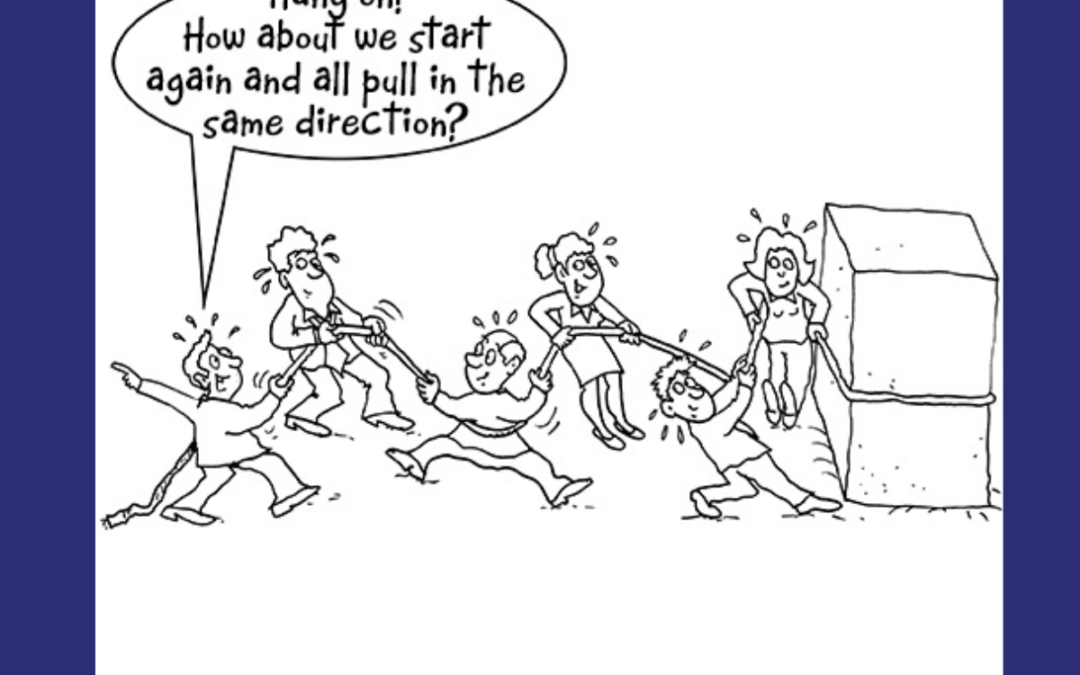
Complex matrix management structures when not executed effectively can also create under performance, especially when the various business leaders have no compassion and empathy for the conflicting priorities that team member can find themselves with. However, when done well matrix management can foster collaboration and lead to extra-ordinary results as everyone starts pulling together in the same manner.
Warren Bennis’s believed that leaders need to role model the behaviours they desire in effective team members. He cites that the “management of attention, meaning, trust, and self” are the behaviours that managers must master. Additionally, effective communication, understanding the team’s history, and building trust are also vital for leading successful teams and avoiding under-performance.
Show Notes:
Here are the highlights from this episode:
(02:26) Real-Life Example
(08:10) Identifying Underperformance
(15:12) Addressing Underperformance
(18:12) Teamwork is essential
by Julia Felton | Apr 30, 2024
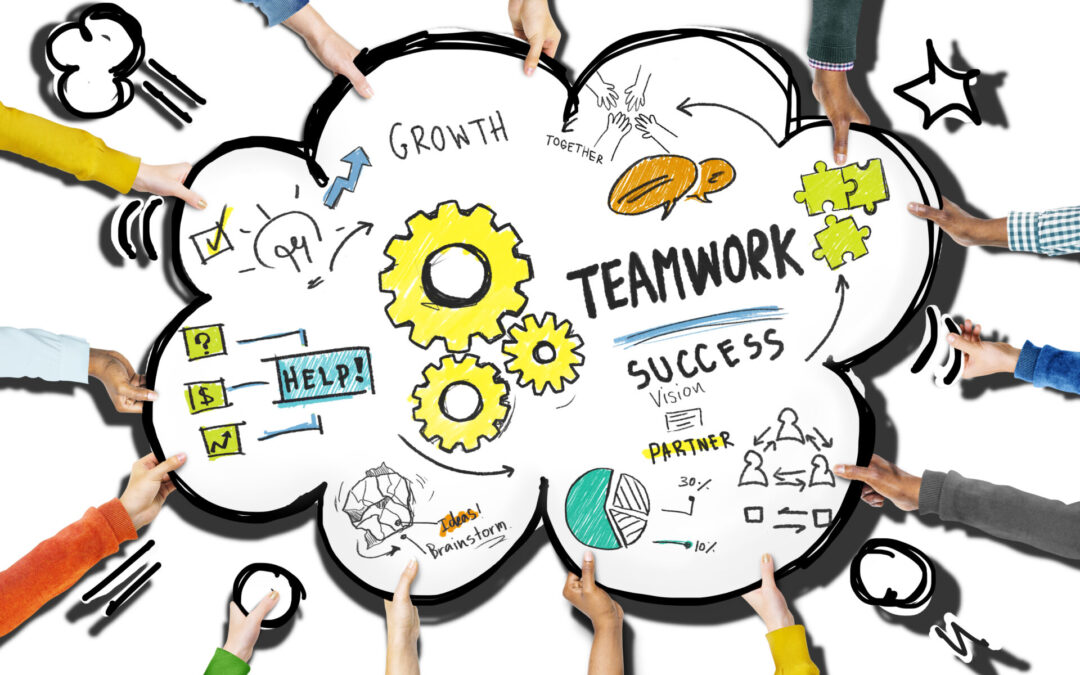
“Teamwork is the ability to work together towards an uncommon vision. It’s the fuel that allows common people to attain uncommon results” Andrew Carnegie
Today I’d like to explore what it is that makes some teams successful and importantly share some great examples of teamwork in practice.
There are many amazing examples throughout the world of when teamwork has accomplished great things. Perhaps one of the most impressive examples I’ve ever seen, was when I was on holiday in Egypt, and we went to see the pyramids because I have no idea how they managed to get all those massive blocks of stone to the location, let alone physically get them in place. This is an incredible feat of engineering and a group of people had to work together effectively to make that happen.
I’ve witnessed another great example of teamwork in Africa where the termites build these amazing termite mounds, that must be at least a metre and a half tall. Its just incredible that these tiny creatures not much bigger than an ant can collectively and collaboratively work together to make a structure that is that impressive.
There’s also a number of events throughout history that illustrate the importance of teamwork. One such example is the D Day landings, and the invasion of Normandy, because this was a fundamental turning point in World War Two. And so many things made that made this a success, because there was all the logistics operation of getting all those troops and equipment there. And also, there were people that actually had to go in and clear the beaches of all the land mines, so that the troops could land on the beach. And then, of course, the whole evacuation process of getting people away afterwards. So that was only possible because of the way that everyone worked together and collaborated to make that whole event a success.
And what about the Apollo 11 Moon landings. Many people remember the three astronauts Neil Armstrong, Buzz Aldrin and Michael Collins but did you know there were over 400,000 people working in the background that made that first walk on the moon possible.
Wikipedia is a really interesting example of effectively crowdsourcing everybody’s knowledge together to create an online Encyclopedia. They have managed to effectively recruit an army of volunteers who put all of this information onto the web. And it’s been incredibly successful. And yes, sometimes there are mistakes. But things are constructed in a way that any mistakes or errors can be corrected easily. Effectively anyone who has ever been on the Wikipedia site is effectively part of that team, because they can provide feedback if they see something that isn’t correct on the site.
In the business sphere, Google commissioned Project Aristotle to study hundreds of teams and understand the keys to effective teamwork. And what they discovered was that the attributes that created effective teamwork included things like psychological safety, dependability, structure, meaning and impact. As a result of that, Google implemented new training and communication strategies to enhance teamwork across the company, including allocating time every week for team members to work on a passion project. This has resulted in innovative solutions such as Gmail and Google Maps.
Southwest Airlines, Zappos and Starbucks have all achieved stellar success by fostering strong teamwork demonstrating the power of a team-centric approach in delivering exceptional customer service. All these companies aim to deliver the WOW factor by collaborating together and going beyond expectations to delight the customer. This is what happens when team members feel empowered and have the latitude to make choices in the best interest of their customers.
And yet we’ve all seen what happens when teamwork and collaboration falter and companies fail to innovate and adapt to the changing business landscape. Think Block Buster Movies, Kodak and Nokia. They were all once household names but alas they no longer trade today because they failed to respond to the rapid technological shifts going on in business. They didn’t listen to their team members who saw the danger as the leaders were too myopic in their view of success.
I’d love to hear about any example you have great teamwork, whether in your business, personal life or maybe even a sports or music team that you are part of. Great teamwork is a super-power that helps ordinary people achieve extra-ordinary results and it needs to be celebrated and acknowledged.
Listen now to discover even more on this fascinating topic
Show Notes:
Here are the highlights from this episode:
(01:12) Teamwork as a competitive advantage
(03:53) Historical Example of Teamwork: D-Day and Apollo Landing
(13:27) Modern Business Success Stories: Google, Southwest Airlines, Starbucks, Zappos, and Apple
(20:05) Empowerment and Innovation

by Julia Felton | Sep 12, 2018
A recent study by accountants Haines Watt reveals that finding and creating a management team that are fully aligned with the business owners vision and purpose can be really challenging. Often it seems that creating such a team is far out of reach. There are two main reasons why your management team might not be aligned.
- you don’t have the right people at the management table,
- lack of clarity of the business purpose and mission caused by a lack of planning, or strategic focus.
The fact is, UK business owners are not spending enough time on their business, rather they are spending a vast majority of their time in the business. This focus on the day-to-day is preventing business owners from planning effectively. And here’s the rub. Failing to plan is planning to fail.
A properly formed strategic plan can ensure businesses grow faster and more sustainably. In fact, our study validated that business owners who are able to step back and focus predominantly on strategic planning are twice as likely to run fast growth businesses.
Developing a fully formed, strategic plan ultimately frees up more time to drive towards a common purpose and innovate along the way. Unfortunately, UK business owners are holding too tightly to the everyday functions of their companies, reluctant to let the management teams, who should be at the heart of the company, take their rightful place.
The theoretical role of the management team is a far cry from reality. The study found that nearly half of business owners are not confident that their business could survive beyond a single week if their team were left to run it. Wow, what a revelation and a telling sign of how little trust business owners put in their team. Imagine too the stress that creates for you, the business owner, when you feel that you are single handedly shouldering the responsibility for the business.
One of the most telling findings in the research was a widespread fear of exposing vulnerability, with business owners refusing to open up to their management team regarding their concerns or future plans. Without enough communication, the result is siloed working, leading to, and exacerbating, a lack of coordination within the team.While the causes of disunity can vary, the result remains the same – stagnated business growth. It is imperative that business owners make the time to identify the aspirations they hold for the business they’ve built. Once identified they can strategically look towards the future and place their management team at the centre of that vision.
If you’d like to get clarity on your purpose then let’s schedule a chat, because without a clear purpose your business will just drift along and never achieve its full potential and you will be unable to leverage the full potential of your team.
by Julia Felton | Jul 31, 2018
Many traditional corporate organisations are struggling to adapt to the demands of the new world rapidly changing around them. They are clinging to the same ideas, talent management models, and ways of working with leaders who are either oblivious to the current mindset or too frightened to instigate change.
Research by the GC Index indicates that there are individuals who have the potential to initiate change and drive transformation, but they are rarely able to make their mark in the corporate world. They are often viewed as disruptive since they challenge the status quo. Exactly what is required for change? Within the GC Index, these individuals are called Game Changers.
Game-changing is different than innovation.
Innovators build on what has been done before — for example, the pursuit of excellence through continuous improvement and incremental change. It’s Game Changers who can trigger and drive transformational change; however, the reality is that many organisations are driving their vision through the need for innovation. Often this is delivered in quite a controlled way, by investing in innovation hubs, labs, processes, and programmes.
Game Changers have the potential to really motivate and inspire others, while displaying an incredible work ethic and dedication, but only when others understand them and what they can contribute. To thrive they need to be set free in a culture where it is “safe to fail.” Where leaders value game-changing ideas rather than innovation.
Unless understood, there are five ways that Change Makers can be seen to be disruptive in organisations.
1) Game Changers are driven by Hierarchy and Stifled by Rules
The stronger the Game Changer inclination, the more they will feel constrained by arbitrary rules and only conform to rules that make sense to them. Since Game Changers are not bothered about status or climbing the corporate ladder, it can be challenging for leaders to retain them within the traditional organisational structures.
2) Game Changers Alienate People
Naturally obsessive, Change Makers are often seen by others as being difficult. Tenacious and persistent, they are repeatedly challenging how things are done and seeking for ways to transform the future.
3) Game Changers See Things Differently
Game Changers are unafraid of failure because they seem to have an inherent belief in their ability to survive. They take on projects that others would view as risky, since their level of risk assessment is very different from many organisational norms. As a result they are often described as disruptive, yet ironically, they are the very people who can instigate change.
4) Game Changers Are Obsessive
When a Game Changer decides to do something, they do not give up on it. This obsessive compulsion can frustrate colleagues, especially when others feel they are driving through change just for the sake of it. For organisations to leverage the strength of Game Changers, they need to allow them a platform to share their ideas and then the freedom to fail. Only through failure will success ultimately ensue.
5) Game Changers See Round Corners
Game Changers always ask “why not” and are prepared to challenge the status quo. They don’t use the past to predict the future, but rather think laterally and very creatively. They don’t necessarily value the tried and tested, but rather seek out solutions that others would instantly believe not possible. Leaders need to be clear about the Game Changer’s talents and leverage these to best effect.
The GC Index research helps explain the irony that exists for Game Changers, as they often find it difficult to survive and thrive in traditional “controlling” corporate structures that don’t value creativity, and so the very organisations that they could help struggle to retain them or realise their full potential.
As one Game Changer noted:
“I lost heart and felt claustrophobic. . . . there was too much red tape, too many barriers and too many people ready to dismiss my ideas without listening to them.”
So if you’re a leader, I urge you to reflect on who the Game Changers are in your team. What can you do to support their success, and ultimately, that of the organisation?
Not sure who your Game Changers are, then why not take the Change Maker Assessment to discover what type of Change Maker you are. There are five by the way. Simply get in touch with me at ju***@****************er.com.