by Julia Felton | Oct 28, 2012
‘Before you are a leader success is all about growing yourself.
When you become a leader, success is all about growing others.’ Jack Welch
A recent survey conducted by Emergentics International revealed that Leadership development is the number one priority of HR and organizational development leaders, with 25% of respondents putting it at the top of their priority list. With organizations needing to meet ever-higher financial goals and growth targets, the emphasis on people development provides a window into the way companies are seeing their ability to rise to the top.
The emphasis on talent development and management over competencies like innovation and tactical elements like metrics points to a realization that positive advancements in organizations must start with people. The second highest response for organizational priority was employee engagement, at 22%.
So what is leadership? The Oxford Paperback Dictionary defines a leader as ‘one whose example is followed’. Leadership is that elusive quality that companies are looking for and yet, in my opinion, is so often lacking in organisations. Given the multitude of companies offering leadership training and the circa £3billion spent on external training annually in the UK, how come our companies are not some of the best performing in the world? To my mind, leadership and management are too often confused. We expect managers to lead and yet leadership and management involve completely different skill sets. Indeed, the Peter Principal invariably plays out in organisations. The Peter Principal states that ‘people are promoted to the level of their incompetency’. This is why all too often people get promoted only to fail in their managerial role because what they really need are leadership skills.
Complete leadership starts with the vision and builds relationships with the people that share the vision and who will take on the task of achieving the vision. This differs from management which uses structures, rules and processes in order to control and predict results in a more stable situation. Frank S. Greene notes that ‘the success of management is seen in the industrial empires where people can be used interchangeably and as replaceable parts.’
In order for any business to be successful it needs strong leaders and particularly so in this age of globalisation because whilst an individual might be able to mask their lack of leadership skills in a small organisation, in my experience once they have to manage across multiple locations they will be found out. Great leadership involves developing a blend of vision, relationships and execution and as an organisation expands, the need for the leader to communicate that shared vision to a diverse set of people becomes paramount because unless the vision is shared, the organisation will never meet its goals. It will become like a ship bobbing up and down on the ocean with no clear direction of where it is heading and wonder why the business fails to move forwards.
So how can Horse Assisted Coaching help people develop leadership skills? The answer lies in the fact that horses are always looking for a leader. As a prey animal, the horse always has to be aware of imminent danger or else he could end up as someone else’s lunch. This means that a horse always has to be alert to any danger in his surroundings and also be in a position to run away should that danger present itself. To ensure that the horse can survive being a prey animal it has evolved so that its natural behaviour and physiology can keep it as protected as possible. This is why horses have eyes on the side of their head, as it gives them nearly 360 degree vision to see any approaching danger. They are also acutely aware of any changes in their environment, as this could herald the onset of approaching danger. The sense of community and camaraderie they gain from living in herds also helps keep horses safe. I’m sure you’ve heard of the idiom ‘Safety in numbers’ – well, this is the premise that horses work from. The more of them that are together, the more eyes they have looking out for danger and so the safer they feel.
It is because of this desire to stay safe that a horse is always looking for a leader. Can you imagine living by yourself, never being able to rest and relax for fear of being attacked and eaten? This is a tiring place to be and the reason why a horse is willing to let us take up the leadership role with them. However, and this is a really big thing, we must prove to be a leader who can be trusted and who knows what they are doing. If we have no clarity or certainty and don’t evoke a sense of trust from the horse then he will not let us lead him and he will take over the leadership position. You see, unlike people who might be quite polite when their boss is not being a clear, decisive leader, a horse has no option but to act, his life depends on it, whereas in a business we continue to tolerate poor leadership until such time that the leader is removed from that position – ironically often promoted to another position.
Different from humans, horses don’t follow blindly, yet they are looking to be led. They cannot be coerced or influenced, they choose to follow. Horses have survived for thousands of years due to their ability to get along with, and depend upon, one another. They test each other to establish their position within the herd, deferring only to other horses they feel will keep them safe. In a world in which money, control and status are non-existent, horse leaders respond immediately to the thoughts, feelings and sometimes hidden agendas of those around them, and communicate with authority, purpose, authenticity and confidence – all without ‘saying’ a single word. Like some employees, horses can either be willing participants or resentful ‘herd members’, making them ideal partners for teaching self-leadership and teamwork.
Want to learn more about how horses can help you make systemic leadership changes in your organisation, then check out AHA! Programmes at www.unbridledsuccess.co.uk

by Julia Felton | May 15, 2012
Merriam-Webster’s dictionary lists several definitions for the word relationship. The term is generally used to denote family ties, but it’s also used as a state of connecting or binding participants. Actions that bring people together and bind them in a common cause are key to building effective relationships.
I was first introduced to the statement ‘leadership is a relationship’ in the book The Leadership Challenge by James Kouzes and Barry Posner. The authors go into great detail about the importance of building camaraderie among the people you are leading. When you have a meaningful relationship with another person you work more effectively together. You have a common goal and a consistent purpose. Your efforts are channeled toward the same common outcome.
Effective leaders recognize the importance of building solid relationships. They spend time focusing their efforts in key areas that will build connections with the people they lead. Here are three simple tools that great leaders use to improve their working relationships:
- Listen: Leaders let other people talk and they pay attention to what they’re saying. They remove anything that would distract from their conversations and focus on what people are trying to convey.
- Understand: They appreciate what other people do and value their contributions. Leaders are not only open to new ideas but are also eager to learn new things. They know that taking the time to understand where people are coming from will pay dividends in the long run.
- Acknowledge: Leaders acknowledge the contributions of others. They are quick to give credit to others for their successes. They celebrate achievements and delight in the accomplishments of their team. They know that people will be more motivated to work hard and try new things if their leader acknowledges their efforts.
What are you doing to build effective relationships?
Source: Michael Ray Hopkin – Lead on Purpose
by Julia Felton | Apr 5, 2012
I’ve just got back from the yard where I have been moving my horses from their day to night pasture. I don’t know what it is with the weather today but there was a lot of high jinks going on. Usually pretty placid the horses were all animated and just wanted to run, buck and play so I let them off in the strip that runs up to the field. Charlie, my race horse, clearly thought he was back on the track and raced up the strip at lightening speed, followed in pursuit by Toby. Charlie’s motivation to run was in part inspired by the fact that Bracken, my young cob filly, was in front of him. There was no way however, that Bracken was going to let Charlie pass her. Perhaps her fear of him made her run faster, but she definitely flies like the wind.
As I watched the herd gallop off my heart was in my mouth as they raced past the entrance to their field. About 200 yards further on the strip ended with a thin wire rope, that acts as a fence dividing the end field from the strip. Surely there would be a massive crash as all the horses piled up in front of it. Then to may complete amazement, Bracken picked up her front feet and neatly jumped over the thin wire rope, which must have been 2’6″ high. She never faltered in her stride pattern and looked majestic. Then she trotted round the end field wondering why no-one else was with her. You see the other horses never even considered jumping the wire rope. They just stopped in their tracks and looked somewhat bemused at a very pleased with herself Bracken on the other side. Once the horses had moved off Bracken popped back over the wire rope and took herself off the her regular field.
So why am I sharing this story? Well firstly, I’m so proud of my pony for her jumping ability but more importantly her actions reminded me of this quotation from George Lucas:
“You have to find something that you love enough to be able to take risks, jump over the hurdles and break through the brick walls that are always going to be placed in front of you. If you don’t have that kind of feeling for what it is you are doing, you’ll stop at the first giant hurdle.”
There are so many times in our lives when barriers and obstacles are put in our way and can hinder us reaching our goals. Successful people figure out how to negotiate these obstacles. They do not get discouraged but rather keep going as there is simply nothing that is going to stop them getting what they want. Like Bracken they find a way to jump these hurdles and they are able to do that as they have a great reason Why?
What is the great reason Why that is fuelling your actions? I know from experience if you don’t have a great reason Why and are not fully committed to your goals, then more than likely you will not succeed when the inevitable obstacles, barriers and hurdles appear. Negotiate these however, and you will be even more motivated and inspired to reach your dreams and goals.
by Julia Felton | Dec 25, 2011
It never ceases to amaze me the lessons my horses teach me about life, and today, Christmas Day, is no exception. My friend Maria and I decided to take my two horses Toby and Charlie for a walk in the woods along with her dog Zac. We were just leading the horses on foot due to the icy ground conditions. Maybe it was the exuberant energy of Zac or the bell on the end of my Xmas hat that kept ringing but the horse’s energy was really high which for my two boys is pretty unusual.
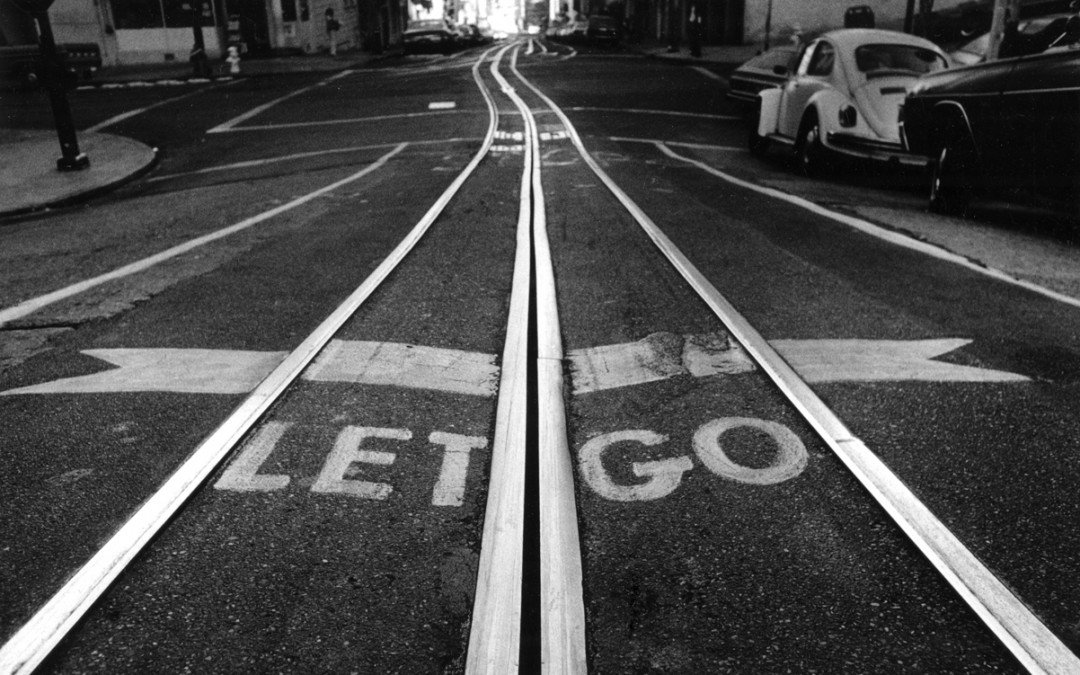
Often when we lead them out on foot (as we do quite often) it is a case of trying to encourage the horses to move forward. Today, they were no a mission, and there was no stopping them. As we entered one of the large fields Charlie’ s energy rose even more as he connected to his racing instincts and thought momentarily about racing off. When you have half a ton of horse on the end of a rope your instincts are to keep the rope short so that you can control the horse. What are we deluding ourselves to?. There is no way – me weighing some 63kg has any chance of controlling that half ton of weight. If he wants to run that is exactly what he will do and nothing will stop him. And yet, when I had faith and actually loosened my grip on the rope and made it slack, thereby letting go of the control, Charlie’s energy dropped and he slowed down.
This made me think about how often in my own life, especially when life seems like it is spiralling out of control, that holding on tightly is just about the worst thing that you can do. Surrender to what is happening around you and let go and often the most unexpected outcomes arise. Did I think that by loosening my grip on Charlie’s rope that he would slow down?. No not really, but I had faith and just by letting go of the outcome and yielding control to something greater an amazing result happened.
I am reminded too of all the times in my corporate life when often I micro-managed my team. My need to be in control to ensure the correct outcome was so strong that I never allowed my team members to “race off”. How different the outcome might had been had I given them that power and loosened my control over them. Interesting food for thought on this Christmas Day.
So as we enjoy the Holidays take time to think about your own life and what might be achieved if you have the courage to let go.
Seasons Greetings to Everyone
by Julia Felton | Nov 27, 2011
I recently came across this article that I wanted to share with you as I feel it could help some of you explain what is happening in your own lives. Often we fail to do things not because we can’t but because of a fear of failure. This got me thinking about training my horses and working with my clients. Do I sometimes not do things because I’m afraid of failure? I’s love to read your thoughts on this really interesting perspective on life.
If you have a habit of not finishing what you start, you may have attributed your lack of results to disorganization or a lack of focus. For some individuals, however, this habit is signs of an underlying psychological pattern of playing not to lose.
Stuart Emery, author of Life is Not a Dress Rehearsal and Success Built to Last, noted that where most people tackle situations with a goal of winning, others approach life with a goal of avoiding losing. Somewhere in life, they decided that they were incapable of winning and have lowered their expectations to merely not coming in last.
The groundwork for this pattern is often laid in childhood. For example, if a father raves over his young daughter’s drawing, she may have next colored on the wall, not recognizing that the wall is not an appropriate place to express artwork. After repeated incidents of getting in trouble in such a way, she may have drawn the conclusion that she couldn’t win. She didn’t like the pain of not winning, so she unconsciously adopted the strategy of trying not to lose in the future.
Not finishing what you start is one of many habits you fall back on when playing to not lose. The reason this has worked for you in the past is that if something is incomplete, it cannot be judged as not good enough. You can just say that it’s not “finished.”
Other ways we ‘play not to lose” include:
- Playing the Judge. By being the judge, you never have to be the participant. By pointing out how imperfectly others are dancing, for instance, you get to avoid dancing yourself, which could open the door to you failing at the task.
- Being perfect. With this approach, you attempt to not lose by doing everything as perfectly as you can… or at least by presenting a front that you are “perfect.” You never really relax or let your guard down. Instead, you overdo everything instead.
- Becoming a “problem.” If you take on the role of the identified problem, others will need to stop and take care of you. This is a form of sabotage. Because others are directing their time and energy into helping you and are less likely to win themselves.
If you recognize that you’ve been playing not to lose, it’s time to shift the behaviour.
Embrace Feedback
Your decision to stop playing to win was most likely unconscious. You received feedback that you interpreted as being a condemnation of your abilities and who you are. An important step in shifting this pattern will be recognizing feedback for what it is: Information that tells you whether you are on course or off course.
When you get negative feedback – such as lack of results, little or no money, criticism, poor evaluation, inner conflict, and unhappiness – it’s a sign that you are moving away from your intended goal. Evaluate what you’re doing and make a course correction. When you receive positive feedback, such as praise, happiness, money and results, you’ll know that you are back on course.
Sharpen Your Focus
Another thing you can do, particularly if you’ve developed a habit of not completing what you start, is to train yourself to sharpen your focus. In the Achievers Focusing System, Les Hewitt, author of The Power of Focus, teaches his clients to focus their attention only on what they want to accomplish in the next three months. They select one goal in each area of their lives during that period.
Then, each week, they identify the three most important things that must be accomplished during that 7-day period to move them closer to their goals. A weekly check-in with your accountability partner helps to keep you accountable for achieving these tasks.
To download a free copy of the Achievers Focusing System 3-month planner, click here.
Chunk It Down
One final word of advice: As you begin to build a new habit of completing what you start, you may feel overwhelmed and lost about what to do next when you look at your list of goals. The best approach is to chunk down your goals into small, manageable steps.
Interview people who have already accomplished what you want to do and ask them to share all of the steps they took. If you can find a book or manual that guides you through the process, even better. Another approach is to imagine that it’s the future and you’ve already accomplished your goal. Start at the end and look backward. Notice what you had to do to get to where you are.
Capture all of these steps in a list or mind map. Then convert all of your to-do items into daily action items that can be plugged into your calendar. Start with the first item on your list, and when it’s finished, cross it off and tackle the next item. Before you know it, you’ll be completing projects and well on your way to playing to win.
Playing not to lose may protect you from the potential pain of negative feedback. But the cost is steep. Every time you fail to live up to the commitments you make to yourself and others, you undermine your self-confidence. Use the steps outlined in this article to identify why you’ve settled for simply not losing and to take the corrective action you need to complete what you start.
by Julia Felton | Aug 29, 2011
In my last post we learnt how focus and clarity helped “Susan” when she was in the picadero with a horse. Today, I’d like to share some of the teachings of one of my other great mentors (apart from my horses) in the art of leadership, John C Maxwell. For some years now I’ve been in the habit of revisiting books that had a profound impact on my thinking. It’s a powerful process, I find new insights and understandings I hadn’t experienced before, not because there’s been any change in the content of the book of course, but because of the changes in me since I first read the book. My awareness has shifted, resulting in my ability to see things in the book I wasn’t able to see previously.
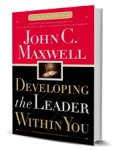
Recently, I returned to John’s ‘Developing the Leader Within You’, and one of it’s messages hit me like a train. It was a message relating to vision, perception, thinking and potential.
Casting vision ignites potential. Too many people fail to create a compelling vision for what they aspire to in their lives, and what can’t be seen with the mind can’t be created in life. What you see is what you can be, and what you see is what you get.
I’ve worked with many business leaders who cast vision for their business and never for themselves. This is a major error. Without a personal vision of success, an individual is nothing more than a wondering generality in life.
Having a career is one thing, shaping one on your own terms is another. Lacking vision, a person is a like a ship adrift at sea without destination, it’s the tide that governs the path. Despite the biblical warning of ‘where there is no vision the people perish’ many people are still choosing to live life this way.
Then there’s perception. The way a person chooses to see things has a massive impact on their success in life. Konrad Adenauer once said ‘we all live under the same sky, but we don’t all have the same horizon’.
Henry Ford was told repetitively by his most senior engineers that his idea to create an eight-cylinder automotive engine was ‘impossible’. Over a two year period he continually sent them away to ‘make it so’, only for them to return with the same message. He refused to accept their beliefs, and eventually they overcame the obstacles and ‘made it so’. Ford and his engineers lived under the same sky yet had very different horizons.
What you see is what you get. What are your horizons? Where’s your thinking?
by Julia Felton | Aug 12, 2011
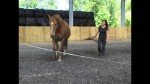
The picadero – much like a round pen with corners – is a place where we can explore our own truths and look in the mirror of how we relate to others. With our equine partner, we have the opportunity to experience the impact of our presence – our emotions and energy – on others. This experience can be a very powerful metaphor, as was the case with “Susan,” a participant in one of the corporate HorseSense programs we facilitated recently.
Susan is the Office Manager for an executive search firm in the northeastern United States. She had never been around horses before our program, and seemed to be enjoying her interactions with them very much. Still, she entered the picadero with some trepidation, gripping the flag tightly in her left hand, unsure of how to proceed with Chip, a large Appaloosa gelding who was a veteran of a number of our programs. Susan approached Chip in an attempt to establish a connection with him. Dropping the flag to the ground between her own and Chip’s front feet, she held out her hand in silent gesture of “hello”. Chip expressed mild interest in the flag, nosing it lightly, and ignored Susan.
We watched as Susan tried more affirmatively to connect with Chip, moving closer to him, tentatively stroking his neck with her right hand, holding the flag aloft in her left hand near Chip’s head, and occasionally shaking it. When these gestures produced no obvious connection, Susan began to wave the flag at Chip’s left haunch, then his shoulder, then his haunch again – trying to get him to move. Chip stood perfectly still.
Susan’s efforts became increasingly disjointed and remained without effect. It was painful to watch her frustration visibly mounting. After a very long few minutes of being ignored, Susan turned away from Chip looking dejected. She lowered the flag, lowered her head and said, “I just don’t know what to do.”
Nikki joined Susan in the picadero and asked her a few questions. “What would you like Chip to do?” “How would you describe what you’ve tried so far?” “What else might you try?” With a few words of encouragement about the importance of setting your intention and concentrating on being clear when asking for what you want, Nikki stepped out of the arena and left Susan to continue.
Susan seemed to draw inward and we all watched in silence. Then she took a step back from Chip and snapped the flag energetically behind him. Chip raised his head and shuffled forward a few steps. Encouraged, Susan repeated the vigorous snap of the flag. Once again, Chip responded by moving forward a few more steps. Then the dance began in earnest. With each step that Chip took, with each snap of the flag, we could see Susan’s confidence grow until both horse and human were trotting easily around the picadero together. Susan was grinning from ear to ear, carrying herself lightly and openly, radiating excitement and energy.
After a minute or so, Susan stopped trotting, lowered the flag and, having accomplished her objective, moved to leave the picadero, not noticing Chip following behind her like her newest best friend. We motioned to her to turn and look, and then asked her to stand by Chip for a picture of the two of them together.
Once the picture was taken, Susan left the picadero and walked past the group, clearly moved by her experience. Without speaking, Leslie placed a hand on Susan’s shoulder, and Susan started to sob. Leslie asked, “Do you want to talk about what’s coming up for you?” Susan nodded and explained that her experience with Chip mirrored her experience in the office with staff. “I don’t want to hurt anyone’s feelings at work, just as I didn’t want to push Chip with the flag. But they don’t pay attention to what I’m asking for, and I end up feeling frustrated. I see now that I’m so concerned about being nice and getting along with everyone that I don’t really ask for what I want. I don’t want to hurt their feelings, but I end up feeling hurt because I’ve been unclear and they don’t respond.”
Leslie asked, “How did Chip respond to your clarity?” Susan answered, “It was great. Everything flowed so easily after that. We had a great time! This was a huge lesson for me in asking clearly for what I want.”
Not every picadero experience is so profoundly insightful, but the opportunity is there for those who are willing to engage with what they see when they look in the mirror of their equine partner’s eyes.
Article contributed by Nikki and Leslie Kagan, Israel/USA, Fellow HorseDream Professionals
by Julia Felton | Jul 13, 2011
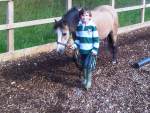
There is so much that horses can teach us about life. Horses have been described as “authenticity meters” and in my experience this is so true. They see beyond the mask that we put on and through to the real core of the person. They know when someone is frightened or in need of support, and when someone is overly aggressive. Horses allow, and expect us, to be who we truly are. They will not tolerate the mask that humans so often feel forced to put on in order to protect themselves.
I am reminded of an experience with a young lad, we shall call him Tom. Tom had been excluded from school for his aggressive behaviour. The teachers described him as being out of control and he bullied the other children. It took only a few sessions with a horse for Tom to realise that in order to connect with a horse he needed to let go of this mask. He needed to expose the young, frightened lad beneath and know that everything would be alright. Tom learnt it was ok to show his emotions and soon realised that acting tough had not been serving him well.
Horses act as mirrors reflecting back to us what we otherwise choose not to see. We all understand that we have different perspectives on the world and see the same thing in different ways, yet ironically we can only see what we already have in our frame of reference. If we experience the horse as angry and aggressive, it is likely that there are similar emotions that we have running through our lives. Horses allow us the opportunity to experience firsthand what is happening to us and by providing immediate feedback they allow us to change our actions to get a different result. How often does that happen in life? And importantly horses are non-judgemental. They just respond to the energy and intent shown to them. For children, I have found that often when faced with a horse the child’s whole persona can change as the real child that has been hiding behind that conditioned mask emerges. This can be a joyous experience for both children and parents. AHA! Moments occur and the children, and parents, get some real insights into what is happening for them.
So why is Horse Assisted Coaching so powerful? Well the answer lies in the fact that many traditional programmes focus on a verbal, classroom (neo-cortex) approach. Whilst this clearly has a role in society I have found that Horse Assisted Coaching sessions achieve a deeper, more sustainable and faster impact on creating change. This is achieved by doing, what is known as limbic learning, therefore there is no integration required. Examples of limbic learning are riding a bike, learning to walk etc. Once we have learnt to do these we do not forget.
Typically no riding is involved in a Horse Assisted Coaching session. Generally, all the work is done on the ground with the participants leading the horses through a series of exercises that help give them insight into such diverse topics as:
- The importance of being a great leader. If you can’t lead a horse and get him to follow you, how can you expect a team to follow you? Importantly, how can you lead others if you can’t lead yourself
- How body language and voice tonality help you influence others. With no words participants need to influence the horse to move using their own resources and what state you are in definitely influences the outcome.
- Value of teamwork. In this ever-connected society there is a real need for being plugged into the system in order to succeed. Alliances and partnerships will become more commonplace so participants learn how to contribute to a team and work towards a common goal.
- The importance of focus and intent because if you are not clearly focused and know what you are doing then horse will not follow you.
Sessions can be run in a group format or one on one depending on the client’s requirements. Horses can also be used to develop family constellations and these in the past have been shown to be very powerful.
So if you are looking for a fun, innovative way to have a break through with your clients then please do not hesitate to contact me. co*****@*****************es.com
by Julia Felton | Jun 20, 2011
This week’s blog is inspired by Mark Fritz and his weekly quotes in leadership. Recently Mark stated:
“Leadership is influence, and the consistency of our behaviours is what keeps our influence with others high. However, the hardest person to influence is ourselves, as we often ask ourselves “Why am I not able to do it?”. Successful leaders understand that the foundation of their success is built by leading themselves first”.
This statement really made me think as I resonated with it so much. Horses are always looking for a leader to take care of them. Let’s face it being a leader is tough, and few want to do it when others are willing to assume that mantel. However, what is really interesting is that whilst a horse is happy to be a follower he will only remain in that role if he knows the leader is competent and making sound decisions. The minute the leader demonstrates poor decision making and acts in an indecisive way, the horse is forced to take over the leadership role in order to keep himself safe.
This has so many implications for organisations as unlike my horses, employees in organisations cannot assume the leadership role if their boss lacks leadership style. Rather they are forced to stay and keep on operating in the same way, despite the fact they are aware of serious leadership flaws. This made me wonder how those employees feel. I suspect they lack trust in their leader and in fact often get disheartened believing that they could do a better job. How demoralising and demotivating that must be.
The Peter Principle states that:
“We are promoted to our level of incompetence”
So given this fact there must be an awful lot of leaders in business today that are not really happy in that role. In my opinion these “uncomfortable” leaders often lack the charisma and ability to earn respect and instil trust in their teams. What a tragedy this is and for what it is worth in my view many of these people lack these essential management skills as they can’t apply them to their own lives. In my observations of successful leaders these are the ones that have a real focus, desire and passion. They know what they want in their lives and this drive is infectious. It rallies people to support them and as such their tribe grows and grows. They lead by example with passion and committment. They understand that real leaders can’t lead others until they can lead themselves.
Are you leading yourself, the hardest person, or are you letting life lead you. Leadership is not for the faint-hearted. Step up to the mark and claim your power and get a tribe of people following you. Just like my horses want to follow me.
by Julia Felton | Jun 1, 2011
Last week I shared a blog that my mentor Carolyn Resnick had written on boundaries. This is a subject close to my heart and you might recall me writing about my experiences of setting boundaries with my little yearling, Bracken. Increasingly I’m finding more and more of my clients struggling with the issue of setting boundaries. A boundary is a limit or rule you set on how you allow others to treat you. Our boundaries help define who we are and how we want to be treated. They tell others what we will and won’t accept.
When you don’t set boundaries, a bunch of problems show up for you. The first is the problem of anger. If you have problems with feeling angry, resentful or irritated by others much of the time, or if the intensity of your anger is beyond what is really called for by the situation, you probably don’t set and enforce boundaries. Why? Because anger is a normal reaction when someone violates your boundaries. Whether the issue is someone walking all over you and treating badly or just cutting you off in traffic, anger is one of the ways we react when our boundaries have been violated. When you don’t set boundaries, that anger festers, and eventually explodes. (Think of the buildup of pressure in a volcano if you want to know how this works).
The second problem is another emotion–hurt. The emotion of hurt is also a response to having your boundaries violated. If you are someone who feels hurt by others, you probably are not enforcing your boundaries. Whether you are being rejected by others or just have your feelings hurt from time to time, you may not be enforcing your boundaries in a way that tells people how to treat you the way you deserve.
A boundary is like a rule. You are telling others what the rules are about how they act around you. When you tolerate bad behavior, you are allowing others to treat you badly. Usually, you are not enforcing your boundaries. In some cases this ends in physical abuse and actual physical injury. In others, the abuse is verbal and emotional, and the injury is to self-worth and self-esteem. Often it is the very people we love and who claim to love us who violate our boundaries in the worst ways. We don’t do ourselves or them any favors when we tolerate it.
Love certainly complicates boundary issues. Often people erroneously believe that if they love someone they don’t have to set boundaries. They may believe that they shouldn’t ever say “no” or that they should share everything. Wrong. It is important to set boundaries with those we love. Think for a minute about your children or your horse. Despite the fact that you love your 3 year old, you won’t allow him to have chocolate instead of meals, stay up all night or choke his baby sister. Your love for him makes you set boundaries on how he behaves. The same is true for your horse. Not setting boundaries allows your horse to walk all over you and this can become dangerous.
To tackle boundary issues, first of all, we need to be willing to set boundaries. We need to be willing to tell others how we want to be treated. But it isn’t just how we want to be treated. For us to set boundaries, we need to communicate that the boundary is about how we demand to be treated. For some people, telling them is enough. They may have violated your boundaries because they didn’t know how you wanted to be treated. They didn’t know what was important to you. Once you tell them, they do their best to comply.
But sometimes you can set boundaries, and others won’t respect them. In those cases, you have to enforce them. What that means is that you have to stand firm. Just as when your child throws a temper tantrum in the grocery store to get a candy bar, people in your life will “temper tantrum” about your boundaries. They do this by ignoring them, or by telling you how unreasonable you are to have set them in the first place. They hope that you’ll give it up and let them do what they want to do. Sometimes they use “emotional blackmail,” trying to make you think that they won’t like you if you enforce those boundaries. But you have to do it anyway.
One important thing to know is that you don’t have to get angry when you enforce your boundaries. You can simply make statements. “I don’t like it when you____________.” “I’m not going to stay here and allow you to treat me this way.” “It isn’t OK to do that.” You need to be firm, but you don’t have to shout or be angry. If you feel determined about setting your boundaries and making them stick, other people will understand that you mean it and that you will follow through.
After all, that is what setting and enforcing boundaries is all about–following through and demanding that others treat you the way you want to be treated.
Adapted from Linda Pucci – Inner Resources