by Julia Felton | Mar 17, 2015
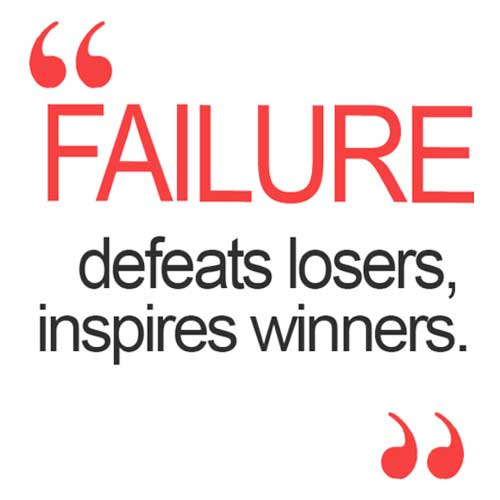
Thomas J. Watson, the founder and first president of IBM said: “Failure is a teacher – a harsh one, perhaps, but the best… That’s what I have to do when an idea backfires or a sales program fails. You’ve got to put failure to work for you … you can be discouraged by failure or you can learn from it. So go ahead and make mistakes. Make all you can. Because that’s where you will find success. On the far side of failure.”
I know when I was starting out in business I used to dread getting things wrong and having projects fail. I used to think that failure was something bad, to be avoided, but along the way I have begun to realise that my best lessons are learnt when I try something and it doesn’t turn out as planned. In effect I’ve failed but the feedback I get is priceless and it helps me calibrate my offering and do something different.
Recently I read an article about the African impala. They can jump to a height of over 10 feet and cover a distance of greater than 30 feet and yet these magnificent creatures can be kept in an enclosure in any zoo with a 3 foot wall. The reason is that these animals will not jump if they cannot see where their feet will land.
This is a lot like humans. Many of us will not live up to our full potential and achieve all we want to as we are afraid to take a risk. We are afraid to fail as society has conditioned us that failure is bad. That was certainly the messaging that I got as a chlld, however failure can be one more step on your road to success – you just have to turn it around in a positive direction. Failure can push you harder to succeed. Failure can strengthen your determination to overcome obstacles. Failure can make you braver in the face of opposition. Failure can help you learn what you need to do in order to succeed. Failure can teach you what your limitations are – and your strengths. Failure can encourage you to change your strategy.
“Failure is not an option” became a popular catchphrase after the release of the movie Apollo 13. Failure happens, but when you’re responsible for the people working for you, you have to do everything you can to guard against it.
As a leader, devote yourself to avoiding these crucial failures in leadership.
- Disconnecting from people. Don’t get so caught up in strategy and planning that you forget to talk to the people who work for you. Most of the time, they know more than you about how things work from the ground level, and their insights can be invaluable.
- Doing too much. Delegate appropriately so you don’t get overwhelmed and lose sight of the big picture. When you hire, look for people who can perform aspects of your job as well as or better than you can. Your role is complicated enough without adding tasks that your team should be able to handle.
- Avoiding risk. Play it safe, and your organization will never grow. That doesn’t mean being foolhardy with your organization’s assets. Seek opportunities everywhere, and be willing to commit resources wherever you’ve got a reasonable chance of success.
- Exhaustion. Take care of yourself, physically and mentally. Eat well, exercise, and take time off so you can stay fresh as you confront the day’s challenges. Pushing yourself to the brink will only increase everyone’s anxiety.
- Falling in love with authority. You’re the boss, not a monarch ruling by birthright. Don’t rely on your title, and the volume of your voice, to get employees to do what you want. Base your decisions on your experience and judgment, and be willing to listen to other points of view instead of assuming that only you know what’s right.
When J. K. Rowling, author of the phenomenally successful Harry Potter series, had been out of college for seven years, she found herself at a dark juncture in her life. At that time, she says, she had failed in life on an epic scale. “An exceptionally short-lived marriage had imploded. I was jobless, a lone parent, and as poor as it is possible to be in modern Britain without being homeless.”
In short, Rowling says she was the biggest failure she knew. And while she says there is nothing ennobling about being poor, she believes she reaped benefits from her failures. Failure, she says, stripped away all the inessential aspects of her life. She stopped pretending to be anything other than herself, and it was then that she began to earnestly pursue the only work that mattered to her. It was not, she says, the fairy-tale transformation to success so often written about her in the media.
And one thing I have learnt is that becoming successful – whatever that means for you – is never something that happens overnight. Despite all the media hype success takes hard work because it takes 10,000 hours to perfect your craft. So imagine the opportunity for failure along the way and embrace this and learn from the experience because this will help accelerate your success.
So what leaps of faith will you take today to move your business to the next level?

by Julia Felton | Feb 24, 2015
In a recent article the Harvard Business Review cited the following as traits of innovative leaders. I’m curious what you think about these traits and are there any you would add.
Many organisations would like their leaders to create more innovative teams. But how exactly should they do this? Most highly innovative leaders can often find it difficult to pinpoint what accounts for their skill. Research carried out by US –based leadership development consultants Jack Zenger and Joseph Folkman identified 10 distinctive behaviours that set innovative leaders apart.
These leaders:
- Display excellent strategic vision. The most effective innovation leaders could vividly describe their vision of the future
- Have a strong customer focus. They networked with clients and asked incessant questions about their needs and wants.
- Create a climate of reciprocal trust. They initiated warm, collaborative relationships with the innovators who worked for them.
- Display fearless loyalty to doing what’s right for the organisation and customer. Pleasing the boss took a back seat to doing the right thing for the project.
- Put their faith in a culture that magnifies upward communication. These leaders were often described as projecting optimism, full of energy, and always receptive to new ideas.
- Are persuasive. They presented ideas with enthusiasm and conviction, and the team willingly followed.
- Excel at setting stretch goals. They set goals that required people to go far beyond just working harder but required that they find new ways to achieve a high goal.
- Emphasize speed. These leaders believed that experiments and rapid prototypes were preferred to lengthy studies by large committees.
- Are candid in their communication. These leaders were described as providing honest, and at times blunt, feedback.
- Inspire and motivate through action. This comes from a clear sense of purpose and meaning in the work.
So do you have the skills and mindset as a leader to create innovative teams? I’d love to hear if you’d focus on anything different.

by Julia Felton | Oct 26, 2014
If you run your own business I’m sure you are always been told that you need to attend networking events because this is the one of the fastest ways to gain visibility and let people know what you do.
I agree that visibility is vitality important for any business owner because if you are the best kept secret on the planet no-one knows to buy from you. In fact I’ve known many great businesses fail simply because no-one knew about them. Today, however, it is easier than ever to get visibility and let people know what you do.
So then, why doesn’t networking work for most people? The simple reason is that most people spend their time networking telling people WHAT they do. For example, they are a social media consultant, a coach, a trainer or a landscape gardener. You get the idea.
However, people don’t really care WHAT you do they care WHY you do it.
The why is the reason that you went into business and it is what motivates you to get out of bed in the morning and continue on with business even on the toughest days. The why is your driver.
So for example Virgin’s WHY is to change the game and challenge the status quo by providing a product or service of great use. Us shoe retailer Zappos WHY is to make customers happy whilst Disney use imagination to bring happiness to millions.
When people share Why they do something this stirs feelings in the limbic part of the brain – the part of the brain responsible for decision making and behavior. It helps people connect together through shared feelings and emotions. Contrast this with the neocortex part of the brain which is rationale and analytical and is concerned with what we do. The problem is that the neocortex does not drive behavior which is why when you tell people what you do at a networking event they often don’t take any action and help refer business to you.
Networking Neighs is networking group with a difference as the entire focus of the event is on sharing with people WHY you do WHAT you do. Based on the proven formula developed by Emma Taylor of The Bay Horse Speaks the levels of connection that have been built up between the members in other Networking Neighs Groups has been astounding as has the level of business passed between each other.
Forming relationships and connections is vital for business success and really helping others understand more about your own drivers really helps accelerate this process. Plus the event being held at Gallabar Farm, where the mere presence of horses somehow unlocks something hidden within each of us to connect and be seen as who we really are.
You can find out more about the Networking Neighs meeting in Yorkshire here. You’ll also find Networking Neighs in Warwickshire and Sussex
Next time you are at a networking event I challenge you to start sharing with people why you do what you do. You’ll be amazed at the results.

by Julia Felton | Jun 11, 2014
Recently I’ve been realising that running your own business is much like being in a horse race such as the Grand National. You all want to get to the Winners Circle but how many of you have the courage to get there?. How many of you are mentally and physically prepared for the ride of your life?
As in any race you can prepare for this by yourself or you can enlist the help of a coach to support and guide you. All great sports athlete’s have coaches (sometimes more than one) who help them not only with race strategies and tactics but also with the mindset of success – the psychology of winning.
It doesn’t matter how you look at it business success is down to just 2 things:
– what you do
– how you show up
and both are needed but usually not in equal measures. In my opinion business success is much more about how you show up rather than what you do. It’s the old 80:20 rule. Unless you are mentally prepared to face your fears and get over the obstacles (aka the jumps) you will never reach the winners circle.
This is how I described the role of a coach and mentor to my new VIP client last week who has came to work with me on a six month programme to Jump Start her business so that she can reach the Winners Circle.
I used the analogy of being in the Grand National where your business is the horse, you are the rider, I’m the trainer and the jumps represent the obstacles that you will face as you ride your business over the finish line to the winners circle.
Now it turns out that my new client really got the analogy – unbeknown to me she was once a jockey and had even competed in the Grand National – that’s an amazing achievement and shows me how much courage she has. Assuming she can harness this same courage, that got her round Aintree, to her business, she is really off to a flying start.
What my client realised was that with me as her coach and trainer we can co-create and discuss all the strategies and tactics for the race but in the heat of the moment she needs to listen to her intuition and do what feels right as she rides to success. This might mean kicking on into the jump or checking her stride.
My responsibility as her trainer/coach is enter her for the the best races and set her up for success. Her role is to ride pro-actively over the fences. If she sits passively on her horse (aka her business) the likelihood of crossing the finish line and reaching the winners circle is severely diminished.
So if you want my help to get your business into the winners circle why not apply for one of the limited number of Business Acceleration Success Sessions that I’m offering this month. This is a complimentary call with me where we will identify what is holding you back in business and map out a plan for your next steps. And if I think we could create a great trainer – rider relationship for your business then I’ll let you know.
To apply simply complete these five simple questions online here. Do it now as I don’t want you to miss out on this amazing opportunity.
by Julia Felton | May 6, 2014
“There is nothing quite so useless, as doing with great efficiency, something that should not be done at all.” – Peter Drucker
The Pareto Principle – also known as the 80:20 rule – is applicable to any business and let time and time again I witness business owners failing to understand this and so wasting valuable time, energy and money on activities that are not adding to helping the business meet it’s goals. As my regular herd members know I am all about creating businesses that are more efficient and what I called Joined Up.
So what is the Pareto Principle? It holds that 80% of the consequences of any action come from 20% of the causes. This principle can actually be applied to everything you do. It is a powerful, fundamental principle of life – and of working smart.
The original 80:20 observation was as a result of Italian economist Pareto noticing in 1906 that 80% of Italy’s land was owned by 20% of the population. He then carried out surveys on a variety of other countries and found to his surprise that a similar distribution applied. He and others later discovered that this principle is proven in many other areas of interest:
- 80% of results come from 20% of effort;
- 20% of your customers will account for 80% of your profit.
Apply the 80:20 rule to the information you receive: 20% is useful, whereas 80% is not. The key is to identify and focus on that 20% and ignore or remove the rest completely.
The same is true of time expended for results achieved. Think of the benefits of applying the Pareto Principle to your time management and personal and business productivity!
Which one of these statements rings true for your business?
- 80% of your business comes from 20% of your customers
- 20% of your product or service range contributes 80% of your profit
- 80% of customer complaints originate from 20% of the causes.
- 20% of your individual effort and time achieves 80% of the desired results
- 80% of your business productivity loss results from 20% of the causes
- 20% of your staff is responsible for 80% of the business outputs and results
- 80% of the value in the business is generated by 20% of the processes
The common approach to business is to squeeze every last drop out of each opportunity, to go ‘100% all-out’, without consideration of the impact on time, productivity and wastage. Simple, time-efficient businesses recognise that it is fundamentally inefficient to go for the ‘whole pie’ when you can get the majority of results for the minority of effort.
With knowledge of the 80:20 principle, you can concentrate on what wins you customers and success. Look at your business and concentrate on the 20% that produces the 80% of benefit. Spend 80% of your time doing the 20% that really gets you results. ‘You win some, you lose some’ is no way to run a successful business, but armed with knowledge of the Pareto Principle, you can work the system to your benefit.
It’s not just about working smarter – it’s about working smarter on the right things that will get you the best results. Think really boldly about this law – how far, and in how many ways you can apply it. The more incredible the results can be.
- Why spend 100% of your money and time on ‘growth at all costs’ when you could downsize, freeing up capital and time? Spend just 20% in developing the most profitable 80% of your current business, and invest the rest in other ventures?
- Why work full time, when you can work only 20% of the time on the things that get you 80% of your profits? And spend the rest of the time sipping a cold beer on the beach, watching the sun go down or if you are like me hanging out with my horses!
This year I am actively reviewing my business to see which activities I need to focus on most and which I can let slip by as the benefits of doing them are not worth the time and energy invested.
I encourage you to cast a critical eye over your business and examine what you need to do more of and what you need to stop doing. I’d love to hear what you discover about your business
How can you use this rule to revolutionise your business and your life? Take it to the limit!

by Julia Felton | Apr 28, 2014
The person on the phone wants to go over the contract she sent you. This is THE call you’ve been waiting for! However, looking at your cluttered desk and the bags full of paperwork waiting to be filed, you have no idea where the document might be.
You bluff your way out of the conversation (“Can I call you right back? I was on the other line when you called.”) and spend 30 minutes hunting for the paper. When you finally find it, you notice the stickie reminding you of action you were to have taken on the document last week. Yikes.
Now, where is her phone number? It’s on the back of this envelope, right? Maybe it was on the back of today’s lunch receipt…
Pretty scary! The wasted time and energy. The harsh self-criticism. The stress and embarrassment. The lost opportunities.
This office nightmare comes to life countless times every day by people who miss or ignore the direct connection between organization and success. It’s not just that organization allows you to move more easily around the office. Organizing your office and work life helps you fulfill your own potential and that of your company.
“Organizing is the process by which we create environments that enable us to live, work and relax exactly as we want to,” writes Julie Morgenstern, in her book, Organizing from the Inside Out. “When we are organized, our homes, offices and schedules reflect and encourage who we are, what we want and where we are going.”
For most people, the three biggest obstacles to an organized office and work life are: clutter (paper and email), planning and follow-through, the latter two being more an issue of time management. And while a disorganized office can be much like a disorganized schedule—overly packed, haphazard, limited in space or hours—it makes sense to organize space and paper first. Below are some tips for tackling office clutter.
If you’re starting from scratch—organizing the entire office and creating a new system—Morgenstern advises to first analyze the situation, taking an overall look at space, furnishings, equipment, supplies and types of paperwork. Ask yourself five questions:
1. What’s working? It’s helpful to know what’s not “broken” so that you don’t spend time fixing it. Also, a little “good news” is nice to hear.
2. What’s not working? Take a big picture approach here. It takes forever to get things done, because I can’t easily find what I need, so I work a lot of overtime.
3. What items are most essential to you? What do you need to have at hand? What papers represent the crux of your business?
4. Why do you want to get organized? These are the benefits you will derive from an organized office/desk. Less anxiety, more energy for work, more room for work.
5. What’s causing the problems? Some of the most common sources of office clutter: inconvenient or insufficient storage, no designated “home” for things, perception of not enough time to get or stay organized.
The next step is to strategize how to approach the things that are not working and their underlying problems. There are dozens of organization methods and systems; one might be just right for you, or you may be best served by mixing and matching ideas. In addition to Morgenstern’s, here are some books to consult for ideas:
The Well-Ordered Office: How to Create an Efficient and Serene Workspace, by Kathleen Kendall-Tacket
Organize Your Office! Simple Routines for Managing Your Workspace, by Ronni Eisenberg
The Office Clutter Cure: How to Get Out from Under It All, by Don Aslett
Organizing Your Work Space: A Guide to Personal Productivity, by Odette Pollar
File…Don’t Pile: A Proven Filing System for Personal and Professional Use, by Pat Dorff
Taming the Paper Tiger at Work, by Barbara Hemphill
For many, the biggest problem lies in maintaining an organization system. Stephanie Winston, author of Organized for Success, studied the habits of a cross-section of high-level executives across the United States, and recommends a relentless, laser-focused approach to processing paperwork—and even electronic communication—so that it doesn’t build up:
• Toss it. (Delete, if electronic.)
• Refer it. (Forward.)
• Act on it personally.
• File it. (Archive.)
To arrive at any kind of a sustaining system, Morgenstern writes, it’s important to understand and work with or around psychological obstacles to a clutter-free environment. These may include:
- Unclear goals and priorities. Organizing is about defining what’s important and setting up a system to reflect that.
- Fear of success/fear of failure. Disorganization may be a convenient way to hold back.
- Need to retreat. Clutter can be a protective shield to keep others at a safe distance.
- Fear of losing creativity. A common myth is that creative, “right-brained” people need to work in chaos to produce high-quality work. Balderdash!
- Need for distraction. Clutter can provide a convenient excuse to avoid uncomfortable issues or unwanted tasks.
- Need for perfection. Often, people won’t deal with clutter until it can be done perfectly. Translation: It will never get done.
Identifying these obstacles to an organized office and work life can go a long way toward creating an effective, lasting solution to clutter and disorganization. Along the way, you might just find yourself fulfilling your potential, too!

by Julia Felton | Apr 8, 2014
“Don’t mistake movement for achievement. It’s easy to get faked out by being busy.
The questions is: Busy doing what?” – Jim Rohn
Everyday I see entrepreneurs and business owners being busy and I often wonder if they are really being effective. You see being busy and being effective in business are not the same. It’s easy to be busy doing other peoples things or activities that are not driving you towards your dream and goals. As entrepreneurs it is also easy to get seduced by the “bright shining object syndrome” what I affectionately call Entrepreneurial ADD. This results in a lack of focus and engaging in tasks that don’t drive you towards where you want to go. Sure as an business owner you need to be open to all possibilities as opportunities can appear from the least expected places, but when you are not clear on what you want the right opportunities in my experience never show up, just distractions instead.
In his highly acclaimed book on effectiveness, “The 7 Habits of Highly Effective People“, Dr Steven Covey makes a clear distinction between what is urgent and what is important. Covey outlines a 4-box matrix with Urgent on one axis, and Importance on the other (see the image).
Most people who are feeling like busy fools are making one of two mistakes in respect of Covey’s matrix: they are putting all their effort into completing Urgent tasks, or they are failing to identify the Important ones. Urgent tasks are those that have a deadline approaching, while Important ones are those that get you where you want to go in the longer term.
Covey says we should be spending most of our time in quadrant two – “Urgent AND Important”. And he makes a very important point: if we are dealing with quadrant two items while they are not yet urgent, we should never have anything in quadrant one at all. And where we can get the time to work on quadrant two stuff, to stop it leaking up into quadrant one, is from quadrants three, and particularly quadrant four.
The trick, of course, is to understand whether the “importance” of a task, or a project, or a business, relates to *your* long-term objectives, or those of somebody else. So before you put something to the top of your priority list, make sure you are doing it for you.
Another important distinction to be made here is that as a business owner marketing and sales are always activities that should be in quadrant 2. If you are to avoid the roller coaster of cash flow that many business owners experience you need to ensure consistency in your sales and marketing activities so that you are always working on income generating activities. After all your business won’t survive if you don’t have any customers.
Avoiding being a busy fool means s focusing on these Important and Urgent tasks daily and engaging in income generating activities. Only then will you create a successful business that fuels your dreams and goals, and yet time and time again I witness business owners being busy by finding activities to do that stop them focusing on this quadrant. This is a classic case of procrastination, something we will look at in another article.
So for today, be clear on what you want to achieve and stay focused on this path. Stop being busy doing other peoples things or tasks that don’t lead to your success.
I’d love to hear about what you are focusing on today.

by Julia Felton | Feb 18, 2014
Given that this is the Year of The Horse, I’ve made a decision that in 2014 I need to become more visible and bring the amazing work that horses teach us into the world. It continues to amaze me how much my horses teach me about business on a daily basis. The lesson that the herd has been reinforcing this week is the power of FOCUS and clarity.
In fact the lesson only landed for me when I was chatting with one of my coaches. Last year she had come and experienced a Horse Assisted Coaching session with me, which she still raves about. When we were chatting about her experience on Sunday she reminded me that when she was leading Charlie, my race-horse I had told her “Just look where you want to go and he will follow”. Of course when she had clarity and focus Charlie followed, but when she was unclear on where she wanted to go, Charlie just took over and did his own thing, invariably eating the grass.
Wow, how like that is business. When as a business owner you lack focus. clarity and a vision of where you want to lead your business it becomes confused and like Charlie finds excuses to go off and eat grass. In fact I have observed when I lack focus my business takes on a life of its own and manages to spiral out of control. My business ends up leading me rather than the other way around. And that is not a great place to be as you become reactive to the situation around you. And this constant reacting creates stress and does not help you achieve the life-style that you want.
The only solution is to have a plan. A vision of where you want to go. You wouldn’t get into a car to drive to a meeting without knowing where you were heading. If you didn’t know the destination it is certain that you would fail and not get there. This is why having a plan in business and in life is so vital. Beware however of becoming fixated with the plan, you need to adopt a flexible approach to navigate the obstacles that will surely come up along the way. If we take the car journey example again, if you decide to drive to Scotland you will hopefully have an idea of the route you want to take but if the road is flooded you would have to deviate. To continue on blinded by the flood warnings would be a recipe for disaster.
So do you have a plan for your business and life?. Do you have a clear vision of where you are heading? If not I strongly suggest you create one. You can write out your vision, draw it, collage it, whatever works for you. I find vision boards work well for me.
by Julia Felton | Feb 2, 2014
I’m often asked how I made such big leaps in my business in such a short amount of time.
One of the things that has made such a big difference over the last three years is surrounding myself with amazing, high caliber, professional women and investing with mastery level coaches. So every now and then I thought I’d point you in the direction of worthwhile free resources from some of those women who are rockin’ it with their unique specialty.
May you find the connection to the perfect resource you’ve been hoping for!
*****************************************************
Awesome FREE Resources from Mastery Level Coaches
*****************************************************
Just click on the resource title in red and you will immediately be taken to the download page for that resource.
[content_box_red width=”75%”]Speaking to groups is one of the quickest ways to get known,
build your list and get high-end clients. Check out Dinah Snow’s
free Speaking Kit: How to Attract Clients and Build Your
Tribe – Step by Step –by Speaking for Free 2.0
[/content_box_red]
[content_box_green width=”75%”]If you are a corporate leader or designated professional,
Nafissa Shireen invites you to explore your hidden beliefs
about money that may be affecting your leadership skills.
Learn the 5 steps you can take to Master Your Money
and Career.[/content_box_green]
[content_box_blue width=”75%”]Coaches, health professionals, and those wanting to shed
weight need these toolkit basics from Janis Pullen: Weight
Loss Maintenance Assessment Report, 15 permanent
weight loss tips, done-for-you tracking sheets, risk report,
Ontological Wealth, Weight, and Leadership Success Tips
“Weight Loss 101” Package:
[/content_box_blue]
[content_box_yellow width=”75%”]Your Mindset is the Key to Your Success. Check out
Meriflor Toneatto’s 7 Secrets to a Wealthy Mindset
audio which includes high value and high content
information to help you shift your mindset into financial
freedom in your business and life.
[/content_box_yellow]
[content_box_light_blue width=”75%”]Boost Your Attraction Power: Master 12 Love And Money Alchemy Principles and Thrive! Acknowledge the
Alchemy that exists between Love and Money in order to
create a positive relationship with money and attract a
consistent flow of abundance! Download Marcelle della Faille’s
free checklist.[/content_box_light_blue]
and then of course there is a new free resource that I have specially created for you:
[order_box_2 width=”60%” + border=”4px”]Entrepreneurial ADD: The Hidden Illness That’s Costing You Cash and Clients. In my revealing new report you will discover how you know if you have it, how it impacts your business and the one thing you can do right now to cure this condition.
[/order_box_2]
I hope you love these resources!.

by Julia Felton | Jan 27, 2014
It doesn’t matter what you do in life staying FOCUSED is paramount to ensure your success. Steve Jobs, the founder of Apple, had laser-like focus and cites staying focused as one of the key leadership skills any business owner must have. Staying focused also means that often you need to streamline your offering. According to Jobs it is better to do a few things really well rather than loads poorly. Can you think of a time when you have experienced a mediocre product or service because the company was distracted by too many competing priorities. Success will always elude you until you get focused.
At a Garden Party in 1994 William Gates II (the father of MicroSoft founder Bill Gates III) posed this question to his distinguished dinner guests who were at the time the two richest men in America:
“What factor do you feel was most important to getting where you’ve gotten in life?”
Both guests, Warren Buffett and Bill Gates replied focus.
Everyone knows focus is vital for achieving success. But how do you get focus? And once you have it, how do you keep it?. The recipe for focus has two ingredients.
- The first ingredient is clarity about what you want to do. No surprises here. When people talk about defining specific goals; casting a clear vision; or describing what success looks like they are talking about variations on this one critical point.
- The second ingredient is killing the other things you also want to do. This second ingredient is far less obvious, and far more forgotten. Our natural tendency is to assume that if we just get really clear about what we want to achieve that the seas will part and distractions will magically evaporate. That’s the positivist approach. Reality calls for a reductionist approach.
In an interesting study, the NYU psychologist Peter Gollwitzer found that writing action plans in a “distraction-inhibiting” way is more effective at keeping us focused than writing the plans in a “task-facilitating” way. For example, let’s say your goal is to reach a certain sales target for the week. To achieve that goal, you know you that you need to start your day by making sales calls right off the bat. So, you might set a calendar reminder for yourself that says “the first thing I will do is make 3 sales calls to customers A, B, and C!”
The problem is that this crystal clear “go get em’!” plan doesn’t say anything about the emailing, water cooler chats, and Facebook status updates that will compete for your attention first thing in the morning. Gollwitzer’s research suggests that the best approach to distraction is not doubling your efforts toward the goal, but preemptively naming and avoiding the likely distractions.
I’ve started applying this to my own daily habits and it’s working wonders. For example, when I need to focus on writing this newsletter I write “NO EMAIL!! Write your ezine” and then I turn my phone and email off to ensure that I get no distractions.
As Steve Jobs noted “Deciding what not to do is as important as deciding what to do”. So my question to you today is what will you say No to, in order to stay focused on what you really want and rein in that business chaos.