by Julia Felton | Jun 19, 2018
I recently heard a story that shocked me. Three judges sat on a parole board, where they got to decide which prisoners would be granted parole. On this one specific day, three different prisoners came in to have their cases reviewed. All three had served two-thirds of their sentence, but only one was released. Why?
It turned out that the determining factor had little to do with crimes or rehabilitation, but rather the time in the day that their case was heard. One case was heard in the morning at 8:50, the other two in the afternoon at 3:10 and 4:25 respectively. Which prisoner was released? The one whose case was heard first thing in the morning. A further study of 11,000 parole decisions revealed that 70% of prisoners who had a morning appearance were granted parole, compared with just 10% whose case was heard in the afternoon.
When people become tired and fatigued, they switch to a quicker, more efficient, and less energy-consuming form of decision-making.
The challenge is that this is more fallible. When leaders are fatigued they struggle to communicate effectively, collaborate, and compromise. Often they actually avoid making decisions and revert to established patterns of thinking.
This phenomenon is known as decision fatigue. and helps explain why leaders can sometimes become emotional and irrational in their decision-making. Leaders simply can’t make decisions all day every day without experiencing this kind of mental fatigue. The problem is that many leaders are unconsciously aware of this fact. They blindly continue, thinking that the decisions they make in the afternoon are as well-thought-out as those they made in the morning.
As decision-making fatigue kicks in, leaders respond in one of two ways.
- Their decisions become reckless, as they act impulsively instead of expending the energy to think through the consequences. (Just think about how many times you have purchased something you really didn’t need — I bet you often made those decisions in the afternoon!)
- They do nothing, and so avoid making a decision to mitigate any risks. By doing nothing, leaders exhibit the ultimate form of energy conservation. However, avoiding making decisions now often creates more problems in the long-term.
For the prisoners attending the parole board review in the afternoon, decision-making fatigue meant the judges were less inclined to grant release for fear of making a bad decision. So, effectively, they made none at all and maintained the status quo.
So what can leaders do minimize the effects of decision fatigue impacting their performance?
- Ensure that all meetings that require critical thinking are held first thing in the morning when you are more alert.
- Schedule creative activities in the morning. I know, when writing my second book, I was always more creative and productive between 5am and 7am.
- Use early mornings for planning and scheduling.
- Plan difficult conversations, for example with team members, for the morning when you are more alert and can have the energy and ability to pivot and be flexible in your approach.
- Use the afternoon for repetitive tasks, that don’t require so much mental power, or for tasks where you don’t need to make lots of critical decisions.
- If you need to get buy-in from the board for a decision, and the rational for the decision is compelling, then try scheduling a meeting in the afternoon. The board may feel less inclined to challenge your well-thought-out logic because of decision fatigue.
- In the afternoon, people can be reckless with their decisions; so if you want to implement a process that could help the other person, try promoting it later in the day when they are seeking to sedate their fatigue
Understanding the concept of decision-making fatigue can help explain why sometimes a proposal gets accepted and other times rejected. It’s not because of the quality of the proposal or idea, but rather with the mental state of the recipient. How will you restructure your leadership activities to leverage the power of decision-making fatigue?

by Julia Felton | Apr 18, 2018
We’ve all heard the announcements on the Underground (or subway if you live abroad) to “Step Away From The Edge”. In effect they are reminding us that we need to step away and put space between us and our businesses and and yet the reality is that few business leaders really do this, especially in the SME sector. Business leaders struggle to “Stop working in the business and start working on the business” The result is that many businesses get stuck at a certain revenue ceiling because they simply can’t grow. The business leader/owner has become a bottle neck in the business causing operational flows to slow down and in the worst case stop all together.
Some recent research conducted by Haines Watts, a UK accountancy firm, of 500 UK SME’s revealed that “(42%) of UK SME owners believe that their business couldn’t survive more than a single week without them at the helm”. I can’t imagine what pressure that puts on the business leader just simply to keep things going. Having time to take any vacation, well that simply doesn’t figure into the equation. And yet when business leaders step away, even for just a few days, from the daily business operations, they come back renewed, re-energised and with a new perspective on business issues.
Here are five reasons for this very serious business challenge:
- Lack of Shared Vision
Business leaders are very poor at articulating clearly their vision for the business. As such their teams are not on the same page when it comes to the strategic growth plan. These divergent views cause silos to emerge, and create team disengagement as the team members, who could massively drive the business forward, are not engaged and don’t feel they know how to contribute to the success of the business.
- Poor Planning
The research revealed that only 84% of business owners are only able to spend between 1-10% of their working week planning for the future. In contrast, business leaders who are able to step back and focus predominantly on planning are more than twice as likely to run fast growth businesses (annual growth greater than 15%).This is the typical chicken and egg situation. The business leader doesn’t feel that they has time to plan, and yet without creating a robust, well thought out plan, no-one else can navigate the business, as they don’t know where they are heading.
- Lack of TrustOnly 60% of business leaders believe that they have the full support of their management team and as a result many business leaders simply don’t trust their team to deliver. Whether this is a perception built on ego – No-one can do this as well as me – or a genuine concern, the reality is the same. The business leader doesn’t share vital information with team members, and so they feel disempowered to do their role.Concerningly, despite nearly 50% half of business leaders lacking trust in their management teams, the teams themselves don’t realise that trust isn’t there. 83% of senior managers believe they fully understand the business owner’s goals and 87% hold the, often false, belief they would be trusted to run the business even in the owner’s absence. So, there is a massive gulf in team members perceptions and that of the business leader.
- Lack of Communication
The problem of a lack of trust is compounded by poor communication. 52% of business owners find themselves hiding their concerns from their teams because they are worried about showing vulnerability. And yet we know that being able to display vulnerability is a key skill of a leader. And if the business leader cannot articulate their concerns to their management teams then there is no transparency and courageous conversations fail to occur.
- Lack of a Growth Mindset
For an SME business there is a very real need to focus on sales if the business is to grow, and yet many management teams lack the skillset to help the business leader grow the business. The research revealed that over half (53%) of management teams have never helped grow a business prior to the one they now work in today. This is because in larger organisations there are specific functions dedicated to sales, and yet in a smaller business every single team member needs to be a brand ambassador actively promoting and selling the business at every opportunity
Given that SME sector is the powerhouse of economic growth across the world it is imperative that we help these business leaders elevate themselves out of the day to day operations so that they can become more strategic about their growth. Only by doing so will they be able to fully leverage the power of their teams which will create a more engaged workforce that help deliver more productivity and profitability to fuel business growth.

by Julia Felton | Apr 4, 2018
Over the last few months I’ve been delivering a number of workshops on dealing with conflict, as its one of the top challenges that people have in the workplace. The problem is that a leader’s unwillingness to address conflict can result in devastating consequences for the business. Not only that, people can also fail to address this in their personal lives, and the results too can be damming.
Whilst some people enjoy dealing with conflict most of the people I work with would rather avoid it. There are a variety of reasons for this including the need to be liked, the pursuit for acceptance and the desire for stability in one’s life – they don’t want to rock the boat. The irony is that although many people seek to avoid conflict what they are actually doing is internalising their frustration. This frustration bubbles inside of them and then suddenly, just like a volcano, it erupts leaving a wake of devastation in its path, that other people don’t understand because that are unable to join the dots to see what was the trigger as often this happened days, weeks or even months beforehand.
“Avoidance is the best short term strategy to escape conflict, and the best long-term strategy to ensure suffering” – Brendon Burchard, author The Charge
Unfortunately, great leaders cannot lead effectively without addressing conflict as it arises within the workplace. In fact, if they choose to avoid conflict at all costs, they can put their business at great risk.
Here are five deadly sins of conflict avoidance that I often witness in organisations when the leaders routinely avoid addressing conflict:
- Communications Become Strained: Conflict that goes unresolved will only fester and cause communication breakdowns to develop within the workplace
- Teamwork Diminishes: As communications become strained within a team, cooperation and teamwork will lessen as animosity builds up.
- Productivity Declines When teamwork fail to work together productivity declines. Silo mentality results and often competition rather than collaboration becomes the norm
- The Customer Experience Suffers: When team members are not engaged and team become dysfunctional this directly impacts the customer. Typically it is seen as poor quality and reduced service delivery.
- Top Performers Leave: Non-one wants to work in a highly tense environment marred by conflict. When leaders fail to address, say the poor performance of other team members, then your best performers become frustrated at carrying the load and may opt to vote with their feet.
What Can You Do to Become Better at Addressing Conflict?
There are five steps that you can take to be a better leader, even if avoiding conflict is your default pattern.Consider the following:
- Develop and communicate your vision: Some conflicts can be avoided through clarity. So, develop a clear vision for what your team is to accomplish and communicate it. Help everyone understand what you’re trying to do and how they fit in and contribute to the vision
- Set expectations: Once the long-term vision is understood, expectations of each team member should be set. Expectation setting is important because it establishes baselines for guiding behavior and results.
- Monitor progress: By actively checking behavior and monitoring results any needed intervention can be provided earlier and larger conflicts can be averted.
- Focus on results: You can keep personalities out of the discussion by focusing on outcomes. It’s a way to keep everyone honest without making it personal. Team members that aren’t keeping up with the plan or, otherwise, are not meeting expectations can be “coached” based on facts rather than perceptions–which can make conflicts easier to address.
- Take Decisive Action: Many of us tend to put off doing things that we prefer not to do. Do not put off addressing conflict situations. If the need to confront someone on your team arises, do it now. There is simply too much at stake to let it go or to wait for things to work themselves out.
I know from my own experience how damaging avoiding dealing with conflict can be as it nearly caused the business unit I was running at the time to implode. Basically, I failed to deal with a performance issues of one of my team members. They had some great skills that we needed in the team, but their attitude and behaviour were not aligned with the company values. I made a bad decision when I hired them but my ego got in the way and I didn’t want to admit this. So I kept making excuses for them. The crunch came when my team told me, either they go or we all go. It was what John Maxwell refers to as the case of the bad apple. The longer I allowed that underperforming team member to stay he more he was affecting the rest of the team. Taking decision action was the only solution, as I then actively had to manage him out of the business.
And yet managing conflict doesn’t have to be difficult. My horses are masters at dealing with conflict. They aIways act immediately giving feedback to each on other on whether their performance is acceptable. They don’t fret about what the other horse will think, or worry about being liked. They don’t worry about the consequences.They just do what needs to be done and then “go back to eating”, Admittedly this is easier as they live in the present moment and don’t have to be concerned that the other herd members will hold grudges for months to come, which is something that many leaders get concerned about.
Always remember, it is a leader’s job to address issues as they arise and take decisive action. If we choose to avoid conflict at any price, the price may be far greater than we are willing to pay. The impact of conflict avoidance can ripple throughout the organisation and cripple the future growth and success of the business. So, embrace conflict resolution. After all, conflict can be very healthy, too. It is often how we get the best answers to the toughest questions.
by Julia Felton | Mar 14, 2018
“Some of the greatest advances happen when people are bold enough to speak their truth and listen to others speak theirs”.
KENNETH BLANCHARD, AUTHOR AND MANAGEMENT EXPERT
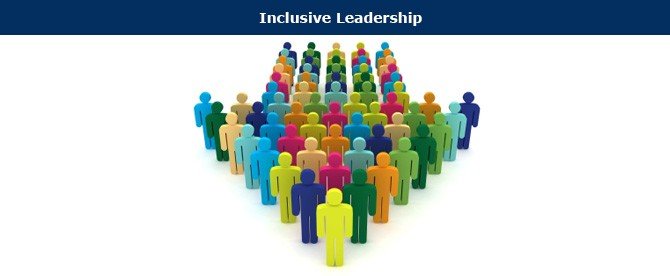
It seems that everywhere I look right now the topic of diversity and inclusive leadership prevails. So what is really is inclusive leadership? In their book Inclusive Leadership: The Definitive Guide to Developing and Executing an Impactful Diversity and Inclusion Strategy, the authors Charlotte Sweeney and Fleur Bothwick define an inclusive leader as “someone who has a strong self-awareness about their own preferred work style, but is able to flex this style to connect with all of their team, even those who think and work differently and who may have totally different motivators.” Clearly then an Inclusive Leader needs to have emotional intelligence and be self-aware of how others perceive events, as well as appreciating their own unconscious bias and how that could impact their decision making.
The term ‘cognitive bias’ was coined by Amos Tversky and Daniel Kahneman in 1972 and quite simply it means “our tendency to filter information, process facts and arrive at judgments based on our past experiences, likes/dislikes and automatic influences.” In a world that is a flux of rapid change it is natural for leaders to default to what they know. After all this feels safe, but of course it limits the opportunity for innovation and creativity and sometimes can result in wrong decisions being made because what worked in the past may no longer be a viable if the context has changed.
Unconscious bias can often be more noticeable when leaders discriminate against people of a certain colour, race, sex or nationality based on their past experiences with similar people. At work, biases (or the perception of bias) is the biggest contributor to people disengagement and cost of disengagement is huge. According to Gallup in the UK an incredible 92% of team members are disengaged or actively disengaged which is having massive repercussions on productivity and profitability levels and explains why the UK is struggle to compete with other European nations whose productivity levels are higher.
Here are 6 ways to deal with Unconscious Bias and so create a more inclusive workplace:
Become More Self-Aware: Get Conscious and become more fully aware about unconscious cognitive biases. Knowing that they exist is the first important step to tackling them. And they exist in plenty. There are over 150 different types of bias, do you know how all these impact you as a leader?.
Embrace Inclusion and Diversity. Ensure that when you hire you don’t hire people just like you. It is essential that every team contains a balanced mix of viewpoints as this leads to more diverse thinking patterns, and so creativity and innovation.
Ask Questions: When considering a decision, ask questions that elicit understanding and clarify details. When you ask questions, you extend an opportunity to others to really express them. You are extending an opportunity to yourself to understand their thinking more closely. Encourage a culture where asking questions is valued.
Look for Patterns. Nowadays we have a plethora of data we can examine to help us identify patterns. Looking for patterns from the results of past decision can lead to important insights and learning. However, beware as sometimes data can be misleading unless the real context of the data and the decisions made are fully understood. It’s easy to look at data out of context and interpret it in a completely different way to that which was intended.
Challenge the Norms. Playing devil’s advocate and taking a contrarian view of things is a great skill for inclusive leaders to have. It challenges others to think differently and articulate clearly and concisely their position so you can assess whether their stance is driven by their own bias.
Communicate Clearly. Inclusive leaders appreciate the clarity in communication is key, and so become mindful about their choice of words to describe people and situations objectively. Miscommunication is the cause of so much workplace angst as everyone interrupts through their own filters. In fact it is a wonder that we ever achieve anything at work.
Horses are masters at modelling inclusivity for us, as each member of the herd knows their role and how they contribute to the safety of the group. Indeed for a horse to be excluded from the group is tantamount to a death sentence, as a lone horse, being a prey animal, cannot survive alone. In fact being included as part of the herd is his ticket to safety and security. The herd provides what Simon Sinek refers to as the Circle of Safety for the horse, something he is loathed to be excluded from.
I’m curious what actions will you take to make your workplace more inclusive so you can leverage the benefits of increased employee engagement, productivity and profitability.
by Julia Felton | Jan 31, 2018
Recently as I prepared for delivering a Leading Through Change programme I thought I would research the different leadership models that exist. Boy was that a bad idea, as there are a plethora of models all extolling some different perspective. Nothing right or wrong with any of them, but the challenge is that they all focus on something outside the leader. In essence, they forget that the leader is an integral part of the situation and that a leadership style is not something you can simply adopt. It must be something that comes from within. That’s why I love this quote:
“If you want to be a leader, the first person you must lead is yourself” Mike Scioscia.
In my first book Unbridled Success, I looked at the concept of Leadership Begins With You, and now executive coaches and faculty members Ray Luther and Eric Johnson of Indiana University’s Kelley School of Business have coined the phrase Self-Observant Leadership to describe the principle that you can’t effectively lead others until you know how to lead yourself.
Self-Observant Leadership occurs when you deeply understand your identity, compare it to your reputation (how others experience you) and then make meaning of the observations and choose to adapt. It is a refinement on authentic leadership as it acknowledges that as a leader you need to understand yourself and how you’re perceived, then making behavioural changes to become the leader you want to be, even if it means operating outside the identity you’re comfortable with.
So how do you deliberately practice Self-Observant Leadership? Luther and Johnson share the following 6 steps:
- Live your values.
Your values are the GPS which you live your life by. They shape what activities and behaviours you engage in and yet many people really know what their values are. Your identity is grounded in your values, and in your purpose
- Move towards purpose.
Purpose is the other component of your identity. Understanding your profound Why, is what gets you out of bed in the morning. It is what drives your mojo and helps you sustain continual activity in the face of adversity. What’s the reason why are doing what you are doing? What legacy are you creating? What impact do you want to make in the world? With a clear understanding of your values and purpose in tow, you can then compare your identity to how you’re perceived.
- Learn from feedback.
Feedback is the breakfast of champions, so pay attention to it, both internal and external. This will help you gain insights into how you’re perceived. Be open and ready to accept some things you don’t want to hear, because it is only by knowing more about ourselves and how we are perceived that we can hope to develop.
- Be Present.
Self -Observant leaders live in the moment. They are present and grounded and so consciously aware of the effect they are having on others.
- Reflect.
Reflection separates good leaders from great leaders. By understanding the gap between how you see your identity and how you’re perceived by others, you can then make adjustments. Journaling is a powerful tool here. Take 5 minutes at the start of every day to reflect on the values and purpose you want to embody and then review this for 5 minutes at the end of the day to see how you did.
- Adjust.
Leaders take action and Self-Observant Leader are no different. They adjust their behaviours so they can be the best, both for themselves and their team. As leaders we need to have courageous conversations and yet for some people this might be outside their comfort zone, and yet to not have these conversations would not be serving your team members, who need to understand both the positive and negative about their performance. Whilst having courageous conversations might not be a leaders natural thing to do, to deprive team members of the opportunity to develop is also a travesty.
I’m curious to hear what you think about the principles of self-observant leadership and whether you subscribe to the tenant that “leadership begins with you”.

by Julia Felton | Nov 8, 2017
If you want to be a great leader who attracts quality people, the key is to become a person of quality yourself. Leadership is the ability to attract someone to the gifts, skills and opportunities you offer as an owner, as a manager, as a parent. Leadership is the great challenge of life.
What’s important in leadership is refining your skills. All great leaders keep working on themselves until they become effective. Here’s how:
1. Learn to be strong but not impolite.
It is an extra step you must take to become a powerful, capable leader with a wide range of reach. Some people mistake rudeness for strength. It’s not even a good substitute.
2. Learn to be kind but not weak.
We must not mistake weakness for kindness. Kindness isn’t weak. Kindness is a certain type of strength. We must be kind enough to tell someone the truth. We must be kind enough and considerate enough to lay it on the line. We must be kind enough to tell it like it is and not deal in delusion.
3. Learn to be bold but not a bully.
It takes boldness to win the day. To build your influence, you’ve got to walk in front of your group. You’ve got to be willing to take the first arrow, tackle the first problem, discover the first sign of trouble. Like the farmer, if you want any rewards at harvest time, you have got to be bold and face the weeds and the rain and the bugs straight on. You’ve got to seize the moment.
4. Learn to be humble but not timid.
You can’t get to the high life by being timid. Some people mistake timidity for humility. But humility is a virtue; timidity is a disease. It’s an affliction. It can be cured, but it is a problem. Humility is almost a God-like word—a sense of awe, a sense of wonder, an awareness of the human soul and spirit, an understanding that there is something unique about the human drama versus the rest of life. Humility is a grasp of the distance between us and the stars, yet having the feeling that we’re part of the stars.
5. Learn to be proud but not arrogant.
It takes pride to build your ambitions. It takes pride in your community. It takes pride in a cause, in accomplishment. But the key to becoming a good leader is to be proud without being arrogant. Do you know the worst kind of arrogance? Arrogance from ignorance. It’s intolerable. If someone is smart and arrogant, we can tolerate that. But if someone is ignorant and arrogant, that’s just too much to take.
6. Learn to develop humor without folly.
In leadership, we learn that it’s OK to be witty but not silly; fun but not foolish.
7. Learn to deal in realities.
Deal in truth. Save yourself the agony of delusion. Just accept life as it is—the whole drama of life. It’s fascinating.
Life is unique. Leadership is unique. The skills that work well for one leader may not work at all for another. However, the fundamental skills of leadership can be adopted to work well for just about everyone: at work, in the community and at home.
This post originally appeared on SUCCESS.com.
by Julia Felton | Sep 11, 2017
No-one I speak to disputes the fact that we live in a VUCA world full of volatility, uncertainty, complexity and ambiguity. We are living in a world where change is ever greater, where the future is less predictable, where the options increase exponentially, and the way we think about these options has undoubtedly changed.
Today, leaders are inundated with huge amounts of information and need to make decisions faster than ever. However, there is no way that just one person can manage that volume of data. Increasingly organisations are realizing the power of shared leadership and collective teams to help them navigate this volatile marketplace.
Whilst many might think that the concept of Shared Leadership is a new phenomenon, the fact is that in nature animals have been applying the principles of shared leadership for literally millions of years.
Take a herd of horses for example. They have existed on this planet for over 45 million years, compared to the 6 million years that humans have inhabited the earth. They have learnt to be agile and adapt to their changing environments through sharing leadership and can teach us some key leadership skills to help us survive in these challenging times.
In a herd of horses, leadership is shared.
The lead mare sets the direction and pace of the herd. The lead stallion keeps the herd together and protects it from predators. Each member of the herd has a role in protecting the health of the herd. All of the horses in the herd contribute to the socialisation of new or young members, teaching them what behaviours are acceptable and correcting those who could behave in ways that could compromise the health of the herd. The overwhelming goal of the herd leadership is to create unity, harmony and collaboration whilst keeping the herd safe.
Safety is a key consideration for herd members because horses are prey animals, so they live under threat of attack every day. The herd leaders need to create and maintain what Simon Sinek refers to as a Circle of Safety. They need to foster an environment free of danger and give the herd members a sense of belonging, the power to make decisions and offering trust and empathy. And guess what that is what we need to do as leaders in the workplace too.
The Diamond Model of Leadership
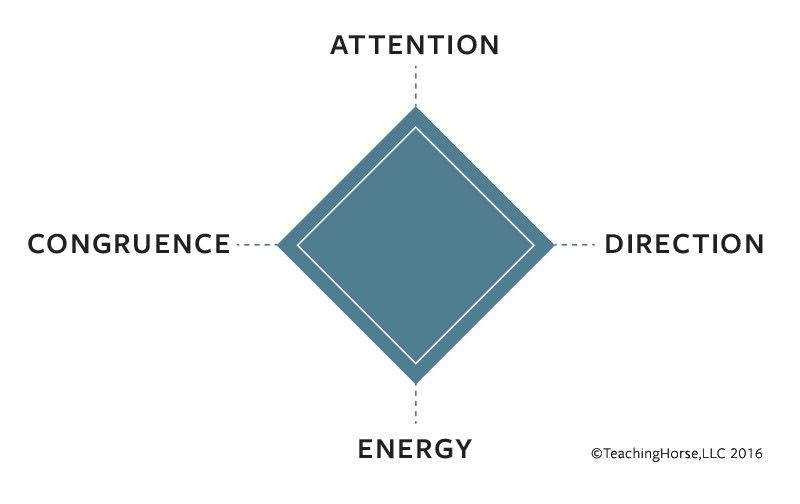
Based on the principles of the herd the Diamond Model of Leadership, developed by June Gunter of Teaching Horse, aptly reveals that for horses to place their trust in their leaders, they must know four things about them. The same four things that our team members want to know about us.
- Attention – when leaders are paying attention they can detect even the most subtle shifts In the environment
- Direction – leaders give clear direction of how to respond to these shifts
- Energy – through assessing the situation leaders decide on the energy and pace required to respond to the situation
- Congruence – leaders display congruence of their inner and outer expressions and are aligned in your actions. Ultimately the herd members must know that the leaders have their best interests at heart, at all times, and are not acting in a self-serving manner.
Attention, Direction, Energy, Congruence: When leaders demonstrate these characteristics and skills the herd become confident in their leadership. And the bottom line is that confidence in the leader makes the herd agile in times of change.
And the same is true for our teams in the workplace. To gain confidence, leaders must demonstrate they are paying attention to what is going on their organisation. They must be present and able to see the entire picture and what is happening. They need to quickly make decisions and give clear direction to the team with focused, inspiring energy that engages the team members to take action. Finally, leaders need to be authentic and have a clear, unambiguous intention that is trusted by the team. Leaders need to act from the perspective of “we” rather than “me”.
When these four attributes are present and aligned in leaders it inspires confidence in their leadership and makes the organisation agile to respond to the changing business environment.
And if you don’t believe me, I challenge you to go and experience Horse Assisted Leadership Transformation (HALT). If you don’t show up and pay attention, have clarity of direction, walk with purpose and be congruent in your actions, you will not be seen as an inspiring, compelling leader who the horse trusts and so he will not walk with you. But guess what, neither will your team members. They might not be so immediate in their feedback as the horse, but over time they will get disillusioned, lose trust and respect for you resulting in decreased productivity and profitability.
Interested and want to learn more, then connect with me and let’s have a powerful conversation. You can reach me at ju***@****************er.com. I look forward to connecting with you.
by Julia Felton | Aug 2, 2017
The thing I love about summer is the weather and the fact that all the plants and flowers bloom. It makes gardens look amazing and the good weather also means all the fields that I can see from my office window are green and verdant. Nature understands the seasons and that now is the time to start stocking up for winter. Animals start eating more so they have more body fat to keep them going through the winter. And my horses are no exception. The poor girls – Bracken and Thistle – only have to look at a blade of grass and they pile on the weight, whereas with the boys – Toby and Charlie – it is a slower process.
Regardless, the challenge is that as they eat more they also create more manure, which means I have more to clear out of their field each day. Currently I have to clear two barrowloads for manure every 24 hours. Given that the horses are currently living on a steep hill, and love to be at the bottom of the hill, my abs are getting a great workout each day, as I push these full barrows of manure up the hill.
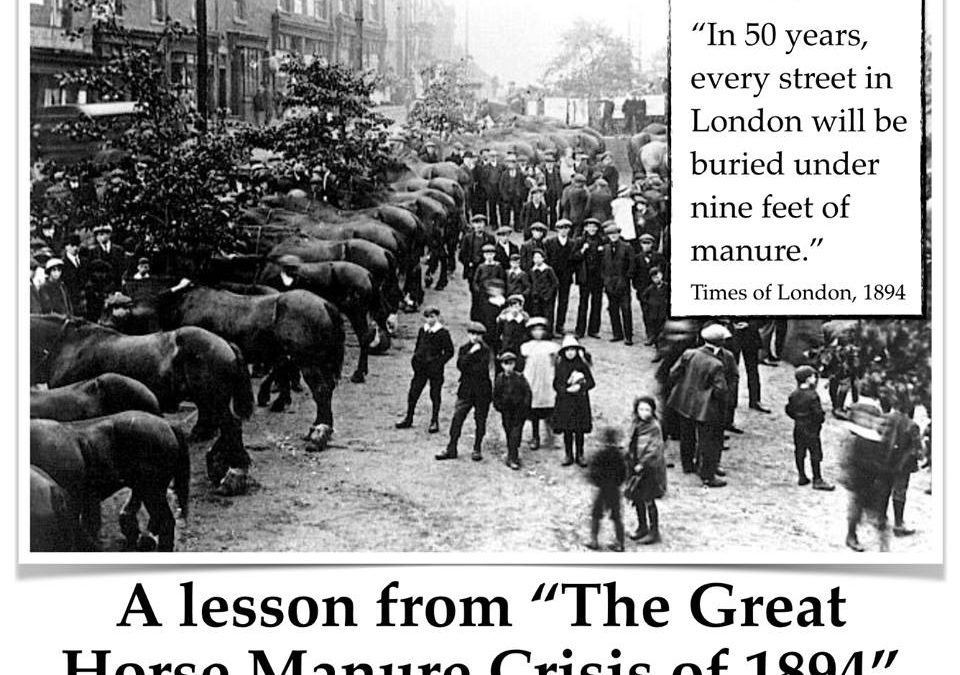
So what does horse manure have to do with business?. Actually quite a lot it seems because the The Great Horse Manure Crisis of 1894 was the first big global urban crisis that the world’s largest cities faced in modern times.
By the late 1800’s London had over 50,000 horses moving cabs and buses every day. Each one produced 15 to 35 pounds of manure and 2 pints of urine daily. At the same time, New York had over 100,000 horses producing 2.5 million pounds of manure each day. No one could figure out how to handle all this manure, and in 1894 the Times newspaper predicted based on the increase in population and horses at the time “In 50 years, every street in London will be buried under nine feet of manure.”
The crisis led to the very first International Urban Planning Conference in New York. However, it was abandoned after three days – instead of the scheduled ten – because none of the delegates could see any solution.
Many of today’s challenges look similarly insurmountable. Anyone looking at current trends and trying to battle the inertia, outdated policies or plain bad decisions of many bureaucracies, corporations and governments can easily lose hope
So what happened to end the Great Horse Manure Crisis of 1894?
Within a matter of years, the entire crisis simply disappeared. While officials looked unsuccessfully for solutions, Karl Benz, Gottlieb Daimler and other inventors and entrepreneurs were creating the very first automobiles. They were looking outside the box at solutions that the urban planners could not even consider possible. After all who would have thought that cars would replace horses. That was such a preposterous idea.
Yet, by 1912, there were more cars than horses in London and New York, as it was cheaper to own a motor vehicle than a horse-drawn carriage and economics eventually ensured that horses were no longer central to the urban transport equation. In just over a decade the number of cars sold in the US rose from 4,192 per year in 1900 to 356,000 in 1912. By 1917, the last horse-drawn streetcar in New York had been retired. What was once thought to be an insurmountable threat to humanity’s existence vanished in little over a decade and the entire incident is now a barely remembered footnote in human history
“We can’t solve problems by using the same kind of thinking we used when we created them.” ~ Albert Einstein
Of course – the age of fuel-driven vehicles has created a whole new set of problems. But today, new inventors and entrepreneurs in green energy, health, education and all areas of society are coming up with new solutions at an increasingly rapid rate. In fact the biggest challenge for business today are the mavericks who are thinking outside the box and disrupting business. Just think Uber and Air BnB. Who would have thought that these two companies could completely change the face of the travel industry – and best of all they have done it without owning any assets!
There is no getting away from the fact the business is at a tipping point. The old structures are no longer serving us and as a business owner and leader you can either decide to focus at joining the groups protesting them or you can join the many who are already creating the new paradigms and be the change you want to see in the world.
What are you deciding? Will you become a conscious entrepreneur who challenges the status quo and stands for something more, or will you shrink and play small, staying stuck in the old ways of doing things. If the former, I’d love to hear from you as I specialise in helping leaders set out of their comfort zone to challenge the status quo and in doing so become a business pioneer.
by Julia Felton | Jul 19, 2017
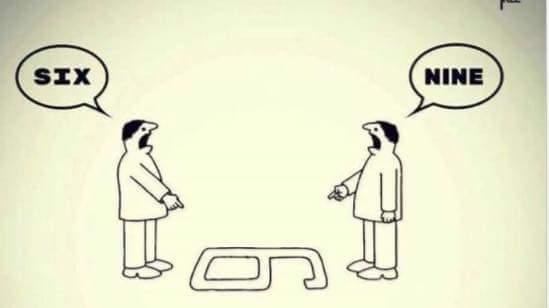
How to have powerful conversations is a real challenge in business. And this cartoon that I came across on LinkedIn recently shows you exactly why. Both people are right and cannot understand why the other can’t see it. Can you relate to that?. Being certain that something is correct when your colleague is adamant that it isn’t.
I know I have been in this situation on more than one occasion. When this happens it is easy for the situation to escalate out of control with both parties believing that they are right, because after all they are. The only solution in these situations is to step into the other person’s shoes and to see things how they see them. Only then you will realise that they are also right and the confusion is coming from the fact that you are both seeing different things.
Now of course as readers and observers to this situation we can easily see the problem that these two people have, as we are in the position to see the challenge through yet another lens. Yes, that’s right there are always three positions of perspective to any situation. These are:
In this situation the man on the left hand side of the page is seeing the world through his lens and that means that the number is 6. If the man stepped across the page and stepped into the shoes of the man on the right hand side of the page, he would see that the number is 9. And finally if the man stepped away from the situation and looked back, he would clearly see, as we do, that both men are right but it is just how they are viewing the situation that is causing the confusion.
Armed with this information, the two men can now have a powerful conversation, in a calmer manner, as they can appreciate the different perspectives on what is happening. The man on the left is able to appreciate the folly of his insight and so make a much better decision.
These three positions of perspective can be used anytime you have to have a difficult conversation with someone, or if you have to make a difficult decision. What I love to do is to put three peices of paper on the floor. Then one by one I stand on each peice of paper and reflect on how I am feeling in that space. How does the situation change when I view it from a different perspective. It is amazing what insight you can get into other people’s intentions and feelings when you do this.
I remember the first time I used this model was when I was deciding what to do about my racehorse Charlie. My three month loan period was fast approaching and I had to make a decision about whether I wanted to buy him. Although I wanted to, I knew he also had some underlying lameness problems which we hadn’t got to the bottom of, and given I already had one lame horse I didn’t want another one. So from my perspective the only option was give him back. However, when I stepped into the position of Other I realised that the owner was happy not to have the responsibility and upkeep for Charlie, so they didn’t really want him back. Finally, when I looked at the situation through the lens of the observer I realised another solution existed and that the owner might just consider extending the loan for another 3-6 months. Armed with all these different insights I was now able to make a much more informed decision about how to proceed.
And as many of you know, Charlie stayed with me and eventually, some six months later I brought him for £1. That was something I could have never imagined would be possible initially.
So what opportunities are available to you right now, if you could just look at them from another perspective? There are probably a lot more than you ever imagined.
The Art of Authentic Communication
If you enjoyed this post then I know you will enjoy the Art of Authentic Communication workshop I am running this Friday 21st July, along with the horses. There are still a few places left if you want to come along. During this experiential workshop will learn how to:
- Use the three diferent dimensions of communication
- Engage in listening and communicating more effectively
- Mediate discussions amongst team members
- Gain an insight into different personality types and their preferred method of communication
- Become more assertive
- Use your body language as a tool for communication
- The importance of non-verbal communication
- Influence team members and inspire them to follow you.
To book in simply click here. I can’t wait to share all this great information with you, as I know that mastering the art of authentic communication can seriously improve your life and business.
by Julia Felton | May 22, 2016
How many times have you heard an expert say “Stop working in your business and start working on your business”. Or “Start thinking like a CEO and lead your business. Stop acting like a team member”.
Conceptually all business owners I have ever met get that they need to step up and start leading their business if they are to get to the next level of success. The challenge is how to do this. But do this you must because your business won’t grow to the next level unless you the business owner up level your mindset and really start thinking like the CEO of your business.
And let’s just look at the business owner role. Are you really a business owner? According to National Statistics Office there are some 5.2million businesses in the UK, so you would think that all these people were business owners. Wrong. An incredible 75% are to my mind just self-employed experts who do not employ any team members. Sure. they are working for a business enterprise, that they own, but really the way they behave means that they are in effect working for the business, being reactive to all the circumstances that some up. That is not leadership, and that is not how a CEO behaves.
So lets look at the key differences between a self-employed expert, a business owner and a CEO.
Characteristics of a Self Employed Expert
- Highly proficient in their area of expertise (often referred to as being a great technician)
- Their view of what is achievable is limited by what they personally can do
- They have little or no leverage and are stuck trading time for money
- Very reluctant to outsource tasks or build a team
- Often can’t exceed USD250,000 in annual revenue
Characteristics of a Business Owner
- Grudgingly starts accepting they can’t do everything and so begins to strategically outsource tasks
- Adds to the team and starts leveraging other people’s time and expertise
- They often jealously guard some core areas of the business believing that only they can do this
- Usually experiences a rapid growth in both revenue and team
- Revenue typically flat lines between USD1-2 million per annum
Characteristics of a CEO
- Finally accepts they have to replace themselves in the business
- Consciously shifts their primary role to that of strategic relationship builder and rainmaker
- Limits the amount of time that they spend on service delivery to just a few key clients
- Appreciates that their role is to become irrelevant so that the business generates revenue without them
So how do you up level your mindset and start to become the CEO of your business. Here are three things that you can start with:
CEO Mindset #1: Don’t Make Business Decisions based Primarily On Your Personal Preferences
As you step up to become the CEO of your business you need to learn to start making decisions not based on what you personally like but what would be best for the business. For example, choose a business logo and brand colours that resonate with your target audience rather than ones that you really like. Travel to events where your clients will be hanging out, even it is inconvenient for you. Don’t confuse business expenses and investment decisions. The former waste money whereas the latter will over time generate you a return. For example, the decision to invest in a CRM systems won’t feel like an expense when it is delivering you qualified, automated leads every day.
CEO Mindset #2: Don’t Let Outside Factors Impact Your Ability To Take Action
In business there are always a myriad of outside influences that can impact what we do, however CEO’s don’t let outside circumstances take them off track. A classic example of this would be the business owner saying that they will invest in that sponsorship deal as soon as they have secure a new piece of work. Well if you know that sponsorship investment is absolutely the right thing for your business to do and will get you in front of your ideal client. Then surely you should make that investment regardless of whether you secure the new piece of work. In fact just by making the decision to invest and begin hanging out with your ideal client, you may will find that the new piece of work appears as if by magic.
CEO Mindset #3: Don’t Stick Your Head In The Sand and Avoid Addressing Important Issues
As the CEO it is your role to have courageous conversations with your team members, even if it feels uncomfortable. You also need to ensure that key issues in the business are addressed such as having contracts in place, making sure your accounts are completed and other legal obligations. Now I appreciate that some of these things might not fall into your area of expertise but as the CEO it is your responsibility to manage these operations and ensure that your business is compliant at all times. As the CEO you must always be thinking “What is the best for the business”, even if that answer is outside your comfort zone.
You’ll be amazed at what happens when you start stepping up and becoming the CEO of your own business how that has ripple effect on everyone around you. Your new found leadership inspires others to also up level their game and as a consequence business productivity and profitability results.