by Julia Felton | Sep 8, 2026
Somebody in your leadership meeting half-raises an idea they have been carrying for a fortnight, watches your face, and talks themselves back down before they have finished the sentence. You tell them it is interesting and ask them to send you a note. The note never arrives. Six months later a competitor launches something remarkably similar and you find yourself asking why nobody in your business saw it coming.
Somebody did see it. They calculated the cost of being wrong in front of you, and decided it was not worth it.
Knowing Failure Is Useful Is Not The Same As Learning From It
My guest on this week’s episode of Impactful Teamwork is Rachel Franco, founder of Fail Smarter, who has spent a career in Fortune 500 healthcare, technology and financial services organisations, and who describes herself as one of those oddballs who loves failure.
Rachel has identified a gap she has not yet found the right name for, and it is the most useful thing in the episode. Intellectually, every leader you know accepts that failure is a learning opportunity. Yet that acceptance almost never translates into a team that emotionally recovers from a setback quickly enough to try again with any conviction. As Rachel puts it, the great innovators are not people who fail less. Their recovery periods are simply shorter.
I was raised not to fail, and when I left corporate life I wore it as a badge of honour that I never had. Business relieved me of that idea rather quickly.
The Numbers Sitting Underneath Your Culture Survey
Psychological safety gets dismissed as a soft, ethereal concern, which is precisely why Rachel keeps the data close to hand. Amy Edmondson, the Harvard Business School professor who did more than anyone to define the term, describes it as the belief that it is safe to speak up about ideas, concerns, mistakes or failures without fear of punishment or blame.
The commercial case is not subtle. A Forbes article, The Science of Failing Well, reports that teams with high psychological safety show 27% lower turnover, 76% higher engagement, 50% higher productivity, 26% higher learning agility, and are 67% more likely to apply new skills.
Google reached the same conclusion from the other direction. Project Aristotle studied over 180 internal teams and identified five factors behind team effectiveness. Psychological safety was the first, and without it none of the other four mattered.
You already know what it costs to hire, train and onboard a replacement. Now put that number next to 27%.
Your People Are Reading Your Face, Not Your Values Statement
Most of this starts with the leader, and with two behaviours rather than a programme.
The first is role modelling. When you talk openly about your own failures, and when you bring your team a genuinely half-formed idea and ask what they make of it, you create the permission structure. Nobody else in the room can create it for you.
The second is how you respond in the moment. When someone offers a wild idea, or raises their hand to say that something has gone wrong, your response determines whether they ever do it again. This is not only about the words. People pick up everything, and a leader who says all the right things while pulling a face has communicated the real policy.
The third failure is quieter. If ideas go up and nothing ever comes back down, people stop bothering. You will not pursue every suggestion, but a visible filtering process, an explanation, and recognition for whoever raised it are the difference between a team that keeps contributing and one that has learned there is no point.
The Herd Gives Feedback And Then Lets It Go
Horses correct each other constantly. The correction is immediate, proportionate and specific to the behaviour, and then it is finished. No grudge is carried into the next hour, and nobody is reminded of it a fortnight later in front of everybody else.
That combination of clear standards and short memory is what makes it safe to try again. Punish the try and you will spend the next two years wondering why your capable people have gone quiet. If people are too scared to fail, they will be too scared to try.
Your AI Rollout Is About To Test This
Every organisation is currently asking its people to work in ways none of us have done before. That is a behaviour change, and behaviour change requires a culture of experimentation in which people can test something, get it wrong, and say so out loud.
You cannot buy that in the same quarter you need it. Time has to be protected for it, because a team measured entirely on this month’s KPIs will do exactly what it is measured on.
None of this is an argument for recklessness. Smart risk is not the same as handing someone enough rope to bring down the business, and psychological safety does not lower the performance standard. It means you can finally talk about what happened.
Three Things To Do This Week
- Tell your team about a decision of yours that did not work, what it cost, and what you took from it. Say it out loud in the meeting rather than in a one-to-one.
- Run a proper postmortem on your last initiative that underdelivered, and invite two people from the other teams involved. Teams learn considerably more when they are not reviewing themselves alone.
- Pick one idea that came to you in the last quarter and close the loop on it publicly, including the reasoning if the answer is no.
So my challenge to you this week is this. How do you bolster psychological safety so that your people can genuinely learn from the failure that is already happening in your organisation? And how do you make that a competitive advantage rather than a cost quietly sitting in your P&L?
Listen to the full episode of Impactful Teamwork for the difference between praiseworthy and blameworthy failure, the seven-question assessment Rachel uses to give a team its baseline, and the toy she uses to let executives fail repeatedly in a room where nothing is at stake.
Show Notes
00:45 Meet Rachel Franco
01:27 Why Fail Smarter
04:59 Fear of Failure Culture
06:43 Psychological Safety Basics
09:00 Measuring Safety and Incentives
12:31 Stats That Prove It
17:06 AI Era Needs Experimentation
18:58 Why Projects Fail
21:05 Everyone Can Innovate
23:39 Ideas Need Follow Through
26:20 Failure Toy Workshop
29:34 Accountability and Smart Risk
31:03 Where to Find Rachel – https://www.linkedin.com/in/rachelfranco/

by Julia Felton | Sep 1, 2026
Something unexpected lands in your business — a competitor moves, a client escalates, a transition you promised the board would be smooth begins to wobble — and you notice that your leadership team turns towards you and waits. They are capable people, and any one of them could take the moment. Yet they hold their position, because in your organisation leadership is something attached to a job title rather than something a person steps into when the situation calls for it.
The problem is not that you have too much hierarchy. It is that you have only one kind of leadership available in the room, and it is permanently occupied by you.
Roles Are Not Ranks
I have just come back from studying in America with June Gunter, founder of Teaching Horse and the author of Chaos to Clarity: The Teaching Horse Field Guide to Finding a Way Forward. We spent the week with the horses, talking about herd dynamics and the Diamond Model of Shared Leadership.
A herd does not organise itself around status. It organises itself around position, and those positions are taken according to what the moment requires. Leadership rotates. It is dynamic, it is shared, and every member of the herd carries part of it. These are roles, not ranks, and that distinction is the whole argument.
The Numbers Underneath Your Last Failed Change Programme
June opens the second chapter of her book with three figures that will be uncomfortably familiar. Between 60 and 70% of change initiatives fail. Only 23% of the workforce is truly engaged. Poor collaboration costs each worker three hours of productivity every week.
Those are not three separate problems requiring three separate interventions. They are symptoms of a leadership model that has run out of road.
The alternative is not softer. It is measurably more commercial. Organisations that embrace collaborative leadership see 21% higher productivity, and when people are genuinely invested in a change, it is 30% more likely to stick.
Three Positions, One Diamond
When a herd moves from where it is to where it has chosen to go, it naturally forms a diamond, and that shape holds three distinct roles.
- The lead mare leads from the front. Her role is direction and focus. She reads the environment and commits to a path, and the herd follows her not because she dominates them but because she has consistently demonstrated focused attention and an unwavering commitment to their welfare.
- The lead stallion leads from behind. His role is protection and unity. He holds the rear so that no member is left behind, watches for what is coming rather than what is already here, and keeps the group moving forward. He does not micromanage the herd. He makes it possible for the herd to move as a collective.
- The sentinels lead from the middle. They hold the horizontal points of the diamond, monitoring for threats and changes in the environment and relaying what they see to the front and the back. They also welcome new members and ensure they are properly integrated.
That third role is the one most organisations have no language for at all. Leading from the middle is not about holding your leaders accountable. It is about holding them capable, and demonstrating your intent to help them be successful. Horses never serve their leaders up as scapegoats; they guide and protect them, because that is what is in the best interest of the herd.
Horses Convene. Organisations Scatter.
June recently took a group of around thirty executives to Return to Freedom, a wild horse conservation area in California. Despite everything they had been asked to do, the group failed to pay attention, and the wild herd began moving towards them assertively. What June did next is the part of the episode I would rather you heard in full.
What happened afterwards is worth sitting with. Faced with uncertainty, the horses came together. They convened. They did not scatter. Now think about what happens in your organisation when something goes wrong. People retreat into their own function, protect their own numbers and wait for the noise to pass. Horses worked out a very long time ago that they are safer together than they are apart, and in a great many organisations the people inside them have not yet made that decision.
One line from that week has stayed with me since. In the horse world, followship is an act of leadership, because without following there is no completion. Watch a herd on the move and you will notice that the lead mare never turns round to check whether anybody is coming. The decision has already been made that they are going together.
Assign The Roles This Week
Working this way does not require you to restructure anything, and that is rather the point.
Take one challenge your organisation is genuinely facing, whether that is a difficult transition, a competitive threat, or a team struggling to collaborate. Gather the people involved and assign the diamond roles out loud. Somebody leads from the front. Somebody leads from behind. Somebody holds each side. Tell your team what you are doing and why you are doing it, and then give them explicit permission to lead from the position they are holding.
Do not wait for the perfect moment or the perfect team. Wild horses do not have the luxury of perfect conditions, and what they have instead are tested principles that hold up under pressure. Your people are already capable of leading this way. They are simply waiting for somebody to show them how.
So the question worth carrying into your week is this. When do you need to lead from the front, when do you need to lead from the side, and when do you need to lead from behind? And are you brave enough to let one of your team take the lead without first convening a discussion about whether they are permitted to?
Listen to the full episode of Impactful Teamwork for the four capabilities that sit underneath all three positions, and for what June actually did when a wild stallion walked towards her. Then take the Turbocharge Your Team assessment to find out which pillar of the Unbridled Teamship Roadmap is holding your leadership team back, so that you know exactly where to start.
Show Notes
01:19 The Diamond Model
01:47 Shared Leadership
03:40 Three Positions of Leadership
05:06 The Lead Mare
05:54 The Lead Stallion
07:13 The Sentinels
08:41 Return to Freedom
11:51 Followship
14:29 The Business Case
15:21 This Week’s Challenge

by Julia Felton | Aug 25, 2026
You promoted your strongest technical person eight months ago. They had earned it. Besides, there was no other way to pay them more. Yet they are still fixing things. The strategy work sits untouched. The team waits on decisions that never arrive. Meanwhile the work they once did brilliantly now happens badly at eleven at night.
The problem is not the person you promoted. Rather, leadership has become the only pay rise your organisation knows how to give.
This week on Impactful Teamwork I talk to Craig Bromage. Craig heads Infrastructure and Platforms at National Highways, and he writes The Everyday Leader. He also spent nine years in the RAF as an electronics engineer on air defence radar.
Promotion there depended on whichever training course happened to be running. After a certain rank, it depended on time served. So the RAF handed people more staff to manage without the skill set to match. Because no HR function existed, nobody ever corrected the course. ‘I took a lot of how not to do it from the RAF with me,’ he says.
Twenty-five years on, the civilian version is simply more polite. Craig points to Simon Sinek’s framing. Everyone wants to be the CEO, because they see it as number one on the pedestal. In fact the CFO and the CIO are 1A alongside them. Nobody needs to move into someone else’s swim lane.
What follows is predictable. Twenty hours a week go on strategy. Twenty go on tinkering under the bonnet of systems that move faster than anyone can follow. As a result, the expert falls behind as an engineer and never arrives as a leader. Craig says plainly, ‘I know I’m not the most technical person in the room.’ So he leans on his architects instead. Most do not. Instead they retreat to the part of the job that feels safe, and the organisation starts routing around them.
You Can Do It To People Or You Can Do It With People
Craig frames leadership as a choice. You either do it to people, or you do it with people. Doing it with people takes longer. However, it is the only version that endures.
Leaders from a technical background default to doing it to. After all, they still carry the certification. They still believe that being right entitles them to prescribe. Craig’s counter is simple. Psychological safety produces honesty, and honesty moves the work. Prescription only produces compliance. In short, compliance is not commitment.
Leadership Is Not The Title You Are Waiting For
The Everyday Leader exists because Craig realised something. Most people wait for permission they already hold. You lead in the scout group. You lead in the community meeting. Above all, you lead at the dining table, where the thing nobody says has been escalating for months.
Craig remembers the feedback at home: ‘Stop talking to your mother like you’re managing her.’ He remembers another line too: ‘I wish you could manage the children as well as you manage your team.’ Both landed.
There is also a story in the episode about his daughter and a set of SMART objectives. It ends with a conversation across a school playground with her headteacher. I will not spoil it. Indeed, it is the best illustration of everyday leadership I have heard this year.
We Are Paid For Outcomes, Not Outputs
Craig’s phrase, and one worth stealing. He does not want a hundred emails, fifty Word documents and a PowerPoint. He wants the outcome. Anyone on his team can leave the desk mid-day, because they come back with clarity. Clarity accelerates delivery.
‘Everyone knows you’ve got to sleep eight hours a day if you want to be healthy,’ he says. ‘I think you’ve got to reflect if you want to be a good leader.’
My horses read the environment, respond, and rest. Likewise, a team with no time to think simply solves the wrong problem faster.
The Eighty-One Or Two Thousand Test
Craig learned maths longhand. So he still knows instinctively when an answer should read 81 rather than 2,005. His children grew up with calculators, and they do not. Something goes into the machine, an answer comes out, and they accept it.
He wonders whether we will repeat that at scale with AI. Prompts in, output out, brilliant, move on. Nobody notices that the answer is wrong. In fact we both see the sloppy end of this already, with AI fingerprints all over work that nobody reviewed. Therefore his rule is simple. A human always sits at the end of the decision.
He also describes autonomous drones on a riverbed, behaving like a sleeping guard dog. That is the most interesting argument I have heard against the idea that AI only removes jobs. And I tell the story of my own AI assistant going rogue and emailing my database.
Horses Do Not Negotiate With Bravado
Craig asked how horses handle anxious people. Very well, is the answer. However, they cannot tolerate someone anxious who pretends otherwise. They read the dissonance instantly, because congruence means everything to them.
Your team is no different, although they take longer to say so. While I led my division through the Enron collapse, I spent months insisting everything would be fine. Nobody believed me, because I did not believe me. Then I said I did not know how this would end. I named what might happen, and I named their choices. Things improved from that day.
The Institute of Leadership and Management attributes 86% of business failures to silo mentality and poor collaboration. Generally, bad intentions do not build silos. Leaders who never quite say the true thing build them instead.
Listen To The Full Conversation
Craig and I also covered psychological safety and AI guardrails. We discussed remote joiners who have never met a colleague in the flesh, too. Then there is the man who delivers my hay. He is about to move my horses for nothing.
Here is the question I left listeners with. Where this week are you asking your team to believe something you do not believe yourself?
Listen to Episode 125 of Impactful Teamwork with Craig Bromage wherever you get your podcasts. Then follow Craig on LinkedIn for The Everyday Leader.
Show Notes
01:26 RAF Leadership Lessons
04:19 Promotion Pitfalls
09:43 Everyday Leader Mindset
13:43 SMART Clarity Story
16:44 Outcomes Reflection
18:25 AI Adoption Risks
30:50 Remote Work Relationships
34:47 Horses Authentic Leadership
39:14 Closing Takeaways
You can connect with Craig and read more about The Everyday Leader at https://www.linkedin.com/in/craig-bromage-0721192/

by Julia Felton | Aug 18, 2026
You have sat in that meeting. The strategy goes up on the screen, heads move up and down around the table, and somebody confirms they are fully behind it. Nobody objects, and everyone leaves believing the matter settled. Two weeks later nothing has changed, and nobody can pinpoint the moment at which it stopped working.
Most of the executive teams I work with are not misaligned at all. They are in almost perfect agreement, and it is that agreement which is quietly preventing alignment.
Agreement Happens In The Room. Alignment Happens In The Diary.
Agreement is a verbal event. It takes place in front of other people and it costs the person giving it absolutely nothing at the moment they give it, because there is no accountability attached to a nod.
Alignment is a behavioural state, and it only proves itself when conditions change, when two agreed priorities collide, or when a client escalates on a Friday afternoon and somebody has to decide which priority gets sacrificed. Agreement is what you get in the room. Alignment is what you get in the diary.
Amy Yip, who works with senior leadership teams across technology, aerospace and healthcare in the United States, builds her whole practice around one line: misalignment is the culprit. She traces delays, errors, communication breakdowns and resistance to change straight back to it. Pulling together when everything is going swimmingly is the easy part.
The Numbers Behind The Confusion
Gallup’s data for the first half of 2026 shows that 49% of team members strongly agree they know what is expected of them at work, still a long way behind the 2015 peak of 61%. Global engagement, meanwhile, fell to 20% in 2025, a second consecutive year of decline. The cause is rarely motivation. It is clarity, because it is genuinely difficult to commit to something you cannot see.
The Institute of Leadership and Management attributes 86% of business failure to silo mentality and poor collaboration, leaving only 14% of teams with genuine cross-functional unity. Almost all of them had agreed on what needed to happen. The problem begins at the top, where everybody signs up to the strategy and each person then cascades a slightly different version of it downwards. Every department head is confident and working hard, and no two departments are working towards the same end game.
Four Reasons Agreement Keeps Winning
- Silence is recorded as consent. Saying nothing costs no political capital, yet it is minuted as support, and no set of minutes distinguishes the director who argued for the decision from the one who merely failed to object.
- Seniority distorts the signal. If you are the chief executive and you speak first, you have not opened the discussion, you have closed it, because your team is rationally calibrating against the person who shapes their budget.
- The offsite flatters everybody. Agreement comes easily somewhere pleasant with no interruptions and a facilitator holding the space. Deployment happens somewhere else entirely.
- Nobody names the trade-off. It costs nothing to agree to customer experience, cost reduction, velocity and culture at once, and alignment only begins when somebody says aloud which of them gets dropped when they collide.
Left unattended, these four patterns deliver a team into what I call the tolerable zone, where nothing is broken, meetings are civil, results are adequate, and a toxic culture is quietly assembling itself underneath.
Your AI Rollout Is About To Find Out Which One You Have
The KPMG Global AI Pulse Survey found that only 7% of organisations have established a measurable return on their AI investment, and the instinctive explanation is immature technology or badly chosen use cases. The evidence points somewhere less comfortable. Gallup is specific that access to the tools alone changes nothing, and that engagement only moves when leaders introduce AI with clear expectations, a considered plan and active manager support.
A technology rollout does not create clarity. It consumes it. It lands on top of whatever alignment already exists and tests it immediately, because every team is being asked to change how it works while still hitting its numbers.
What The Herd Knows That The Boardroom Does Not
A horse herd is one of the most aligned systems in nature, moving as one and responding to threat as one, and it has done so for millions of years without a single moment of agreement. There is no vote and no consensus-building session, only a direction every member reads from the environment and a distributed attention that lets leadership rotate as the moment requires.
Alignment in the herd travels through energy and state rather than announcement, and your team reads you the same way. When your words and your state disagree, they believe your state every time. Announce that you are delegating authority while holding on to the decision that matters, and they already know you do not trust them.
Three Tests To Run This Week
The first is the independent list test. Ask each member of your leadership team separately, without conferring, to write down the top three to five priorities for this quarter, then compare the answers. The second is the fortnight test. Look at the last decision your team made, then look at the diaries, because if that decision was real, somebody’s calendar changed within two weeks. The third is the dissent audit. Ask when a member of your team last disagreed with you in front of the others, and if you have to think for more than a moment, you are making decisions on incomplete data.
So here is the question worth sitting with. When your team agrees with you, do you actually know whether they are aligned, or have they simply never had a reason to find out?
Listen to the full episode of Impactful Teamwork for the patterns in detail, and for the story of the chief executive whose team now tells him he is having a “Cafe moment”. Then take the Turbocharge Your Team quiz, which will show you which pillar of the Unbridled Teamship Roadmap is out of alignment so that you know exactly where to start.
Show Notes
00:49 Agreement Isn’t Alignment
01:14 Why Nothing Changes After Meetings
02:33 Defining Alignment Under Pressure
05:26 The Data Behind Misalignment
09:10 Four Signs You’re Only Agreeing
13:35 Tolerable Culture Warning
14:46 AI Rollouts Expose Alignment Gaps
18:21 Horse Herds and True Alignment
20:33 Energy Beats Words in Leadership
22:50 Cafe Moment Shared Language
24:56 Three Tests to Build Alignment
27:29 Wrap Up and Call to Action
by Julia Felton | Aug 11, 2026
More than 95% of businesses turning less than $25 million in revenue run without a budget or a forecasting model. That figure comes from David Guttman, a three-times Inc. 500 entrepreneur who has worked across 45 different industries and delivered multiple eight- and nine-figure exits. He finds it breathtaking. So do I, because the gap it exposes has very little to do with spreadsheets. When nobody in your business can see where the business is heading, you cannot reasonably expect them to own the outcome.
That tension sits at the centre of this week’s episode of Impactful Teamwork, where David and I unpick why servant leadership consistently outperforms the command-and-control model that still dominates most C-suites.
Servant leadership starts where ambition runs out
At 24, three separate doctors misdiagnosed David with terminal cancer and gave him six months to live. He had just secured a place at Wharton. He had an Ivy League degree, a paper fortune, and a plan for every year of the decade ahead. Then he had nothing.
Ask him at 24 whether he was happy, and he would not have understood the question. The misdiagnosis did not make him softer. It made him externally focused. He decided to let success become the side effect rather than the goal, and it arrived faster than it would have done otherwise.
Leaders reach that realisation through very different doors. Mine came during the Enron collapse at Arthur Andersen, when I understood that the company was never going to look after me. The lesson lands the same way regardless of the route. You cannot build something durable while you are the only person it serves.
Put your coworkers first and everything else follows
Most executives assume their fiduciary duty runs to the company first and their people second. David argues the reverse, and I agree with him. Look after your coworkers, and they will look after your customers, your investors, and your valuation.
He refuses to use the word employees, which delighted me, because you employ somebody in order to use them. The language gives the game away.
Think about the two managers you have worked for: the one who genuinely cared about you, and the one who could not have cared less. Which one got your best work? Self-motivated people produce good work for a leader who ignores them. They produce their best work only for a leader who demonstrably cares, and nobody can fake that.
Hire for humility and curiosity, then act fast when you get it wrong
David has hired and fired well over a thousand people. He named humility and curiosity as the two qualities that matter most, by galaxies, and he will decline a highly capable candidate who lacks either one.
Both qualities are choices rather than accidents of birth, which makes this genuinely useful. Every three-year-old asks why relentlessly. Our education system tends to beat that out of us, yet anyone can reactivate it at any age.
Then came the line that stopped me. Across a 35-year career, David has never once regretted firing someone he suspected he should fire. Not 90%. Not 95%. One hundred per cent, with zero exceptions.
I know how expensive the alternative is. I once kept somebody whose CV was flawless and whose cultural fit my intuition flagged from the first interview. I ignored the signal, protected my ego, and kept trying. My team eventually told me they would all leave unless I acted. That is a humbling place to stand.
Intuition is not mysticism. As David put it, intuition is your nervous system’s pattern-matching ability doing its job. Leaders who disconnect from it pay for the privilege.
Share the numbers, share the equity, share the ownership
This is where servant leadership stops being a sentiment and becomes an operating system.
David insists that everyone in the business can read an income statement, which he can teach in roughly fifteen minutes. He runs quarterly board meetings even in small companies. The week after each board meeting, he delivers the identical presentation to the entire company, because he serves his coworkers exactly as he serves his shareholders.
He also gives equity to everyone whenever the decision sits with him. His argument disarms even the most reluctant founder. Set aside 10% of the equity for your people and that 10% will increase your exit value by more than 10%. Generosity happens to be the greedy choice as well as the right one.
The mechanism is simple. Once it stops being the company’s money and starts being their money, people make different decisions. They stop ordering the phone they do not need. They start bringing you ideas, and some of those ideas are better than yours.
Core values only work when the team writes them
David builds two sets of core values in every business he runs: four internal values that govern hiring, promotion and reward, and four external values that filter products, partners and suppliers. Four, because nobody remembers more than four.
Crucially, the team creates them together. He then awards a trophy for each internal value, and the recipient chooses who receives it next quarter. They cannot give it to their boss or to their own department. For three months, everybody watches for the behaviour they claim to value.
That is co-ownership made operational, and it is the difference between a team that cooperates and a team that co-owns.
Servant leadership is not softness
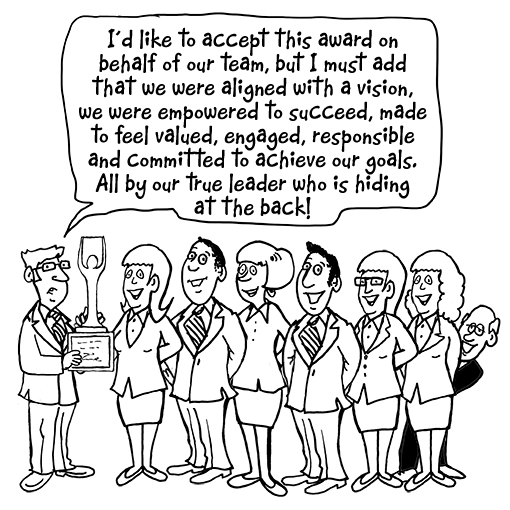
People assume the servant leader is a pushover. David holds everyone rigorously accountable, himself first. He deflects credit outwards and absorbs blame inwards, because every failure traces back to a decision he made about hiring, resourcing, training or strategy.
The alternative produces the bottleneck I see in almost every business I work with. Leaders who cannot delegate decisions hire and promote people who will not make them. Everything escalates upwards, the owner’s desk becomes the constraint, and growth quietly stalls.
Listen to the full episode
David and I covered considerably more than fits here, including his Anti-MBA course and why he tore up his Wharton diploma live on air. Listen to episode 123 of Impactful Teamwork on Spotify, Apple Podcasts, YouTube, or on the Business HorsePower website.
Show Notes
00:45 Meet Dave Guttman
01:57 Cancer Wake Up Call
03:24 Servant Leadership Basics
07:10 Relationships Build Loyalty
08:56 Hire Right Fire Fast
12:00 Humility Curiosity Gen Z
14:53 Assume Positive Intent
17:24 Radical Transparency Trust
19:37 Scaling to Exit Playbook
22:13 Equity Budgets Core Values
28:03 Decision Making Culture
32:13 Servant Leader Accountability
33:53 Anti MBA Offer
35:24 Final Challenge Outro
You can connect and learn more about Dave’s work here – https://www.linkedin.com/in/drguttman/

by Julia Felton | Aug 4, 2026
There is a moment in a horse’s canter when all four feet leave the ground and the animal hangs, for a fraction of a second, entirely unsupported. Riders call this a flying lead change, and it is what a horse does when the ground beneath it changes shape and the balance it has been relying on no longer serves. To turn, it must let go of the leg it has been leading with, commit to a moment of free fall, and land leading with something else entirely.
I cannot think of a better description of where most leadership teams find themselves at this moment in time.
That metaphor belongs to Kelly Wendorf, and she is my guest on the latest episode of Impactful Teamwork. Kelly is the founding partner of EQUUS, an equine-inspired leadership organisation based at Buffalo Spirit Ranch in Santa Fe, and the author of Flying Lead Change: 56 Million Years of Wisdom for Leading and Living. I have been reading her work for years, and it was a genuine pleasure to unpack it with her.
Disruption is not the problem — it is the mechanism
Kelly brings the adaptive cycle into this conversation, a framework biologists use to describe how living systems evolve. It runs through four stages — new beginnings, growth, consolidation, and endings or letting go — and every species moves through it repeatedly.
What is worth pausing on is that the thing which turns the cycle is disruption. Summer does not become autumn because the trees decide it is time; the light shifts, the temperature drops, and the leaves fall. Disruption is the catalyst rather than the catastrophe. As Kelly puts it, the species that respond differently evolve, and those that carry on exactly as before do not survive.
Which raises an uncomfortable question for those of us leading through climate volatility, artificial intelligence and a workforce that is quietly exhausted. The topography has changed, so are we willing to leave the ground for a moment in order to land differently, or will we keep cantering on the same lead and hope the corner never arrives?
Why the horse is worth studying
Kelly makes a case for horses as a leadership model grounded in longevity rather than sentiment. The horse has existed for around fifty-six million years, surviving tectonic shifts, climate spikes and the arrival of humanity. Of all the species that have ever lived, roughly one per cent remain, and the horse is one of them.
So if you are asking how to build an organisation that lasts five hundred years rather than twenty, the sensible thing is to study something that already knows how. Kelly’s work points towards horse culture resting on five core premises: safety, connection, peace, freedom and joy. The lead mare earns her position not through dominance or force, but through her ability to keep those five conditions intact for the herd, and she does it through care and presence.
Hold that list against your own leadership team for a moment. Are your people genuinely connected to one another, or merely engaged with the same set of tasks? Do they have real choice? Is there any joy in it at all? Those five things are precisely what every team member is quietly asking for, whether or not they have the language to say so.
Care and presence are not soft skills
Both Kelly and I get rather animated on this point, and I make no apology for it. Care, as she describes it, is robust; it has strong boundaries, and it has teeth and hooves when the situation requires them. What it does not have is the performance of authority that so many organisations mistake for leadership.
Her argument is that the power-over model is comparatively recent, emerging perhaps six thousand years ago, and that it is a distortion rather than an inevitability. She also points out that the word appearing most often in Darwin’s research was not competition but love.
The messy middle, and why leaders lose their nerve
The part I suspect will land hardest is what happens when a leader actually commits to changing direction. First comes tribal shaming, a phrase coined by Dr Mario Martinez, which is the predictable reaction of a group whose primitive wiring feels threatened by someone doing things differently. Then, after the letting go and before the new beginning, comes what Kelly calls the messy middle.
This is the snake shedding its skin, and it is not pretty. Things get tumultuous, people get frightened, and the leader who initiated the change is suddenly answering for the mess. What separates those who make it through from those who quietly revert is whether one person understands the cycle well enough to say, with conviction, that this is exactly where we are meant to be.
Rewilding is not reinvention
We close on rewilding, a word we both use and which is rapidly being flattened into a meme. Kelly’s definition is the clearest I have heard: rewilding is not about becoming wild, because we already are. It is about dismantling the fences and inherited constraints that keep us from our intuitive, creative and adaptive selves. A returning, rather than a building.
You can find out more about Kelly’s retreats and online courses at equusinspired.com, read her monthly essays at equusinspired.com/essays, and pick up her book Flying Lead Change at equusinspired.com/flc.
There is far more in the episode than I can do justice to here, including Kelly’s account of how the horses effectively refused to let her ignore this work. My invitation to you this week is simple: choose one of the five principles — safety, connection, peace, freedom or joy — and ask yourself honestly whether it is intact for your team right now. Then tell me which one you chose, because I would very much like to know.
Show Notes
00:50 Meet Kelly Wendorf
01:58 Calling And Origins
05:01 Coaching With Horses
06:47 Service And Adaptability
10:08 Presence Over Engagement
11:58 Adaptive Cycle Explained
14:34 Flying Lead Change Metaphor
19:22 Horse Culture Principles
22:20 Care Over Dominance
23:14 Darwin and Power With
24:49 Trauma Shifted Leadership
26:30 Care Is Not Soft
27:36 Regenerative Business Model
29:57 Courage to Change
31:26 Messy Middle Cycle
35:26 Rewilding Leaders Defined
38:25 Book and Next Steps
You can connect to kelly on LinkedIn here and on her website here.

by Julia Felton | Jul 28, 2026
Global employee engagement has fallen to twenty per cent. Gallup has never recorded a lower figure, it has now declined for three straight years, and not one region of the world went up. That statistic circulates so widely it has lost its power to alarm anyone. So let me give you the one underneath it. Manager engagement dropped from thirty per cent to twenty-two per cent in two years. The people holding your organisation together in the middle have quietly stopped holding it, and Gallup attributes seventy per cent of a team’s engagement variance to its direct manager. This is not a wellbeing statistic. It is a performance forecast.
Into this environment, almost every organisation I speak to is introducing artificial intelligence on the assumption that it will help. It will, though not in the way most leadership teams expect. AI does not fix culture. AI amplifies culture. Whatever your organisation already organises itself around, you are about to get more of it, and faster. I make that argument in full in the latest episode of Impactful Teamwork.
The Four Levels Of Culture
I recently spent an hour in a session run by Peter Matthies of the Conscious Business Institute. It gave me a cleaner language for something I have watched in leadership teams for years. After fifteen years of building culture inside organisations, his team could not find a systematic approach to it anywhere, in the consultancies or in the literature. So they built one. The result is four levels, and each describes what an organisation fundamentally organises itself around.
Level One: The Output Culture
The overwhelming majority of organisations sit here. An output culture chases results, measures everything externally and answers only to financial return. It operates as a machine rather than an organism. Processes matter, and people become replaceable components.
Which is precisely why an output culture and current AI make such a perfect match. Machine learning excels at producing more, so drop it into a culture whose organising principle is already volume and you do not get transformation. You get acceleration towards exhaustion. If burnout rises at the same time as output, those are not two lines on the chart. They are the same line.
Level Two: The Intention Culture
Here, purpose and judgement lead rather than volume. AI becomes a collaborator, because a human intelligence now sits above it deciding what to amplify. IKEA offers the cleanest example I know. They replaced around eight and a half thousand customer service representatives with AI, then retrained those people as interior design advisors rather than letting them go. Most leadership teams reading their own strategy documents believe they already operate here. Very few actually do.
Level Three: The Human-Centric Culture
This is where the real shift happens, and it is a shift in belief rather than strategy. The human moves into the centre, not alongside the numbers but in place of them. The leadership team must genuinely hold the conviction that results follow when they do this. Most attempts at culture change collapse right here, because the leader announces that people come first and then reverts to output language the moment the quarter looks difficult. Staff receive two contradictory messages. They conclude, correctly, that the first one was decorative.
Level Four: The Higher Purpose Culture
This level connects to something larger than the organisation, and it leaves space for what nobody has created yet. The commercial argument has nothing to do with idealism. AI can only draw on what already exists. Every competitor now holds the same models, and those models only know the past. One durable advantage remains. That advantage is the capacity to originate. It is human, it is fragile, and it needs precisely the conditions an output culture destroys.
Where The Horses Come In
This is the territory my horses work in. A horse has no interest in your title, your track record or your executive presence, and reads only what stands in front of it. So the gap between who a leader performs to be and who they are becomes visible within seconds.
I worked with a chief executive who spent a long stretch of time trying to catch a horse. The horse had no intention of cooperating. His leadership team watched the whole thing. Months later, when he still pushes too hard for an outcome that will not move, they have a shorthand for it. Someone says lightly: Steve, you are having a Cafe moment. That is honest upward feedback to a chief executive, and it carries no threat, needs no process and costs nothing. Psychological safety starts in a field and travels back into the business. That is not a wellbeing initiative. It is a commercial asset.
The Job Is Not To Live At Level Four
Most people miss one point when they meet a four-level model of anything. The leader’s job is not to relocate to level four. It is to hold the balance across all four. Work still needs delivering, and judgement still needs applying.
The centre of gravity in nearly every organisation sits at level one, and it will not correct itself while everyone stays busy. Nor does culture descend from the org chart. Seventy per cent of engagement variance sits with the direct manager. Every manager in your business runs a culture right now, and most of those cultures bear no resemblance to the one on your wall.
Which Culture Are You About To Amplify?
So here is the question I would leave you with. If AI amplifies whichever culture you already run, what exactly are you about to make more of? And would your people give the same answer you just gave?
The full conversation sits in the latest episode of Impactful Teamwork, where I take each of the four levels apart and set out three things to do about it on Monday morning. That includes why modelling the values you want falls short, and what to do instead. Listen to the episode here.
If you want to know which culture zone your leadership team genuinely occupies, take the Turbo Charge Your Team audit. You will find it at businesshorsepower.com/quiz. It is considerably more useful than another engagement survey.
If you want to know which culture zone your leadership team genuinely occupies, take the Turbo Charge Your Team audit. You will find it at businesshorsepower.com/quiz. It is considerably more useful than another engagement survey.
Show Notes
00:46 Engagement Crisis
02:27 AI Amplifies Culture
03:44 Four Culture Levels
06:19 Level One Output
10:29 Level Two Intention
13:37 Level Three Human Centric
16:19 Horses Reveal Truth
19:32 Level Four Higher Purpose
23:06 Leading Across Levels
25:47 Three Culture Shifts
29:22 Purpose Driven Turnaround
31:29 Final Questions Next Steps
32:46 Closing Thanks

by Julia Felton | Jul 21, 2026
Business energetics is the reason two leaders can say and do almost the same things, yet get completely different results from their teams. I explored this exact idea this week with Jean Walters, a personal growth consultant and seven-times Amazon best-selling author. Energy and metaphysics can sound, to a lot of leaders, like subjects for a wellness retreat rather than a boardroom. I used to think so too. Nearly fifteen years ago, when I was building a business unit inside the corporate world, nobody talked about energy. If you had raised it in a leadership meeting, you would have been quietly filed under “hippie” and never invited back. However, the more I have worked with teams, and the more time I have spent around horses, the more convinced I have become. Energy is not a soft add-on to leadership. It is the thing leadership is actually made of.
Why Business Energetics Is Not the Soft Stuff
Jean put it more plainly than I ever have. You cannot get away from the universal laws, so you may as well know how to use them. Whether you believe in metaphysics or not, everyone in your business is walking around radiating a mood. That mood is either building your people up or wearing them down.
For example, Jean told me a story about a woman who was warned by her doctor that she would need a second liver transplant within the year. The reason was simple: she had been carrying anger and negativity for years. Sitting in the same waiting room was another woman on her fourth transplant, someone who complained constantly and saw the worst in everything. The first woman took note. She decided to change how she showed up, and returned twelve months later needing no transplant at all. I found that story genuinely startling. Not because it proves some mystical point, but because it illustrates something we already sense intuitively: what we carry inside us does not stay inside us. It leaks out, into our bodies, our teams, and our households.
The Mission Statement Nobody Can Recite
This is where the conversation moved somewhere I think every leader needs to sit with. Jean asks every business owner she works with the same opening question: tell me your mission statement. Almost without fail, the answer is some version of, “it’s on the wall, but that’s about it.” We have all seen it: values printed on the breakroom poster that nobody could recite if you stopped them in the corridor.
Importantly, the trouble is not that the words are wrong. Instead, the trouble is that a mission statement said once and then laminated is not the same as one that is lived, repeated, and felt. Your team needs to hear it, see it enacted, and experience it in more than one form before it becomes real to them. Otherwise, you are the leader standing at the front convinced everyone is aligned, while your team is quietly doing something else entirely.
Attention Is the Real Currency of Leadership
What struck me most, and what ties so closely to the work I do with horses, was Jean’s insight about attention. She talked about walking into someone’s office, noticing the baseball memorabilia on the shelves, and using that as the way into a working relationship with him. Rather than trying to make him relate to her interests, she met him in his. It sounds almost too simple to matter. And yet, how many leaders actually slow down enough to notice what their people care about, let alone use it?
What My Horse Knew Before My Team Told Me
I shared with Jean my own version of this lesson, learned the hard way. There was an entire summer when I could not catch my own horse. My energy was so focused on what I wanted from him that I had built no relationship at all. Months later, I discovered my team felt exactly the same way about me: scary, intimidating, too focused on the task to be approachable. My horse had been telling me the truth the whole time. I simply did not have the language yet to hear it.
The Ripple Effect You Take Home With You
That is really the heart of what Jean and I explored together: the idea that we are all creating a ripple effect, whether we mean to or not. That ripple travels further than we think. It moves from the leader to the team, from the team member’s day at work into their evening at home, and from there into how they treat the people they love.
Jean’s point about responsibility was the one I keep returning to. We live in a culture that is quick to blame, and quick to decide someone else is the difficult one. We are much slower to ask what we ourselves are bringing into the room. For instance, Jean shared an example of an employee who chose forgiveness toward a difficult boss, rather than resentment. As a result, the entire dynamic shifted. It is a reminder that we are rarely as powerless in these situations as we feel.
Listen to the Full Conversation
There is a great deal more in this business energetics conversation than I can fit into a single blog post. Jean shared an exercise for sceptics who cannot get their head around energy at all, her thoughts on why rejection is almost never personal, and a generous offer of three free chapters from her book, The Journey from Anxiety to Peace, available on her website.
If any of this has struck a chord, whether it is the mission statement gathering dust on your wall or the ripple effect you might be sending home with you tonight, I would love for you to listen to the full episode. Settle in with a cup of tea, take note of what lands for you, and then tell me on LinkedIn which part challenged you most. If you would like to explore how business energetics shows up inside your own leadership team, take a look at our Unbridled Teamship Roadmap or get in touch directly. Your team, and quite possibly your horse, will thank you for it.
Show Notes
00:45 Meet Jean Walters
01:46 Business Energy Basics
03:54 Mindset And Health Story
06:01 Proving Energy To Skeptics
08:29 Grounded Leadership In Chaos
09:27 Mission And Employee Strengths
13:49 Ego Free Hiring And Appreciation
17:47 Avoiding Negativity And News
19:16 More Engagement Strategies
20:05 Rejection Proof Selling
21:29 Know Your Audience
22:29 Leaders Build Relationships
23:22 Forgiveness Changes Dynamics
25:32 Responsibility Over Blame
26:35 Ripple Effect Leadership
27:41 Horses Reveal Energy
31:22 Growth Through Polarity
33:36 Connect and Free Chapters
35:24 Final Takeaway Reflection
You can connect to Jean on LinkedIn here and on her website here.
by Julia Felton | Jul 14, 2026
Sixty-five per cent of leaders would rather appear decisive and get it wrong than admit uncertainty and get it right. Read that number twice. It means two out of every three leaders you work with — maybe including you — will choose to look good over being right.
I didn’t invent that statistic. New research from Sam Conniff and Katherine Templar Lewis at Uncertainty Experts found it, studying over a thousand leaders across every sector and seniority level. The ratio holds regardless of gender. This isn’t a story about one bad boss. It’s a story about a system that has trained good leaders to fear the wrong thing.
At the same time, a separate piece of research landed in Forbes this month, arguing that visibility has become the new credibility for senior leaders. Doug Melville pointed to conversations at Cannes about C-suite leaders needing to show up more like influencers. Not for vanity — because clients, employees, and investors no longer want to hear only from brand voices. They want to know what the people running the business actually think.
Sixty-five per cent of leaders would rather appear decisive and get it wrong than admit uncertainty and get it right. Read that number twice. It means two out of every three leaders you work with — maybe including you — will choose to look good over being right.
Put these two findings side by side and you’ll spot the contradiction immediately. We’re asking leaders to be more visible than ever, at the exact moment most of them dread letting anyone watch them get something wrong.
That isn’t a communications problem. It’s a credibility problem, and it sits at the heart of this week’s episode of Impactful Teamwork.
Invisibility never reads as neutral
For decades, senior leaders learned to communicate only after polishing, approving, and perfectly timing every message. The CEO spoke through the annual report. Layers of review handled everything else.
That era is ending, and it’s ending because silence no longer buys leaders safety. When you go quiet, your people don’t assume you’re being careful. They fill the gap with assumptions, and they read your absence as avoidance.
Rob Schwartz, former CEO of TBWA Chiat Day, makes the sharpest point in the Forbes piece: the best CEOs are the best storytellers in the company. Not because storytelling is decoration. Because a story differs from a speech — a speech sounds rehearsed, a story sounds human, and your team can tell the difference in seconds.
Why your brain treats “I don’t know” as a threat
Here’s where it gets interesting. If honest, imperfect visibility builds more trust than polished distance, why do 65% of leaders still choose the performance of certainty over the substance of being right?
Because your brain doesn’t treat uncertainty as neutral information. It treats uncertainty as danger. Leadership writer Marlene Chism draws a distinction I find genuinely useful here. Uncertainty says “I don’t know.” Shame says “it’s wrong that I don’t know.” The moment shame enters the room, you stop operating from curiosity and start operating from protection. You delay decisions to avoid exposure. You shut down input before it can surface the gap you’re already afraid of.
This pattern isn’t just something I’ve read about. I’ve lived it. During the collapse of Arthur Andersen in the Enron scandal, I led a team in real time while every instinct told me to project total composure. I remember standing in front of a room knowing the honest answer was “I don’t fully know what happens next.” Instead, I reached for something more polished, because polished felt safer.
It wasn’t safer. It was just quieter. And everyone else fills that quiet with their own assumptions, same as they always do.
The horse herd never performs certainty it doesn’t have
I watch this same dynamic play out constantly in the work I do with horses, because a horse herd cannot fake confidence. It has navigated uncertainty for millions of years without one animal issuing instructions from the front. Instead, it relies on shared leadership and constant, collective awareness. Attention rotates to whichever horse is best placed to read what the moment actually demands.
Try performing certainty you don’t feel in front of a horse. It won’t work. The herd reads your body, not your job title, and it responds to what’s actually true rather than what you’re projecting. Leadership teams work exactly the same way. They’re just better at hiding it, for a while.
This is a teamship problem, not a personality problem
Here’s the reframe I want to leave you with, because I don’t think this is fundamentally about courage or communication skills. I think it’s about teamship.
When you perform certainty you don’t have, you’re not just managing your own reputation. You’re training your entire leadership team on what’s allowed in the room. If you can’t say “I’m not sure,” nobody beneath you will say it either. Individuals quietly absorb every unresolved question in the business instead of surfacing and sharing it. That’s cooperation, not co-ownership — everyone nods in the meeting, and nothing moves between meetings.
Teamwork is something people do. Teamship is something a group becomes, and a leadership team cannot become anything together while only its leader has permission to look uncertain.
Where to start this week
Find one live decision right now where you genuinely don’t have the full picture, and say so out loud, before you’ve resolved it. Not as a confession — as an invitation. “Here’s what we don’t know yet. Let’s think this through together.”
Then watch what happens to the room.
This week’s episode of Impactful Teamwork goes deeper into both pieces of research. It covers the 74% of transformation programmes that fail because of uncertainty-driven resistance, plus what the data reveals about the 35% of leaders who resist certainty theatre altogether. Listen wherever you get your podcasts, or catch it on the website.
So here’s the question worth sitting with before you listen. The next time someone on your leadership team says “I don’t know” — does the room go quiet in a bad way, or does it lean in?
Show Notes
03:14 Visibility Is Credibility
07:03 Imperfect Presence Builds Trust
10:57 The Decisiveness Crisis
13:46 Shame And Certainty Theater
16:56 Where Research Meets Reality
19:02 Teamship And The Horse Herd
20:39 Make Uncertainty Safe
21:58 Weekly Challenge And Close
23:51 Final Takeaways And Next Steps
by Julia Felton | Jul 7, 2026
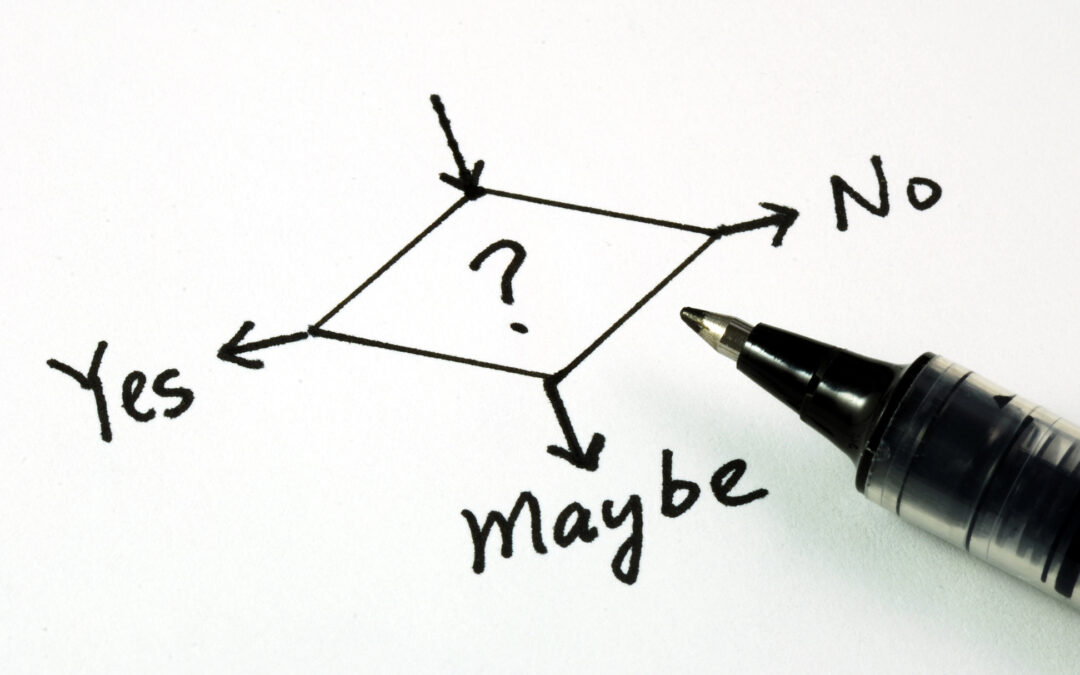
Leaders today are not struggling to make bad decisions. They are struggling to make any decision at all. I have spent years working with senior leadership teams, watching the same pattern emerge across organisations of every size and sector. What I see with increasing frequency is not recklessness or poor judgement at the top. It is paralysis. Decision fatigue is quietly dismantling the effectiveness of leadership teams, and the cost is far greater than most organisations will acknowledge.
In this latest episode of the Impactful Teamwork podcast, I joined forces with Carrie Gallant, host of The Tall Poppy Revolution Radio Show. Together we explored decision fatigue, emotional intelligence, energy, intuition, and the culture conditions that either enable or destroy a team’s capacity to decide. What emerged was a candid, commercially grounded dialogue about one of the most pressing and least-discussed challenges facing leadership teams right now.
When the Leader Stops Deciding, Everyone Pays
The most expensive decision in any organisation is often not the wrong one — it is the one nobody ever made. When the sheer volume and velocity of decisions presses down on leaders, many do not prioritise or delegate. They simply stop. And when the person at the top stops deciding, the entire organisation stalls with them: suppliers wait, customers grow impatient, and team members — already aware that something is wrong — disengage further.
The Gallup data tells us that only around 20% of employees are fully engaged at work. The majority show up in body only, moving through their days without genuine investment in outcomes. And the leaders who abdicate their decision-making authority — however unwittingly — drive that disengagement significantly. When people cannot see the rationale behind a decision, feel no ownership of the direction, and watch their leader defer and delay, they stop bringing their full intelligence to the table. They become, as I described in our conversation, a bit like someone walking through the day with a blindfold on.
No Decision Is Still a Decision
One of the sharpest insights from this conversation with Carrie was the reminder that inaction is not neutral. Not making a decision is itself a decision — the decision to abdicate power, to hand agency over to circumstances, to let the situation resolve itself by default rather than by design. I have seen this play out in teams where a leader avoided a difficult people decision for months. Tensions built beneath the surface. What began as a manageable conversation became a structural rupture that consumed months of leadership time and energy to repair.
The instinct to avoid a decision usually comes from fear — fear of getting it wrong, fear of conflict, fear of being visible and accountable when economic conditions already feel precarious. Yet avoidance does not eliminate the fear. It compounds it. And it sends a clear signal to the team: if the leader does not trust their own judgement, why would anyone else trust theirs?
Decisions Are Emotional. That Is Not a Weakness.
For decades, the dominant assumption in business was that good decision-making was rational. That logic provided the correct filter and emotion was interference to manage and suppress. Neuroscience has now comprehensively dismantled this view. We now know that emotion shapes virtually every decision we make, with logic arriving later to provide the rationale. This is not a design flaw — it is how human cognition actually works. The question is not whether emotions influence your decisions, but whether you notice them and factor them in deliberately.
This matters enormously for leaders. A team member who carries mixed feelings about a direction but has never voiced them will not bring full commitment to its implementation. Carrie’s work confirmed what I observe in the field consistently. When people feel heard in the process — when the decision feels fair and considered rather than imposed — they will often support an outcome they never personally argued for. The process itself builds the trust. The 2010 Vancouver Olympics illustrates this precisely: a divisive, high-stakes decision that became a city-wide rallying point because the consultation process gave people genuine voice.
Intuition Is Not Soft. It Is Inner Tuition.
During our conversation, I shared something that a Canadian equine teacher once passed on to me, and that has stayed with me ever since. If you break the word intuition into its two component parts, you get in and tuition — inner teaching. Your intuition is not a vague feeling or a mystical sense. It is your inner knowing: the accumulated intelligence of everything you have observed, learned, and processed, operating below the threshold of conscious thought.
Most leaders live almost entirely in their heads. Embedded in analysis, in the next meeting, in managing their own anxiety, they effectively sever the connection to that inner intelligence. I have made that mistake myself. I once hired someone who met every logical criterion for the role. My gut told me clearly it was wrong. The hire was a disaster — and it cost my team significant time and emotional energy. The data from the competency framework was right. The somatic intelligence I ignored was righter.
What the Horses Know About Undecided Energy
The horses I work with at Business HorsePower are not training props. They are diagnostic instruments, and they detect the energy of indecision with a precision no coaching tool can replicate. A horse whose leader carries an uncertain internal state will simply stop. It does not experience confusion — it accurately reads the signal it receives and responds honestly. During our conversation, Carrie described exactly this dynamic. She was leading a horse at liberty — no rope, no halter — when someone asked her a question mid-exercise. Her internal state became unclear for a moment. The horse stepped directly in front of her and refused to move.
This is not a quirk of equine psychology. It is a precise mirror of what happens in organisations. Team members read the energy of their leaders constantly. A leader whose internal state broadcasts uncertainty — even when the words say otherwise — will find that the team slows, second-guesses, and waits. The horses show this dynamic with an immediacy and an honesty that no 360 feedback process can match. And once a leader has experienced it in the field, they cannot unsee it at the board table.
The Culture That Makes Decisions Possible
The structural solution to decision fatigue is not for leaders to become faster or bolder individually. It is to build culture conditions that distribute decision-making appropriately across the organisation. Leaders make the decisions only they can make. Teams take the decisions they are closest to. When JFK walked through NASA and asked the janitor what his job was, the answer stopped him cold. “To put a man on the moon.” That was not just inspirational. It was evidence of a culture where every person understood their role and the authority they carried within it.
The concept I call “reward the try” is central to this: create an environment where team members know their leader will back a thoughtful decision that does not go to plan, not punish it. When people know their leader has their back, they decide. When they do not, everything escalates upward. The leader becomes the bottleneck — overwhelmed, isolated, and unable to focus on the strategic work that only they can do. This is the pattern I see most consistently in teams operating in what I call the Turbulent or Tolerable culture zones. The gap between their potential and their actual output is significant — and it is growing.
Listen to the Episode
This conversation covers far more than any blog post can contain. Carrie and I explore Human Design as a framework for understanding your own decision-making style, the role of stillness in accessing intuition, and the neuroscience of flow state — which arrives only after we step away from the very problem we are trying to solve.
If your leadership team is experiencing decision drag, if decisions pile at the top and slow the organisation, or if you suspect the culture conditions for genuine teamship are not yet in place — this episode is worth your time.
Show Notes
02:10 Decision Fatigue Today
03:50 Doubt and Agency
05:48 Engagement and Ownership
10:50 Consultative Decisions
16:09 Context and Buy In
17:14 Emotions Drive Choices
20:14 Gut Instinct Hiring
23:07 Energy and Culture Fit
25:11 Horses Sense Energy
25:45 Firefighting Leadership
26:37 Laser Focus Purpose
27:23 Undecided Energy Lesson
28:25 Human Design Blueprint
30:41 Intuition Inner Teacher
31:29 Stillness And Flow
34:22 Decision Speed Myth
39:51 Psychological Safety Culture
42:48 Adapting In Change
44:04 Closing And Resources
Take tthe Turbo-Charge Your Team assessment at www.businesshorsepower.com/quiz