

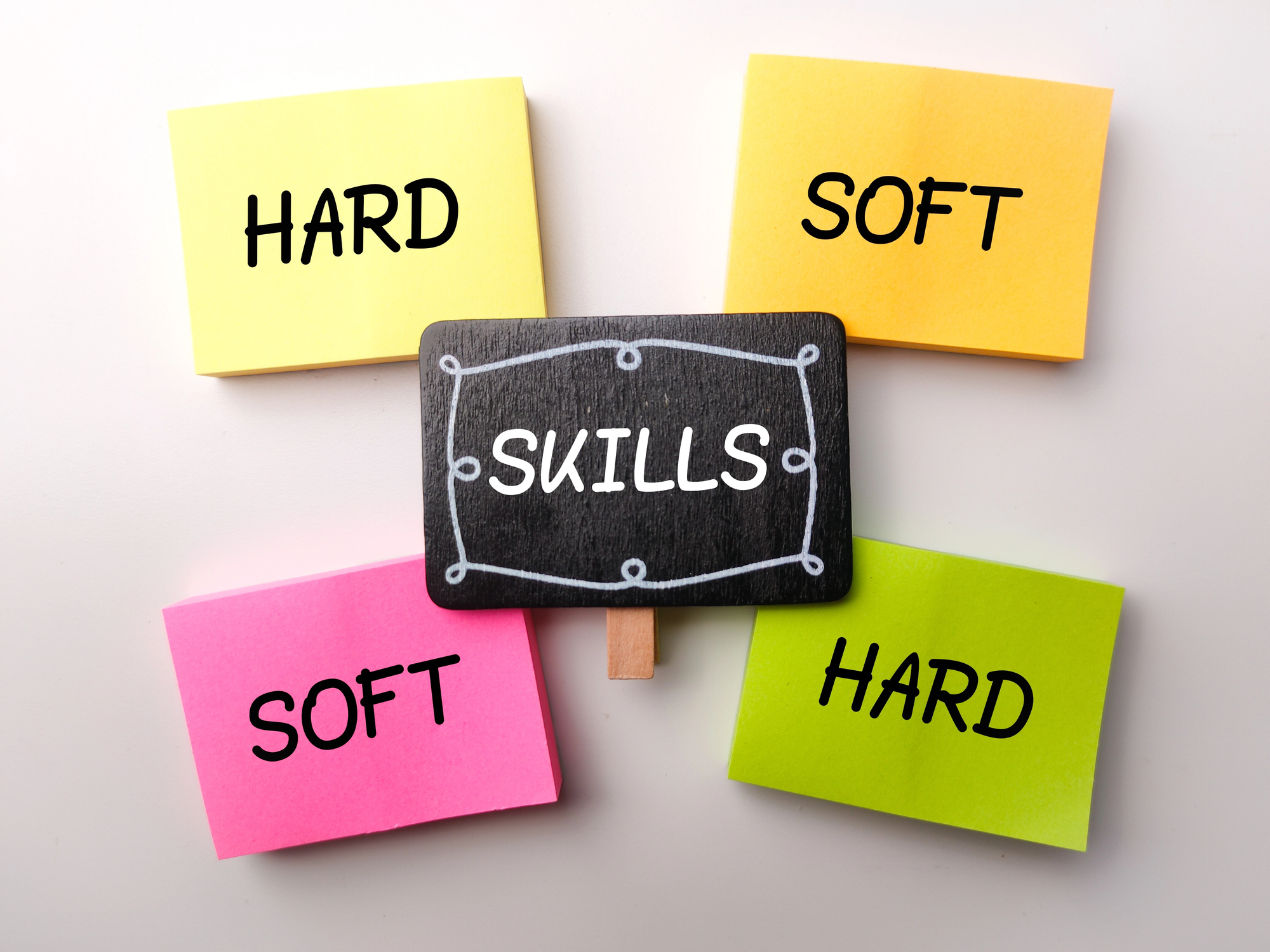
Today I want to challenge the myth that soft skills are somehow “soft.” Let’s get real: there’s nothing soft about the skills that keep businesses alive—skills like communication, empathy, adaptability, and trust. These are survival skills. They’re leadership superpowers. And in a world increasingly shaped by AI, automation, and constant change, they’re the difference between teams that thrive and teams that fracture.
The Myth of “Soft” vs “Hard” Skills
The term soft skills actually comes from the US Army in the 1960s. Hard skills were about weapons and machinery—tangible, technical capabilities. Everything else got dumped into the “soft” bucket. That language stuck, but here’s the danger: words shape perception. Call something “soft” and leaders undervalue it. Call it what it really is—your leadership superpower—and suddenly we treat it with the weight it deserves.
Hard skills might get you hired. But it’s your ability to lead, build trust, and inspire others that will keep you—and your business—at the top.
Action point: Stop using the term soft skills in your business. Reframe them as leadership superpowers or professional essentials to elevate their importance in your culture.
The Business Case for Soft Skills
Let’s cut through the fluff with some facts. The World Economic Forum lists 10 out of 16 top skills for the 21st century as soft skills—creativity, collaboration, emotional intelligence, critical thinking, and curiosity. Deloitte predicts that by 2030, two-thirds of jobs will require soft-skill intensity. And here’s the kicker: the UK economy alone loses £29 billion annually to the soft skills gap.
Meanwhile, research shows that investing in these skills can boost productivity by 12% and revenue by up to $90,000 per employee. That’s not soft—that’s hard ROI.
Action point: Audit your team’s current strengths in communication, collaboration, and adaptability. Where are the gaps? Fill them now before they cost you.
Why AI Makes Human Skills More Valuable
There’s panic in some circles about AI stealing jobs. I see it differently. AI is stripping away the repetitive, process-driven tasks that drained our energy. That frees us to focus on what machines can’t replicate: empathy, curiosity, connection, and trust.
Think about it: AI can crunch your P&L faster than you ever could. But it can’t build psychological safety in a team meeting. It can’t resolve conflict with empathy. And it certainly can’t inspire people to go the extra mile because they believe in your vision.
Action point: For every AI skill you upskill your team in, pair it with a human skill. If you train someone on data tools, also invest in their communication and collaboration training. Balance tech with trust.
Agility: The Real Competitive Advantage
Here’s the uncomfortable truth: 85% of jobs in 2030 don’t exist yet. So technical skills are a moving target. The only sustainable edge is agility. And agility is powered by communication, adaptability, and creativity—yes, soft skills.
This is why in the Unbridled Teamship Roadmap we focus on three levers:
- Game-Changing Trust: Without trust, teams fragment.
- Impactful Contribution: Everyone has a role, a rhythm, and a responsibility.
- Unbridled Adaptability: The ability to reinvent again and again.
These aren’t abstract concepts. They’re exactly what horse herds teach us. Under pressure, horses don’t scatter—they come together, move in unison, and adapt. That’s agility in action.
Action point: Ask yourself—does your team scatter or convene under pressure? Build rituals that strengthen unity when challenges hit.
The Cost of Ignoring Soft Skills
Without these superpowers, hybrid and remote work collapses. Research shows 70% of employees will work remotely at least five days a month by 2025. Without emotional intelligence, resilience, and self-leadership, that quickly turns into disengagement and burnout.
And let’s not forget customer experience. AI bots can handle simple requests, but when problems get complex, customers want humans who listen and empathise. Every unresolved complaint is a missed chance to build loyalty—or a reason for a loyal customer of 30 years to finally walk away.
Action point: Train frontline staff in empathy, listening, and conflict resolution. Every complaint is an opportunity to deepen trust and create raving fans.
Soft Skills as Drivers of Transformation
Here’s the paradox: digital transformation isn’t driven by technology—it’s driven by people. PwC estimates 30% of jobs could be automated by 2030, but you can’t automate trust, creativity, or curiosity. Transformation succeeds when teams have the resilience, adaptability, and influence to navigate disruption.
That’s why I always say: your business is a living system. Just like a horse herd, it thrives when every member contributes, trusts, and adapts together.
Action point: Build time for reflection and reinvention into your culture. Encourage your team to ask “what if?” and “why not?”
From Survival to Superpower
Horses have shown me that leadership isn’t about control—it’s about connection. They don’t follow the loudest or strongest, but the most trustworthy and emotionally intelligent. That’s the same in business.
So let’s ditch the outdated language. Soft skills aren’t soft. They’re survival skills. They’re your hardest currency in a volatile world. And they’re the foundation of your lasting leadership legacy.
Final Action Steps:
- Run a Soft Skills Audit: Where is your team strong on trust, empathy, and adaptability—and where are they brittle?
- Pair AI with EQ: For every tech skill you invest in, invest in a human skill.
- Model Curiosity: Ask more questions, invite new perspectives, and reward reinvention.
- Strengthen Trust Daily: Keep your promises, show vulnerability, and prioritise psychological safety.
Because let’s be clear: technical skills may open doors, but it’s your leadership superpowers—trust, empathy, adaptability—that keep you in the room and ensure your team thrives with unstoppable momentum.gift you can give your team. It’s the foundation of your leadership legacy.
Show Notes
00:00 Introduction to Impactful Teamwork
01:10 The Misconception of Soft Skills
04:31 The Importance of Soft Skills in the Modern Workplace
06:41 AI and the Future of Work
08:25 Building Relationships in a High-Tech World
10:09 Soft Skills as a Competitive Advantage
19:10 The Role of Soft Skills in Customer Experience
24:26 Final Thoughts and Call to Action