


More than 95% of businesses turning less than $25 million in revenue run without a budget or a forecasting model. That figure comes from David Guttman, a three-times Inc. 500 entrepreneur who has worked across 45 different industries and delivered multiple eight- and nine-figure exits. He finds it breathtaking. So do I, because the gap it exposes has very little to do with spreadsheets. When nobody in your business can see where the business is heading, you cannot reasonably expect them to own the outcome.
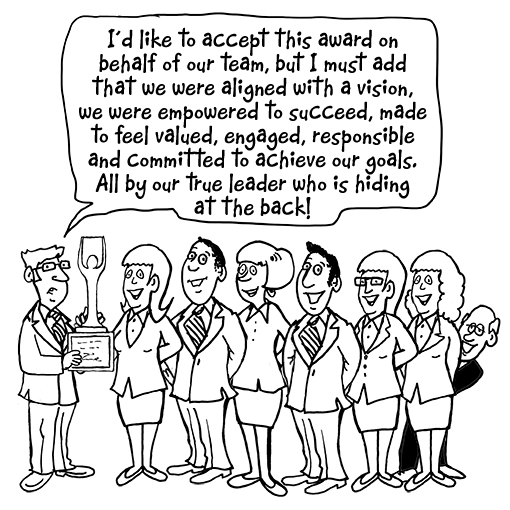
That tension sits at the centre of this week’s episode of Impactful Teamwork, where David and I unpick why servant leadership consistently outperforms the command-and-control model that still dominates most C-suites.
Servant leadership starts where ambition runs out
At 24, three separate doctors misdiagnosed David with terminal cancer and gave him six months to live. He had just secured a place at Wharton. He had an Ivy League degree, a paper fortune, and a plan for every year of the decade ahead. Then he had nothing.
Ask him at 24 whether he was happy, and he would not have understood the question. The misdiagnosis did not make him softer. It made him externally focused. He decided to let success become the side effect rather than the goal, and it arrived faster than it would have done otherwise.
Leaders reach that realisation through very different doors. Mine came during the Enron collapse at Arthur Andersen, when I understood that the company was never going to look after me. The lesson lands the same way regardless of the route. You cannot build something durable while you are the only person it serves.
Put your coworkers first and everything else follows
Most executives assume their fiduciary duty runs to the company first and their people second. David argues the reverse, and I agree with him. Look after your coworkers, and they will look after your customers, your investors, and your valuation.
He refuses to use the word employees, which delighted me, because you employ somebody in order to use them. The language gives the game away.
Think about the two managers you have worked for: the one who genuinely cared about you, and the one who could not have cared less. Which one got your best work? Self-motivated people produce good work for a leader who ignores them. They produce their best work only for a leader who demonstrably cares, and nobody can fake that.
Hire for humility and curiosity, then act fast when you get it wrong
David has hired and fired well over a thousand people. He named humility and curiosity as the two qualities that matter most, by galaxies, and he will decline a highly capable candidate who lacks either one.
Both qualities are choices rather than accidents of birth, which makes this genuinely useful. Every three-year-old asks why relentlessly. Our education system tends to beat that out of us, yet anyone can reactivate it at any age.
Then came the line that stopped me. Across a 35-year career, David has never once regretted firing someone he suspected he should fire. Not 90%. Not 95%. One hundred per cent, with zero exceptions.
I know how expensive the alternative is. I once kept somebody whose CV was flawless and whose cultural fit my intuition flagged from the first interview. I ignored the signal, protected my ego, and kept trying. My team eventually told me they would all leave unless I acted. That is a humbling place to stand.
Intuition is not mysticism. As David put it, intuition is your nervous system’s pattern-matching ability doing its job. Leaders who disconnect from it pay for the privilege.
Share the numbers, share the equity, share the ownership
This is where servant leadership stops being a sentiment and becomes an operating system.
David insists that everyone in the business can read an income statement, which he can teach in roughly fifteen minutes. He runs quarterly board meetings even in small companies. The week after each board meeting, he delivers the identical presentation to the entire company, because he serves his coworkers exactly as he serves his shareholders.
He also gives equity to everyone whenever the decision sits with him. His argument disarms even the most reluctant founder. Set aside 10% of the equity for your people and that 10% will increase your exit value by more than 10%. Generosity happens to be the greedy choice as well as the right one.
The mechanism is simple. Once it stops being the company’s money and starts being their money, people make different decisions. They stop ordering the phone they do not need. They start bringing you ideas, and some of those ideas are better than yours.
Core values only work when the team writes them
David builds two sets of core values in every business he runs: four internal values that govern hiring, promotion and reward, and four external values that filter products, partners and suppliers. Four, because nobody remembers more than four.
Crucially, the team creates them together. He then awards a trophy for each internal value, and the recipient chooses who receives it next quarter. They cannot give it to their boss or to their own department. For three months, everybody watches for the behaviour they claim to value.
That is co-ownership made operational, and it is the difference between a team that cooperates and a team that co-owns.
Servant leadership is not softness
People assume the servant leader is a pushover. David holds everyone rigorously accountable, himself first. He deflects credit outwards and absorbs blame inwards, because every failure traces back to a decision he made about hiring, resourcing, training or strategy.
The alternative produces the bottleneck I see in almost every business I work with. Leaders who cannot delegate decisions hire and promote people who will not make them. Everything escalates upwards, the owner’s desk becomes the constraint, and growth quietly stalls.
Listen to the full episode
David and I covered considerably more than fits here, including his Anti-MBA course and why he tore up his Wharton diploma live on air. Listen to episode 123 of Impactful Teamwork on Spotify, Apple Podcasts, YouTube, or on the Business HorsePower website.
Show Notes
00:45 Meet Dave Guttman
01:57 Cancer Wake Up Call
03:24 Servant Leadership Basics
07:10 Relationships Build Loyalty
08:56 Hire Right Fire Fast
12:00 Humility Curiosity Gen Z
14:53 Assume Positive Intent
17:24 Radical Transparency Trust
19:37 Scaling to Exit Playbook
22:13 Equity Budgets Core Values
28:03 Decision Making Culture
32:13 Servant Leader Accountability
33:53 Anti MBA Offer
35:24 Final Challenge Outro
You can connect and learn more about Dave’s work here – https://www.linkedin.com/in/drguttman/